






Vintage Spirit Chest
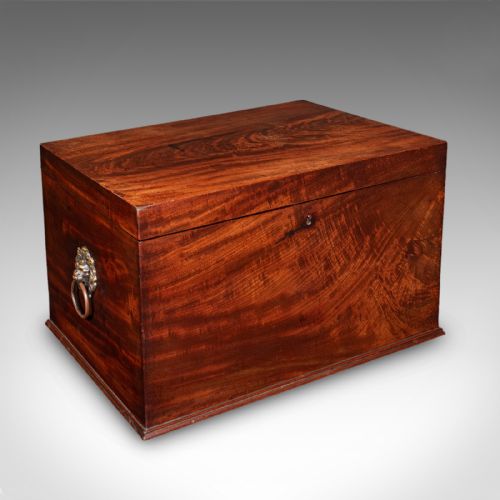
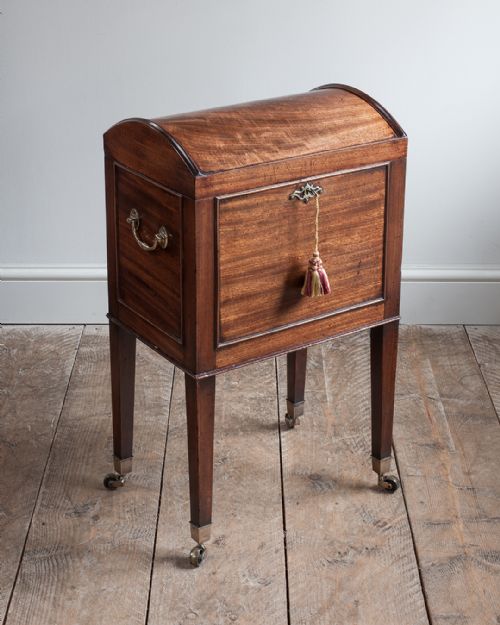
A vintage spirit chest holds the bottles and decanters that kept a household's best liquor safe under lock and key.
Vintage Spirit Chest
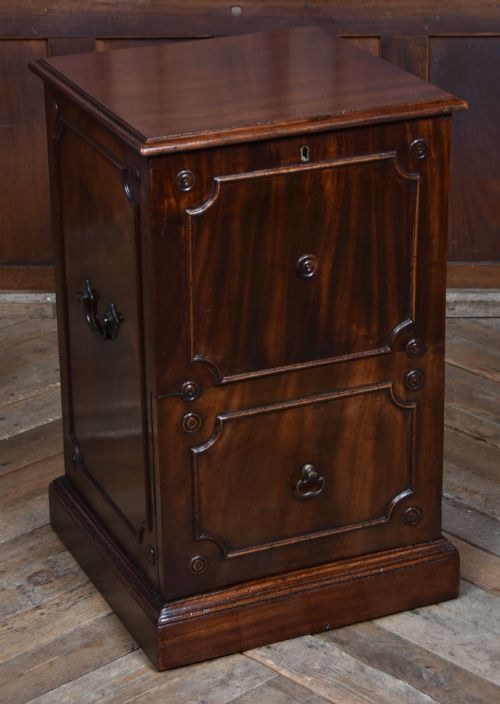
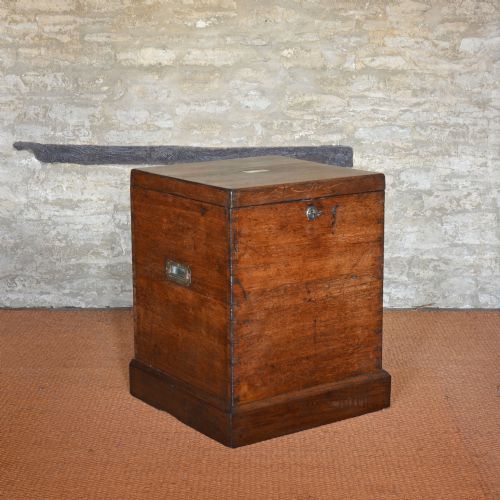
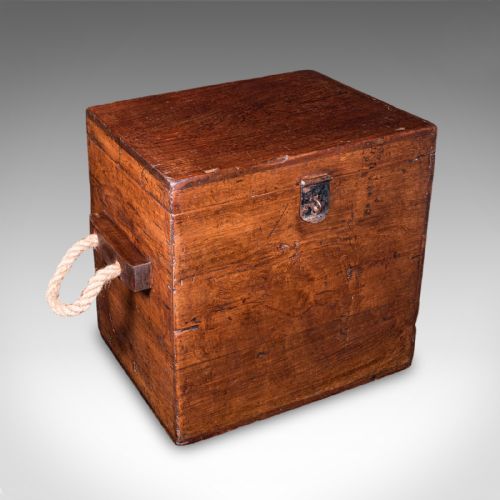
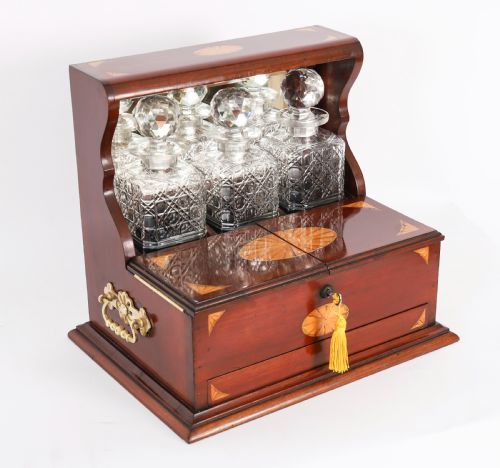
When people search for a vintage spirit chest, they are looking at a range of antique storage forms designed to house bottles, decanters, and glassware securely. These pieces span centuries of social entertaining, from Georgian campaign sets and cellarettes to Victorian and Edwardian tantalus and games compendiums.
The versions most commonly met on this page include mahogany cellarettes, oak tantalus boxes, and walnut decanter boxes fitted with brass hardware. They appear in styles ranging from Georgian and Regency to Edwardian and Art Deco, reflecting the changing tastes of hosts across different periods.
How they were made
Cabinet makers constructed these vessels using hardwoods like mahogany, oak, walnut, and satinwood, often accentuating the grain with inlay or brass banding. Campaign and travel pieces relied on robust brass mounts and drop handles to withstand the rigours of transit.
Interiors were typically partitioned to fit specific cut glass decanters, bottles, and glasses snugly, sometimes combining storage with fold-out games boards. Locks and keys were an integral part of the manufacture, protecting expensive spirits from domestic staff and uninvited guests.
Vintage Spirit Chest Retail Price Guide 2026
Typical asking prices for vintage spirit chest among the pieces listed under this phrase on Sellingantiques today, from the lower quarter to the upper quarter. They describe what is for sale here now, not the wider market.
Listings span periods from the eighteenth century through to the Edwardian era and 1930s, utilising oak, mahogany, walnut, and satinwood.
What varies in quality
The distinction between a standard box and a superior example lies in the choice of timber, the precision of the joinery, and the integration of the internal fittings. Finer pieces feature carefully matched veneers, intricate satinwood inlay, and heavy-gauge cast brass mounts.
Another measure of quality is the completeness and originality of the contents, such as matched sets of cut crystal decanters and working locks with their original keys. The refinement of the carving or marquetry further separates everyday utility boxes from grand entertaining furniture.
Gillingtons
The Vintage Spirit Chest Glossary
- Cellarette
- A lockable container or cabinet used for storing bottles of wine and spirits near the dining table. They frequently appeared in mahogany or oak during the Georgian and Regency periods.
- Tantalus
- A locking drink stand that secures decanters within a metal frame, displaying the bottles while preventing unauthorized pouring. The mechanism usually requires the lid to be unlocked before any decanter can be removed.
- Marquetry
- Decorative woodwork where pieces of contrasting veneer are applied to a structure to form intricate patterns or pictures. It appears on finer Victorian storage boxes.
- Campaign set
- Portable furniture and equipment designed for travel, typically featuring recessed brass handles and reinforced corners. These sets often housed glassware and gold-decorated decanters for officers on the move.
Vintage Spirit Chest: Frequently Asked Questions
What is a spirit chest?
A spirit chest is a dedicated box, cabinet, or cellarette designed to store bottles of liquor, decanters, and drinking glasses securely.
These pieces were kept in dining rooms or studies, allowing hosts to serve guests while keeping expensive spirits under lock and key.
How do you use a tantalus?
A tantalus holds decanters upright in a metal bar frame that locks over the stoppers, preventing the bottles from being lifted out.
To release the decanters, a key must be turned in the lock to lower or swing the locking bar aside.
What is the difference between a cellarette and a decanter box?
A cellarette is typically a larger standalone piece or floor-standing box designed to hold multiple wine or spirit bottles upright.
A decanter box is usually a smaller, portable chest made to sit on a tabletop or sideboard, holding a specific set of glass decanters and sometimes glasses.
How do I date a spirit chest?
Dating relies on examining the timber, construction methods, brass hardware, and overall style of the piece, such as Georgian mahogany or Edwardian inlay.
Interior fittings and the cut of any accompanying glass decanters also offer strong clues to the period of manufacture.