



Vintage Solitaire Pendant
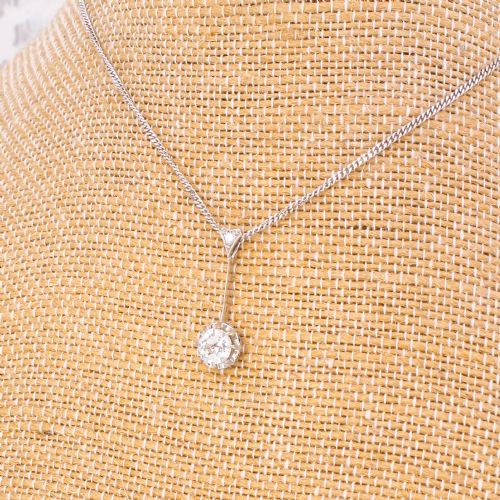
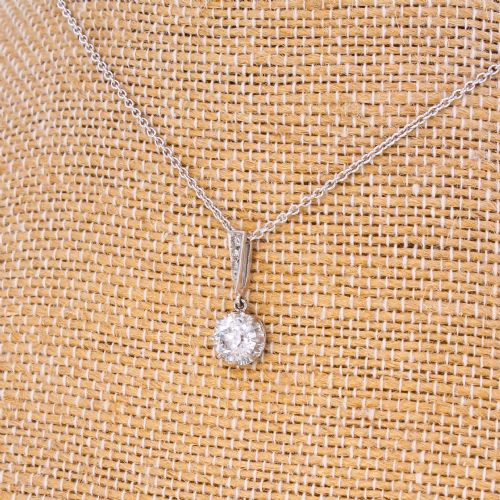
A vintage solitaire pendant offers a single focal gemstone suspended from a chain, combining minimalist focus with period charm.
Vintage Solitaire Pendant
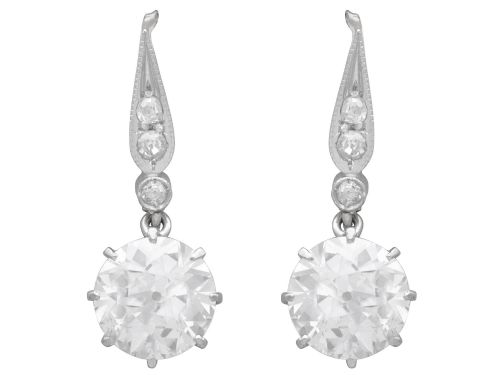
A vintage solitaire pendant focuses attention entirely on one principal stone, whether that is a diamond, opal, sapphire or aquamarine. These pieces span periods from the Victorian era through Edwardian, Art Deco and Mid-Century designs, reflecting shifting tastes in jewellery mountings.
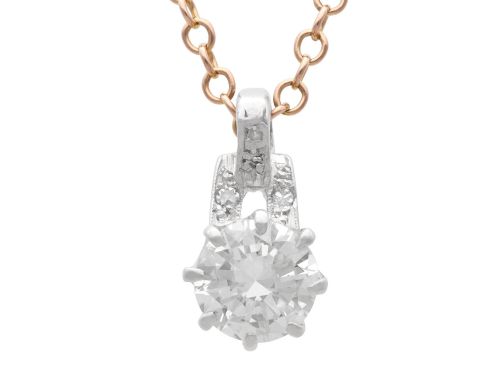
The version most commonly met on this page pairs a central diamond with platinum or gold settings, often suspended on a delicate chain. Alternative iterations feature coloured stones such as oval opals or blue topaz set in nine-carat gold.
Materials and construction
Goldsmiths utilised precious metals including platinum, nine-carat yellow gold, nine-carat white gold and eighteen-carat gold to secure the central gems. Platinum was favoured in earlier twentieth-century pieces for its strength in delicate claws, whilst gold provided warmer tones for mid-century mountings.
Gemstones are shaped into old cuts, brilliant cuts or oval cuts to maximise light return or display the play of colour within opals. Settings range from simple claw mounts to fancy filigreed galleries that support the stone.
Vintage Solitaire Pendant Retail Price Guide 2026
Typical asking prices for vintage solitaire pendant among the pieces listed under this phrase on Sellingantiques today, from the lower quarter to the upper quarter. They describe what is for sale here now, not the wider market.
Distinctions in quality
Quality depends upon the proportion and brilliance of the central gemstone relative to its mounting, alongside the crispness of any metalwork detail. Pieces with substantial stone weight and secure, well-finished settings sit at the upper end of the selection.
The integrity of the mount and the matching quality of any supporting stones, such as small accent diamonds paired with a sapphire or opal, determine the overall execution of the pendant.
The Vintage Solitaire Pendant Glossary
- Solitaire pendant
- A necklace featuring a single prominent gemstone as its decorative centrepiece. This setting style concentrates visual interest on one stone.
- Old cut
- A diamond cutting style prevalent in antique and vintage jewellery characterised by a smaller table, higher crown and open culet. These stones display distinctive light patterns under candlelight.
- Filigree
- Delicate ornamental work consisting of twisted metal threads soldered together to form openwork patterns. It appears frequently in mid-century and Edwardian pieces.
- Platinum
- A dense, durable white metal used extensively in early twentieth-century fine jewellery. Its strength permits very fine claw settings.
Vintage Solitaire Pendant: Frequently Asked Questions
How do I clean my pendant?
Wash the piece gently in warm water using mild soap and a soft brush to remove accumulated oils from behind the stone. Avoid harsh chemical cleaners, particularly if the pendant contains softer gems like opals.
Dry the necklace thoroughly with a lint-free cloth before storing it in a dedicated jewellery box to prevent scratches on the metal or stone.
Can I change the chain?
Most pendants allow for the chain to be swapped, provided the bail is large enough to accommodate the new clasp or thickness. Consult a jeweller if the jump ring requires adjustment.
Ensure any replacement chain matches the metal purity and colour of the pendant setting to maintain a cohesive appearance.
How do I date a pendant?
Dating relies on stylistic clues, such as the geometric lines of Art Deco mountings or the delicate filigree typical of mid-century work. Hallmark stamps on the metal also provide clues to the assay office and year of manufacture.
Compare the gemstone cut against known periods, noting that old cut diamonds typically indicate earlier twentieth-century production.
Are opals fragile for daily wear?
Opals possess a lower hardness rating than diamonds, meaning they require gentle treatment to avoid surface scratches and impacts. They benefit from being worn with care and stored away from harder pieces.
Remove opal pendants before engaging in physical work or swimming to protect the stone from knocks and sudden temperature changes.