



Vintage Slim Longcase Clock
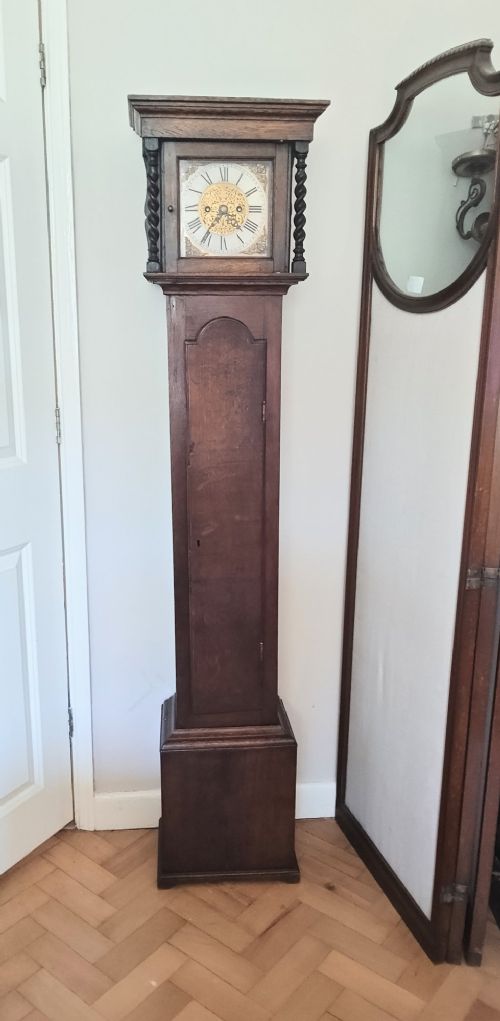
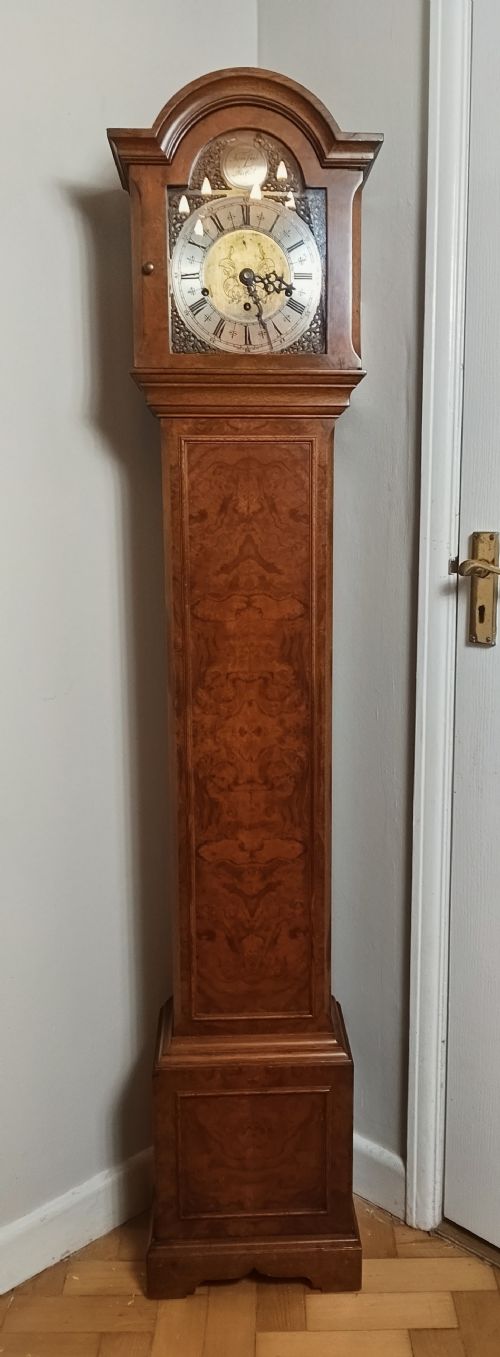
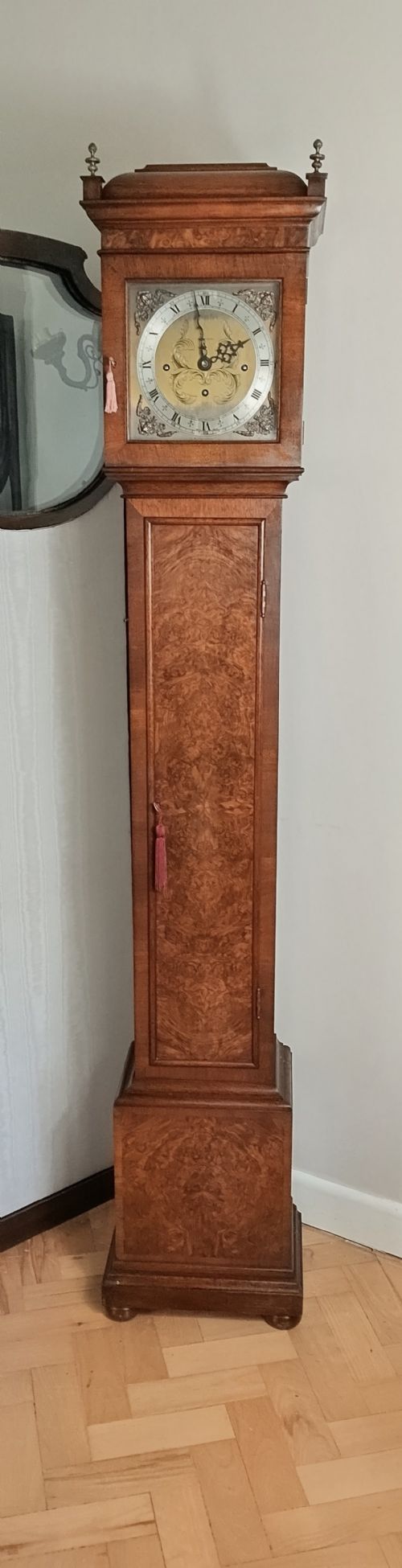
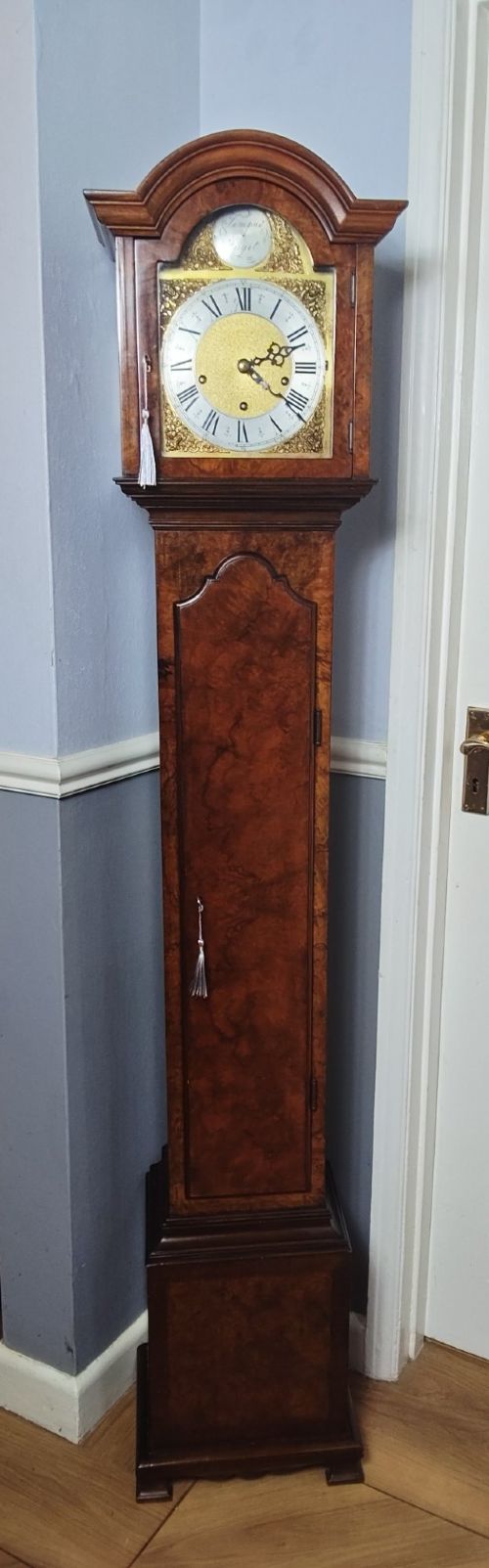
These vintage slim longcase clock pieces stand as slender floor-standing timekeepers, offering upright presence and traditional chime movements for domestic halls.
Vintage Slim Longcase Clock
When you search for a vintage slim longcase clock, you encounter upright timekeepers frequently described as grandmother or granddaughter clocks, measuring smaller in scale than traditional tall grandfather clocks. These floor clocks appear across periods from the nineteenth century into the mid twentieth century, including Edwardian and later revival styles.
The pieces on this page span from eighteen fifty to nineteen sixty, taking forms such as musical and quarter-chiming floor clocks. Walnut, mahogany, and oak dominate the construction, often enhanced by burr walnut or flame mahogany veneers and fitted with brass dials.
How they were made
Cabinetmakers constructed the slim cases using solid timbers like oak and mahogany, alongside decorative veneers such as burr walnut and flame mahogany. Quarter-veneered panels and figured grain patterns show the careful timber selection applied to these upright clock bodies.
Vintage Slim Longcase Clock Retail Price Guide 2026
Typical asking prices for vintage slim longcase clock among the pieces listed under this phrase on Sellingantiques today, from the lower quarter to the upper quarter. They describe what is for sale here now, not the wider market.
Listings feature mahogany, burr walnut, and oak materials across Edwardian and Victorian styles.
What varies in quality
The distinction between standard examples and finer pieces lies in the choice of cabinet timbers and veneer matching. Quarter-veneered burr walnut or figured walnut casework requires greater skill from the cabinetmaker than plain mahogany or oak.
Movement complexity further separates the range, as quarter-musical chimes, tubular bells, and eight-day mechanisms indicate higher horological ambition than simpler time-only setups. Dial execution, brass work, and the harmony of the case proportions complete the assessment.
ELLIOTT·Gillett and Johnston
The Vintage Slim Longcase Clock Glossary
- Grandmother clock
- A slim, smaller-scaled version of a traditional grandfather longcase clock, standing lower to the floor. These pieces suit domestic rooms where full-sized floor clocks appear too bulky.
- Granddaughter clock
- An even smaller variant of the longcase clock family, sharing the slender proportions of the grandmother clock. It maintains traditional dial and weight-driven or spring-driven mechanics in a compact height.
- Burr walnut
- A highly figured timber veneer taken from the wart-like growths on walnut trees. It provides swirling grain patterns prized on the door panels and hoods of twentieth-century clock cases.
- Quarter chiming
- A movement mechanism that plays musical notes or chime sequences every fifteen minutes. Westminster chimes are a common form found in these musical floor clocks.
- Flame mahogany
- A veneer cut from the fork of the mahogany tree where branches meet the trunk, yielding a distinctive feather-like pattern. This material decorates the surfaces of period clock cases.
Vintage Slim Longcase Clock: Frequently Asked Questions
What is a grandmother clock?
A grandmother clock is a slim, smaller-scaled version of a traditional grandfather longcase clock, standing lower to the floor while retaining upright proportions.
These pieces were produced from the nineteenth century onwards to fit modern domestic ceiling heights and smaller rooms.
How do I wind the clock?
Winding involves using a small crank key inserted into winding holes on the brass dial face to tension the internal springs or weights.
Careful handling ensures the mechanical movement maintains accurate time without over-tensioning the gear train.
Where should I place a longcase clock?
These slim floor clocks require a stable, level surface against a solid wall to keep the pendulum swinging evenly and the case secure.
Halls, landings, and living rooms provide suitable environments away from direct sunlight and damp conditions.
How do I identify the period?
Dating relies on examining the timber veneers, dial styles, and cabinet revival characteristics such as Chippendale or Queen Anne influences.
Makers' names on the dial or movement also help establish the decade of manufacture between the nineteenth and twentieth centuries.