

Vintage Silvered Glass
Vintage silvered glass brings mercury-backed mirrors, scent bottles and witch balls into rooms that need a deep, liquid reflection.
Vintage Silvered Glass
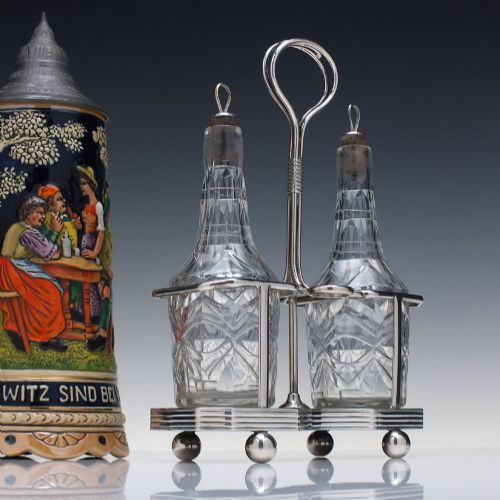
Vintage silvered glass covers a range of domestic objects that use reflective coatings, mercury linings or silver mounts on glass surfaces. When searching for vintage silvered glass, collectors encounter items spanning the Victorian, Edwardian and Art Deco periods, created in forms such as wall mirrors, dressing table jars, cologne bottles and decorative witch balls.
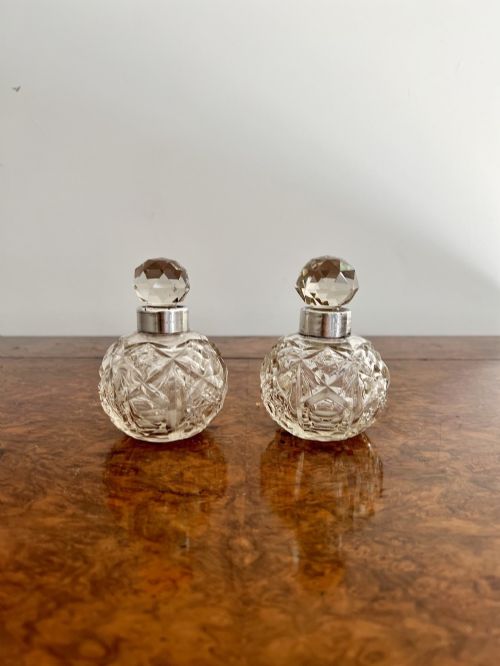
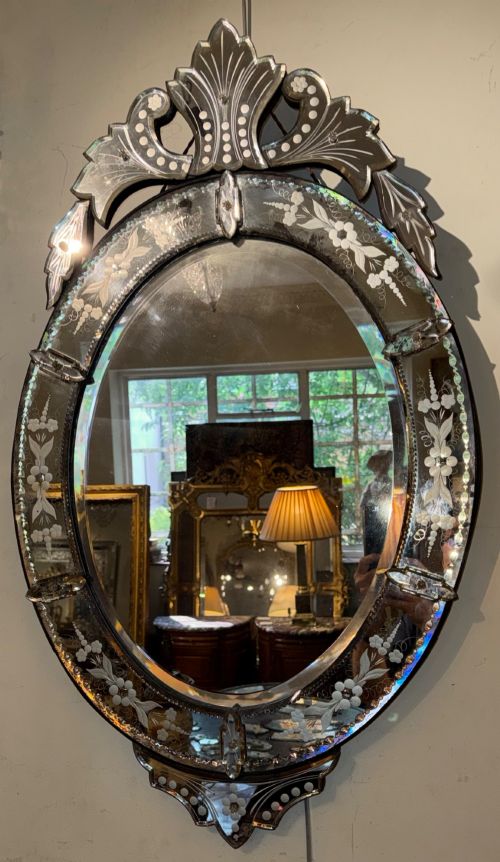
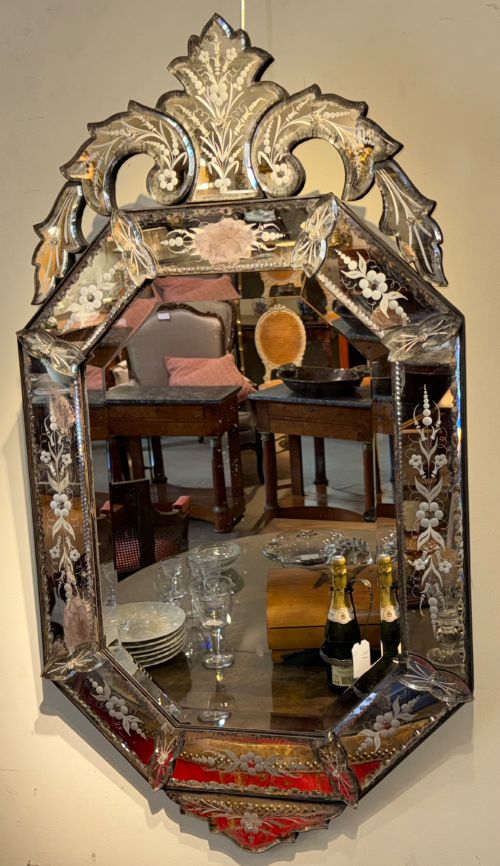
The most common examples on this page include scent and perfume bottles with silver overlay, desk magnifying glasses, and wall-hanging mirrors featuring mercury glass or multi-convex surfaces. Origins range from English workshops to French makers and Continental glasshouses.
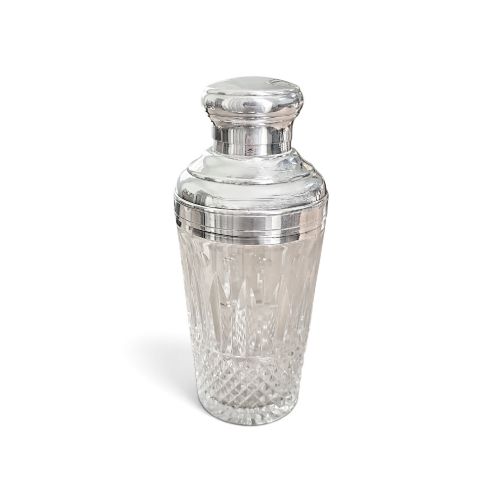
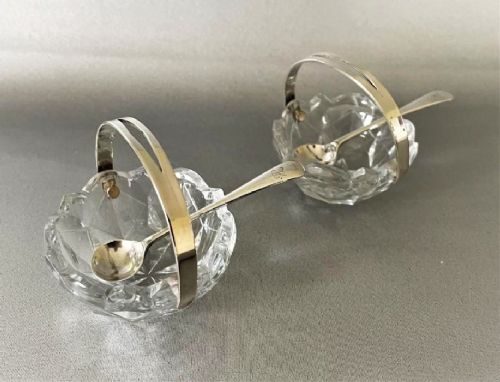
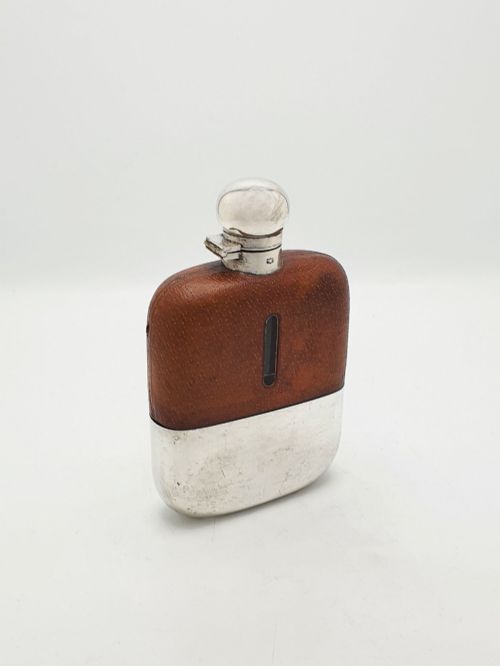
Objects vary from small trinket boxes with Connemara marble lids to large table decanters and biscuit barrels mounted in sterling silver or silver plate. Each piece combines glassblowing or moulding techniques with metalwork typical of its decade.
How they were made
Makers produced silvered glass by pouring liquid mercury or a silver solution into the cavity of double-walled blown glass objects, sealing the opening once the reflective coating adhered to the inner walls. This process created the characteristic misty, uneven sheen seen in Victorian witch balls and antique mirrors.
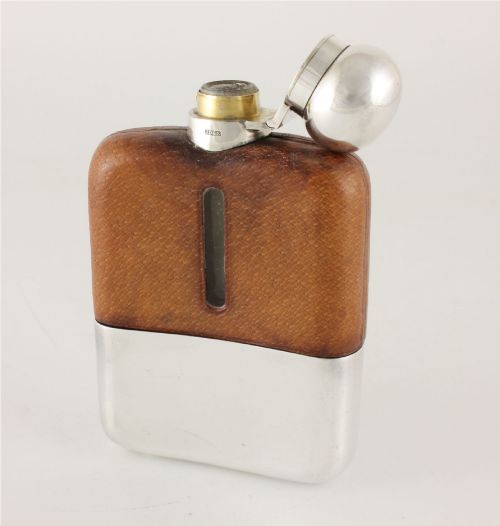
Silver mounts, collars and overlays required silversmiths to shape sterling silver, silver plate or white metal around the glass body, often securing the components with cork, collars or applied mounts. Etching, cutting and guilloche enamel frequently adorned the glass and metal surfaces together.
Vintage Silvered Glass Retail Price Guide 2026
Typical asking prices for vintage silvered glass among the pieces listed under this phrase on Sellingantiques today, from the lower quarter to the upper quarter. They describe what is for sale here now, not the wider market.
Victorian households hung witch balls in cottage windows to trap passing evil spirits in their mirrored depths.
What varies in quality
Quality rests upon the crispness of the silver work and the stability of the silvered lining inside the glass. Heavier silver mounts with clear hallmarks indicate superior workshop standards, whereas thin electroplate or unmarked white metal suggests lower grade production.
The clarity and depth of the glass itself differentiate standard items from exceptional ones. Blown glass displaying deliberate inclusions, even thickness, and intact mercury coatings without extensive flaking commands greater attention than degraded or cloud-damaged specimens.
Asprey and Co. Ltd·Stuart and Sons·Cum Shing·Lee and Wigfull·Mappin and Webb·Walker and Hall·Levi and Salaman·Lalique
The Vintage Silvered Glass Glossary
- Silvered glass
- Glass treated with a reflective substance, such as mercury or silver nitrate, applied between glass layers or onto the interior walls to create a mirror-like finish.
- Witch ball
- A spherical ornament of coloured or silvered glass traditionally hung in windows to ward off evil spirits and catch ambient light.
- Mercury glass
- A type of blown double-walled glass coated on the inside with a liquid mercury amalgam, popular during the nineteenth century.
- Silver overlay
- A decorative technique where sterling silver is bonded directly onto a glass or ceramic body, often cut into intricate floral or geometric motifs.
- Guilloche enamel
- Workmanship involving engine-turned geometric patterns beneath a transparent coloured enamel layer, frequently seen on dressing table items.
Vintage Silvered Glass: Frequently Asked Questions
What is mercury glass?
Mercury glass is a hollow-blown double-walled glass coated internally with a silvering mixture or liquid mercury. Despite the name, actual mercury was largely replaced by silver solutions in later Victorian production.
The resulting objects produce a soft, tarnished reflection rather than the sharp image of a modern flat mirror.
How do I clean vintage silvered glass?
Cleaning requires extreme caution because moisture can seep behind the silvered lining or through small holes in the glass wall. Water contact ruins the internal coating instantly.
Dust surfaces gently with a dry microfiber cloth and avoid using liquid polishes anywhere near the glass interior or coated areas.
Are witch balls made of silver?
Witch balls consist of blown glass with a silvered interior lining rather than solid precious metal. The exterior shell uses coloured or clear glass blown into a spherical shape.
The silvering inside provides the reflective surface that distinguishes them from standard glass baubles.