
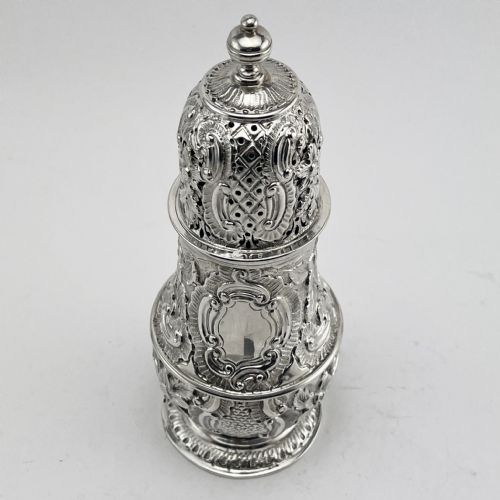


Vintage Silver Sugar Shaker
A vintage silver sugar shaker brings genuine dining table elegance, offering functional refinement and classic style for your collection.
Vintage Silver Sugar Shaker
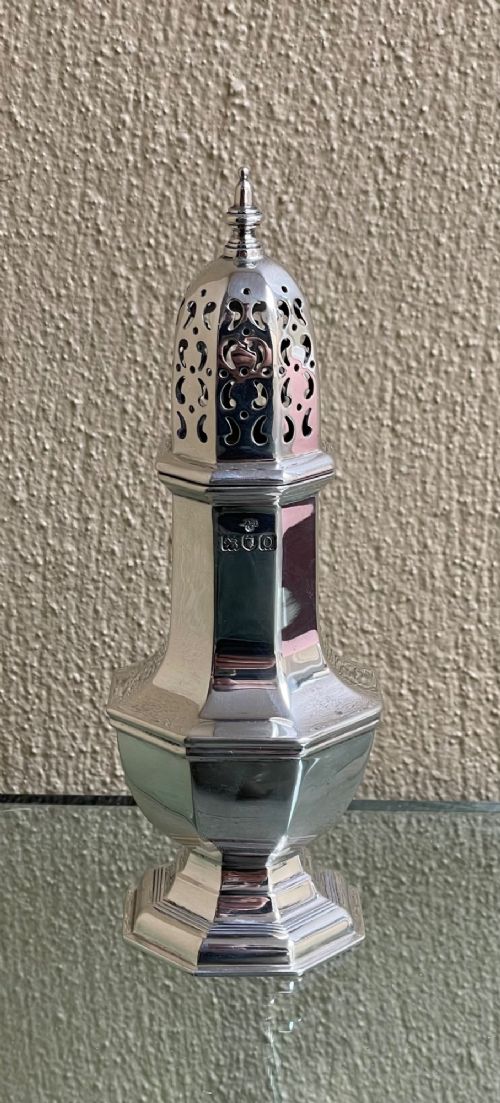
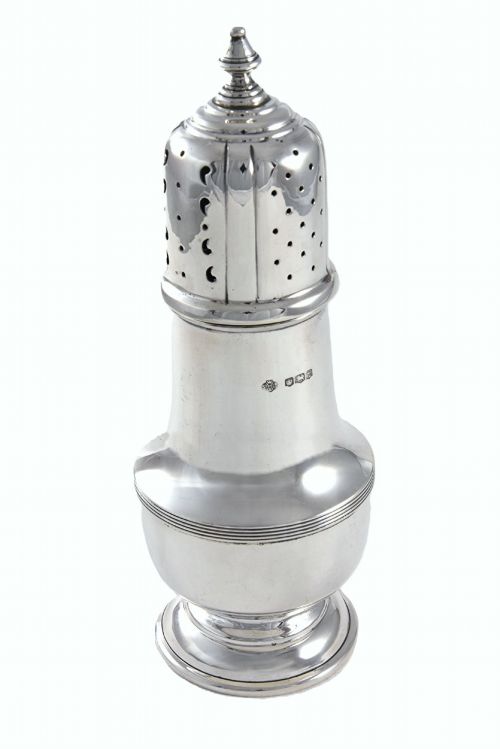
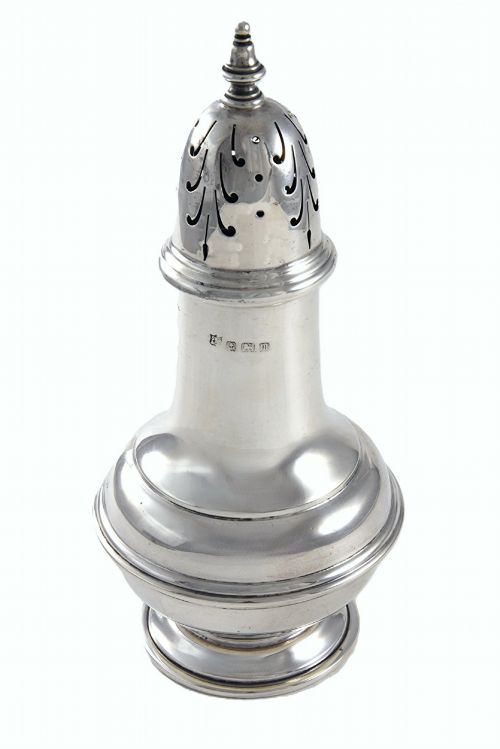
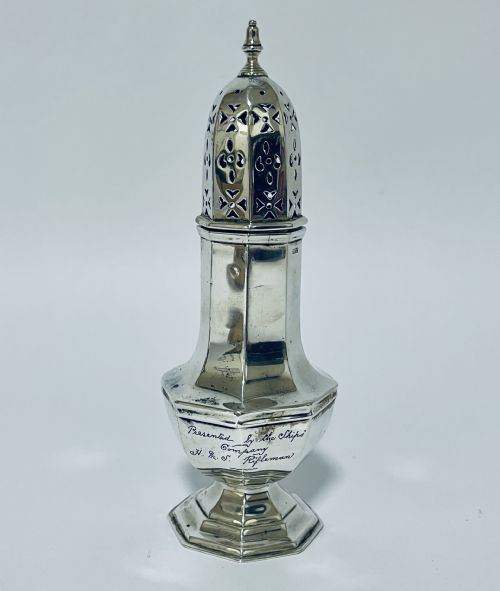
When you search for a vintage silver sugar shaker, you are exploring a refined category of tableware designed to dispense powdered or granulated sugar over desserts and fruits. These functional objects range from slender baluster casters to geometric polygon shapes, reflecting the shifting tastes of dining culture.
You are most likely to encounter Edwardian and 1930s examples on this page, as pieces from the 1900s through the mid-20th century dominate the current selection. Makers from these decades favoured both traditional Georgian revival silhouettes and clean Art Deco lines, alongside cut glass bodies topped with silver mounts.
The assortment includes domestic tableware alongside related forms such as pounce pots and pepper casters, demonstrating how silversmiths applied similar piercing and casting techniques to small table accessories. Each piece carries hallmarks that record its assay office, year of production, and maker.
How they were made
Silversmiths constructed these vessels primarily from sterling silver or silver gilt, employing traditional techniques of shaping, spinning, and hammering. Many examples combine silver with cut glass bodies, requiring secure mounts and collars to join the different materials.
The characteristic pierced covers demand precise hand-sawing or punching to create symmetrical patterns that allow sugar to flow evenly. Makers then finished the surfaces with hand-polishing, highlighting the faceted polygon sides, chased cornucopia motifs, or smooth curves of the metal.
The listings span the late 19th century through the 1940s, featuring both solid sterling silver and silver-topped cut glass.
What varies in quality
Quality in a vintage silver sugar shaker rests upon the weight of the metal, the crispness of the pierced lid design, and the integrity of the maker's mark. Thicker gauge silver provides a reassuring heft in the hand and resists dents, while sharply pierced apertures demonstrate superior craftsmanship.
The prominence of the maker and the sophistication of the decorative style also distinguish finer examples from standard production pieces. Recognised silversmith firms and distinct stylistic movements like Art Nouveau or Art Deco elevate the aesthetic and collectible standing of the object.
Barker Brothers·James Dixon & Sons Ltd·Evald Nielsen·Horace Woodward & Co Ltd·Roberts & Belk·Berthold Muller Hanau
The Vintage Silver Sugar Shaker Glossary
- Sugar Caster
- A container with a perforated top used for sprinkling sugar onto food. Also frequently referred to as a sugar shaker or sifter.
- Hallmark
- An official stamp applied by an assay office indicating the purity of the metal, the year of manufacture, and the maker. British pieces commonly show town marks and date letters.
- Silver Gilt
- Silver that has been coated with a thin layer of gold on its surface. This technique imparts a rich, warm tone to the interior or exterior of the vessel.
- Pounce Pot
- A small perforated shaker historically used to sprinkle sand-like powder over freshly written ink to speed up drying. They share a very similar form to early sugar casters.
- Polygon
- A geometric shape featuring multiple straight sides, characteristic of Art Deco design variants found in 1930s tableware.
Vintage Silver Sugar Shaker: Frequently Asked Questions
What is the difference between a sugar shaker and a caster?
The terms are largely interchangeable among collectors and dealers, though 'caster' often describes traditional baluster-shaped vessels while 'shaker' or 'sifter' can apply to cylindrical or polygon forms.
Both serve the exact same culinary function of dispensing sugar onto desserts, pastries, and fruit.
How do I clean my silver sugar shaker?
Clean your silver shaker gently using a specialist silver cloth or a mild, non-abrasive silver polish to maintain the shine without removing the hallmarks.
Avoid harsh scrubbing on pierced lids, as the delicate fretwork can bend or catch under aggressive pressure.
Can I still use a vintage sugar shaker for dining?
Yes, many collectors enjoy using their silver tableware for special meals, provided the interior is washed thoroughly before and after use.
Sterling silver is durable enough for regular dining, though fine crystal glass bodies require careful handling during washing.
How do I date a silver sugar shaker?
You can date a piece by reading the hallmarks stamped onto the silver, which typically include a specific letter corresponding to the assay year.
Stylistic cues such as Edwardian proportions or 1930s polygon sides also provide a reliable guide to the period of manufacture.