

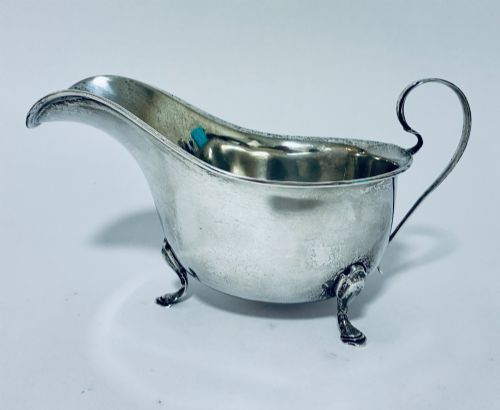
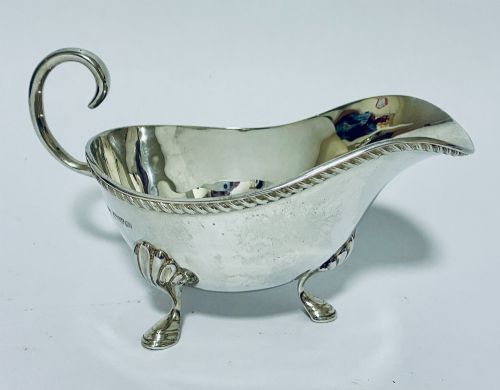
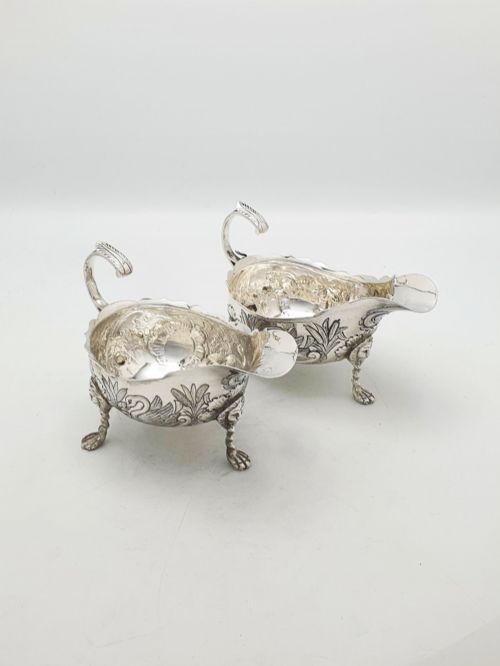
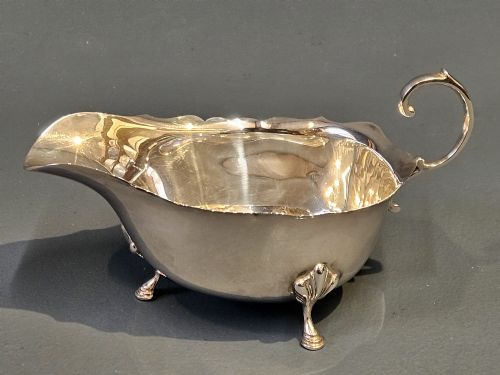
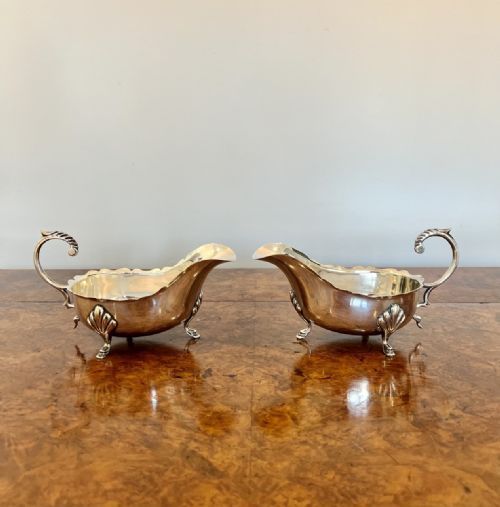
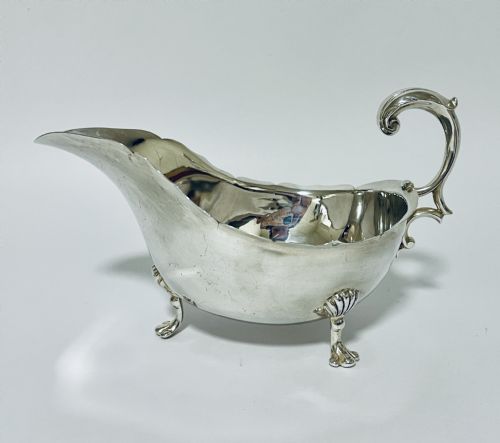
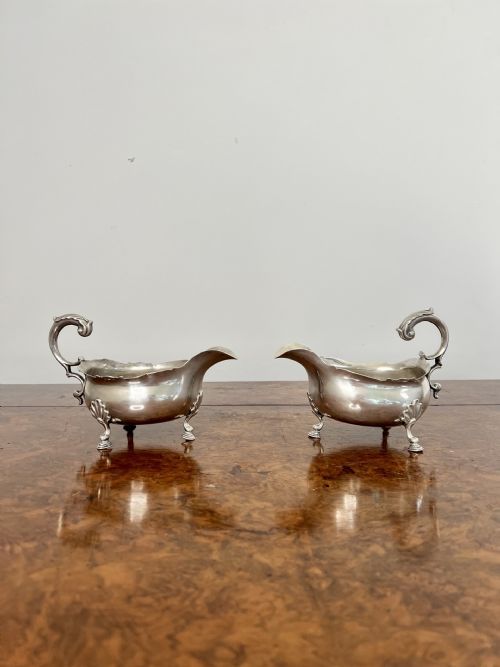


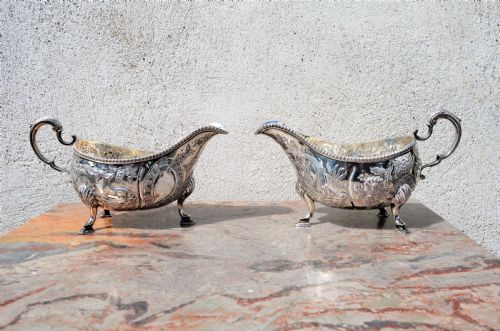

Vintage Silver Sauceboat
A vintage silver sauceboat brings period elegance to the table, offering a graceful vessel for gravies and dressings.
Vintage Silver Sauceboat
When searching for a vintage silver sauceboat, collectors encounter open-form vessels designed specifically for serving sauces and gravies at the dining table. These pieces range from solid sterling silver examples to silver plated and electroplated nickel silver alternatives.
The selection on this page spans several eras, running from mid-eighteenth century Georgian designs through Edwardian and George V periods up to mid-century modern examples. Forms include single vessels and matching pairs, sometimes accompanied by fitted stands.
Stylistic variation is wide, taking in plain classical Georgian silhouettes, embossed George II and George III models, and Celtic Revival motifs with distinct regional character. Buyers find both monumental large sauce boats and smaller everyday domestic pieces.
How They Were Made
Maker workshops produced these items primarily in sterling silver or through silver plating over base metals such as nickel silver. Solid silver pieces utilise heavier gauge metal formed by raising and hammering, while plated versions depend on durable metallurgical coatings applied over a supportive substrate.
Decoration relies on traditional silversmithing techniques including embossing, chasing, and hand engraving. Many iterations incorporate cast handles and applied rims, often elevated on three or four feet or fitted matching stands.
Regional variants include Irish sterling pieces decorated with Celtic style ornamentation and Scottish Georgian examples.
What Varies in Quality
Quality rests primarily on the gauge of the metal and the crispness of the chased or embossed detail. Heavier silver gauge ensures structural rigidity and a substantial feel in the hand, whereas thinner metal compromises durability.
Artisanal execution dictates distinction, separating standard domesticware from exceptional silversmith commissions. Superior examples display balanced proportions, clean cast components, and well-executed maker hallmarks.
James Welch·Theodore B Starr·Walker and Hall
The Vintage Silver Sauceboat Glossary
- Sterling silver
- A silver alloy containing ninety-two point five percent pure silver and seven point five percent other metals, usually copper. This standard provides the necessary durability for functional tableware.
- Silver plate
- A base metal object coated with a thin layer of pure silver. This technique offered an accessible alternative to solid sterling for dining households.
- Electroplated nickel silver
- A base metal alloy of copper, nickel, and zinc coated with silver using an electrical current. It serves as a resilient core for plated serveware.
- Hallmark
- A set of official marks stamped onto precious metal items to guarantee purity and origin. These stamps typically indicate the maker, town, and year of assay.
- Celtic Revival
- A nineteenth and twentieth century design movement incorporating interlaced knotwork and ancient motifs into decorative arts. Irish silver pieces frequently showcase this distinct stylistic heritage.
Vintage Silver Sauceboat: Frequently Asked Questions
How do I clean tarnished silver?
Use a specialised silver polish and a soft cloth to gently remove tarnish from the surface. Avoid abrasive pads that can scratch the metal or wear away thin plating.
Wash the vessel in warm soapy water afterwards and dry thoroughly with a lint-free cloth to maintain the finish.
Can I use them for hot gravy?
These vessels were originally manufactured for serving hot gravies, sauces, and melted butter at the dining table. Solid silver and plated metal conduct heat efficiently, keeping contents warm during a meal.
Pour warm liquids directly into the boat just before serving to preserve the temperature.
How do I identify a Georgian piece?
Examine the piece for stylistic cues such as classical cast feet, sturdy scroll handles, and clean eighteenth-century silhouettes. Solid sterling examples from this era often carry clear hallmarks indicating the assay office and date.
Consult authoritative silver reference guides to match specific punch marks against recorded silversmiths.
What is the difference between solid and plated?
Solid silver pieces consist entirely of precious metal throughout their structure, maintaining intrinsic value regardless of age. Plated versions feature a non-precious base metal core covered by a thin exterior layer of silver.
Weight, hallmarks, and examination of worn high points help distinguish between the two categories.