



Vintage Silver Rimmed Bowls
These vintage silver rimmed bowls combine lustrous metal borders with crystal, ceramic, wood, and enamel bodies for striking table presentation.
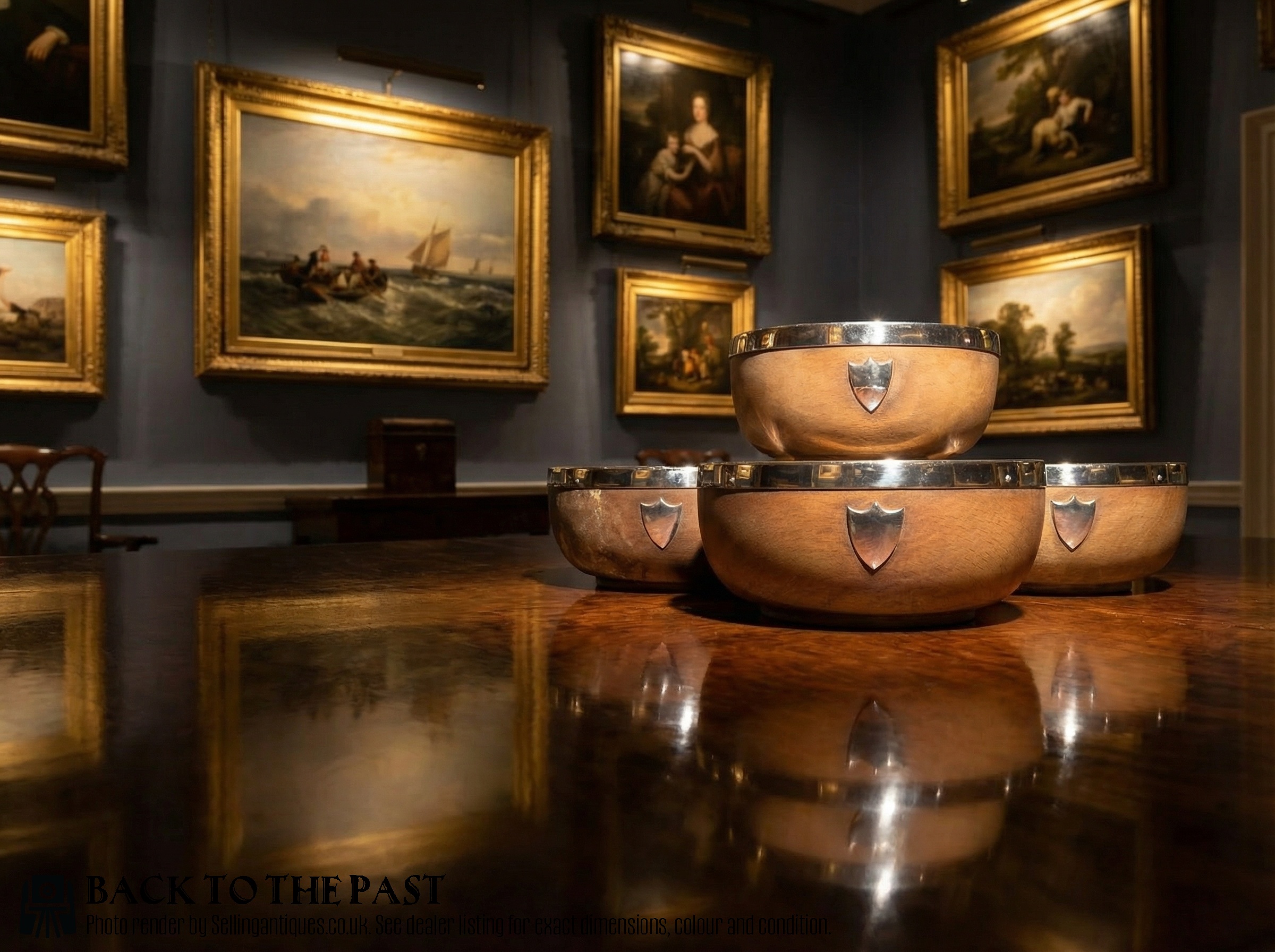
Vintage Silver Rimmed Bowls
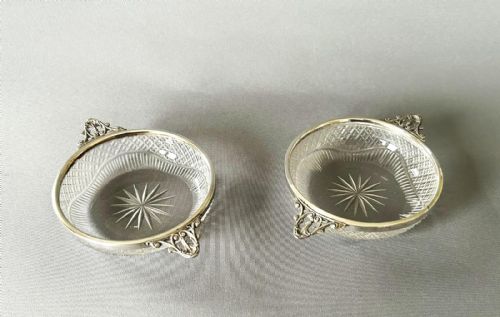
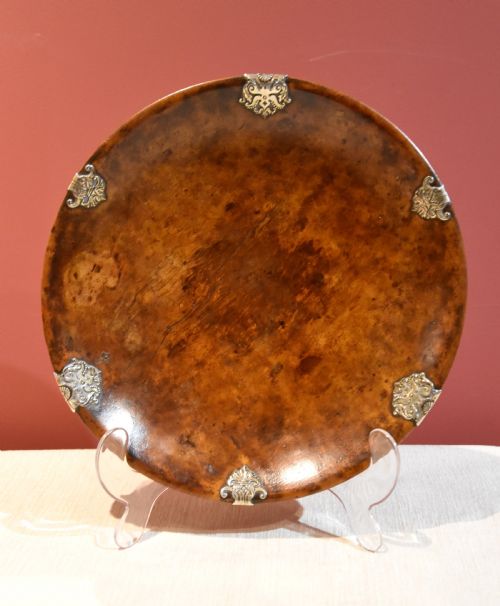
When you search for vintage silver rimmed bowls, you encounter serveware, trinket dishes, baskets, and salad bowls spanning the Victorian and Edwardian eras through to the mid-twentieth century. The selection ranges from cut glass bowls with sterling silver or silver plated rims to oak, stoneware, and ceramic vessels featuring decorative metal mounts.
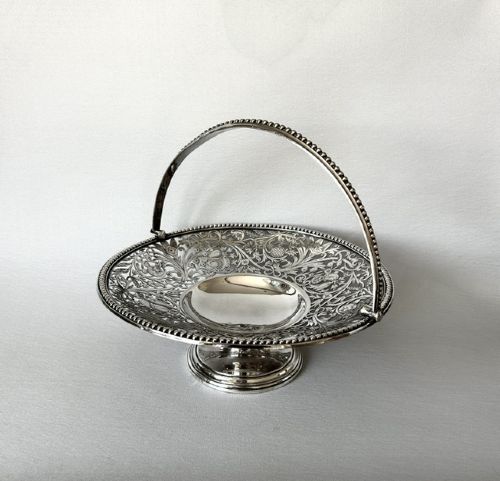
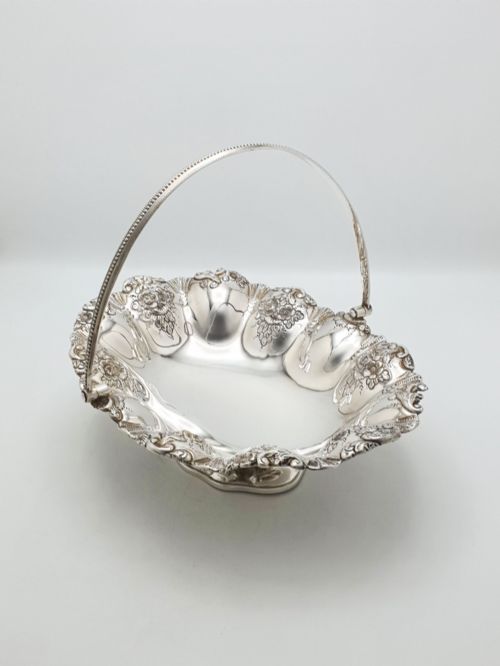
You are most likely to meet Edwardian and Victorian pieces on this page, often exhibiting floral repoussé or pierced work along the edges. Formats extend from small table salts and lidded bowls to large fruit baskets and presentation pieces.
Origins include English workshops alongside Chinese Qing Dynasty items and American silver houses, reflecting diverse global manufacturing traditions of the nineteenth and twentieth centuries.
Materials and construction
Makers combined sterling silver or silver plate with cut crystal, pressed glass, glazed ceramic, stoneware, and burr woods such as oak and maple. Metal rims were secured to glass and ceramic bodies using specialised mounts, often complemented by blue enamel or jade accents.
Silversmiths utilised repoussé techniques to hammer floral and abstract motifs into the metal borders, while pierced work created openwork lattice patterns along basket rims and fruit dishes.
Evaluating craftsmanship and condition
Quality rests in the weight of the silver, the crispness of repoussé detailing, and the clarity of the cut glass or ceramic body. Heavy sterling mounts and deeply incised floral patterns signal superior manufacture compared to thinner plated alternatives.
The integration between the metal rim and the underlying material reveals the maker's skill, with tight, secure seating and unblemished enamel work separating standard domestic wares from exhibition-grade presentation pieces.
Doulton Lambeth·Tiffany And Co·Royal Doulton·Frank Butler·Gorham
The Vintage Silver Rimmed Bowls Glossary
- Repoussé
- A metalworking technique where the artisan hammers designs from the reverse side to form raised patterns on the front. This decorative method defines many Edwardian and Victorian silver rims.
- Silver Plate
- A base metal, such as nickel silver, coated with a thin layer of pure silver. It allowed nineteenth-century makers to produce ornate serveware at a lower cost than solid sterling.
- Sterling Silver
- An alloy consisting of pure silver and other metals, usually copper, standardised for durability. Items bearing this designation contain high silver purity.
- Majolica
- A type of earthenware coated with an opaque tin-lead glaze and brightly painted with enamel colours. Salad bowls from the nineteenth century frequently utilised this ceramic medium.
- Hallmark
- A stamp or series of marks applied to precious metals indicating the maker, standard of purity, and assay office. These stamps authenticate the age and origin of silver components.
Vintage Silver Rimmed Bowls: Frequently Asked Questions
How do I clean tarnished silver rims?
Use a specialised silver polishing cloth and a mild non-abrasive cream to gently buff the metal borders. Avoid getting harsh chemical cleaners onto the glass, wood, or ceramic body of the bowl.
Take care around enamel sections and jade or stone inserts, as aggressive scrubbing can ruin delicate coloured details and weaken the mount.
Can I use these bowls for food?
Solid sterling silver and glazed ceramic bowls are generally safe for serving dry foods or salads, provided the glaze is intact and undamaged. Silver plated items and pieces with delicate enamel work are better suited for display or light decorative use.
Check whether the metal rim is securely fastened to the vessel before filling it with heavy fruits or liquids to prevent separation during serving.
What is the difference between silver plate and sterling?
Sterling silver contains a high percentage of pure silver throughout the entire piece, whereas silver plate consists of a thin coating applied over a base metal core. Hallmarks stamped into the metal usually indicate whether a piece is solid sterling or plated.
Over decades of use, worn silver plate may reveal the darker base metal underneath, while sterling retains its metal composition despite surface tarnish.
How can I date an Edwardian silver rim?
Edwardian pieces typically date from the early twentieth century and often feature floral repoussé work, Garland motifs, or light pierced designs reflecting arts and crafts influences. Assay office hallmarks on the silver rim provide the exact year of manufacture.
Comparing the style of the cut glass or ceramic body with period design catalogues helps confirm the production era of unmarked mounted pieces.