




Vintage Silver Plated Taper Holders
Vintage silver plated taper holders bring formal lighting to a room, drawing on Georgian, Victorian, and Edwardian designs for everyday illumination.
Vintage Silver Plated Taper Holders
Vintage silver plated taper holders encompass candlesticks, chambersticks, and multi-light candelabra designed for dining tables, desks, and mantelpieces. These items span the late eighteenth century through the Art Nouveau and Art Deco periods, though Victorian and Edwardian examples dominate.
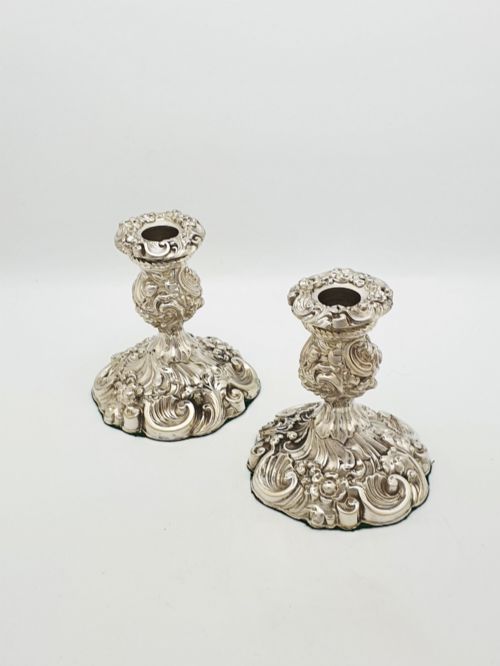
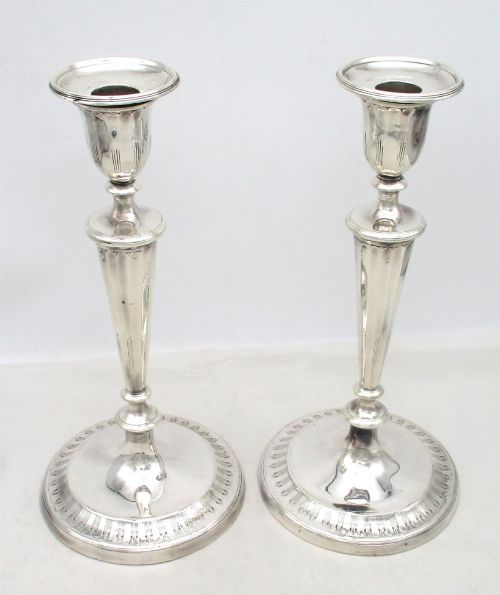
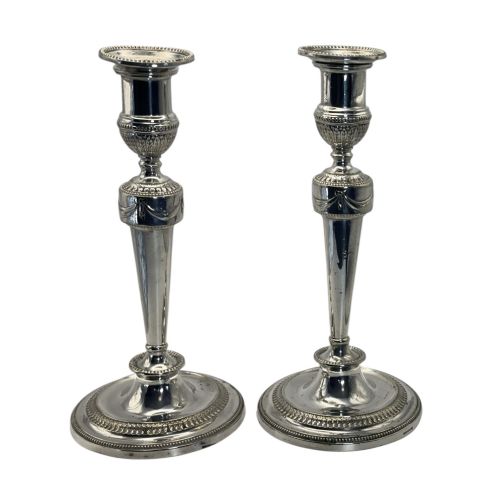
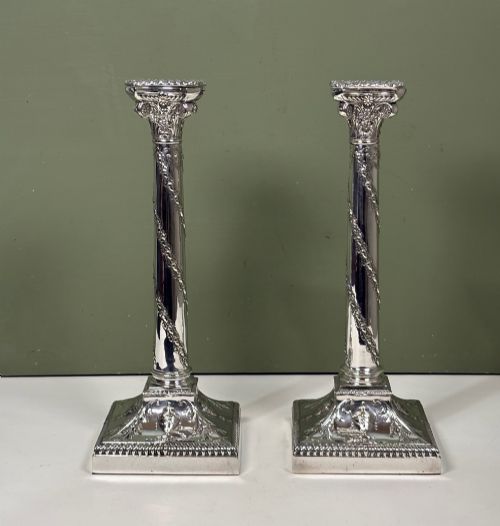
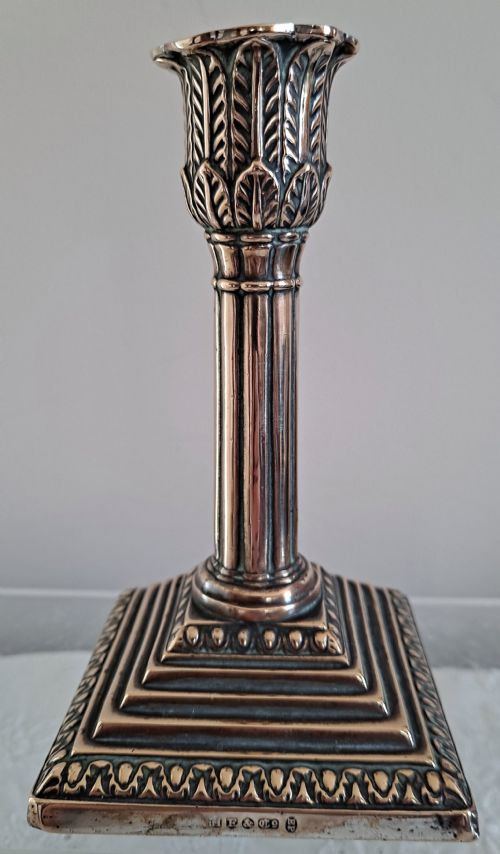
Buyers will encounter pairs most frequently, often featuring classical columns, neoclassical fluting, or ornate rococo scrolls. Forms range from miniature desk pieces and telescopic designs to tall column candlesticks and five-light candelabra suites.
How they were made
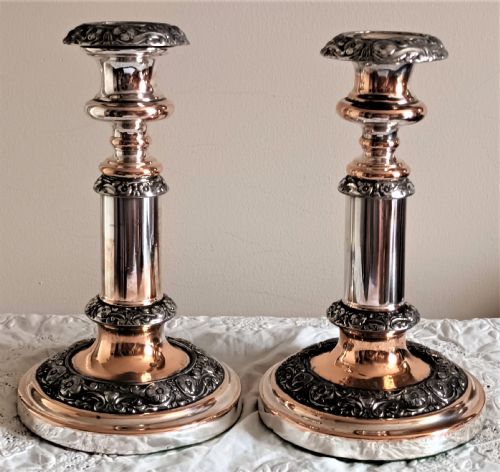
Makers utilised a base metal, copper, or electroplated nickel silver as a foundation before applying a layer of silver plating. Early pieces often employ Old Sheffield Plate, a technique of fusing a thin sheet of silver to a copper core.
Later nineteenth and twentieth century production turned to electroplating, known as EPNS, which allowed manufacturers to coat complex stamped or cast metal forms evenly. Surface decoration was then hand-chased, engraved, or cast in distinct revival styles.
Vintage Silver Plated Taper Holders Retail Price Guide 2026
Typical asking prices for vintage silver plated taper holders among the pieces listed under this phrase on Sellingantiques today, from the lower quarter to the upper quarter. They describe what is for sale here now, not the wider market.
Materials span traditional silver plate and Old Sheffield Plate to copper, base metal, and electroplated nickel silver.
What varies in quality
The standard of these objects rests upon the thickness and durability of the original silver plating over the base metal or copper substrate. Pieces that retain heavy silver coverage without extensive base metal bleed-through represent higher manufacturing inputs.
Design integrity and crispness in cast ornament also dictate value. Cleanly struck Corinthian capitals, sharply defined rococo foliage, and substantial weight signal superior workshop execution compared to lighter, softly cast alternatives.
Mappin & Webb·WMF·John Pound & Co·Elkinton & Co·Barker Ellis
The Vintage Silver Plated Taper Holders Glossary
- Silver Plate
- A thin layer of silver bonded to a base metal core such as copper or nickel silver. This process provided the visual appeal of solid silver at a lower cost.
- Old Sheffield Plate
- An early method of fusing silver to a copper ingot before rolling them into sheets together. The underlying copper often shows subtly at the cut edges or through wear.
- EPNS
- Electroplated Nickel Silver, a common nineteenth and twentieth century manufacturing standard. A silver coating is applied to a nickel alloy base using an electrical current.
- Chamberstick
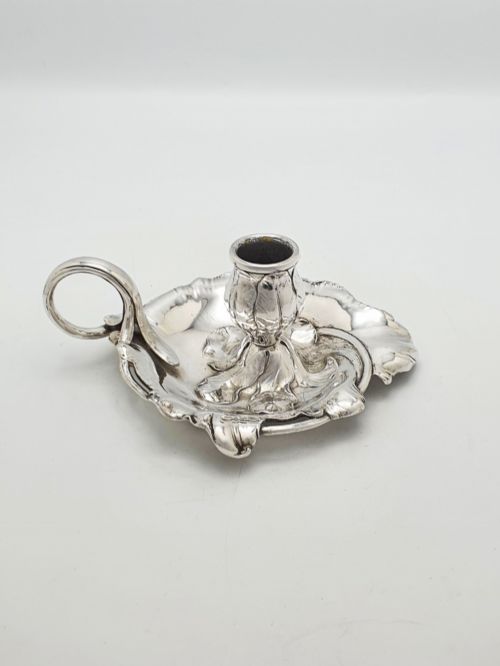
- A low candle holder fitted with a small pan to catch wax drips and a loop handle for carrying from room to room. These frequently include a matching conical snuffer.
- Candelabra
- A branched lighting fixture holding multiple candles on a single central shaft. Examples on record range from three-light to five-light configurations.
Vintage Silver Plated Taper Holders: Frequently Asked Questions
How do I clean silver plated candle holders?
Use a soft cloth and a gentle silver polish formulated for plated items, applying minimal pressure to protect the underlying metal. Avoid abrasive cleaners that can wear through the silver layer.
Rinse the pieces in warm water and dry them thoroughly with a lint-free cloth to maintain their finish without harming the historic surface.
What is Old Sheffield Plate?
Old Sheffield Plate is an early composite material created by fusing a sheet of silver to a thick copper base before shaping the metal.
This technique predates nineteenth-century electroplating and can sometimes be identified by a faint copper line visible where the edges meet.
Are these holders meant for standard candles?
Many older candle holders feature sockets sized for tapers of a different diameter than modern standard candles. Measuring the nozzle aperture helps determine the appropriate candle size.
Using a small paper shim or melting the base of the candle slightly often helps secure an uneven or narrower taper in antique sockets.
How can I tell the period of a piece?
Stylistic clues such as neoclassical columns, Art Nouveau whiplash lines, or Art Deco geometry point toward specific design eras. Maker marks and manufacturing methods also assist in dating.
Electroplated marks typically indicate Victorian or later production, whereas fused copper techniques often point back to Georgian origins.