

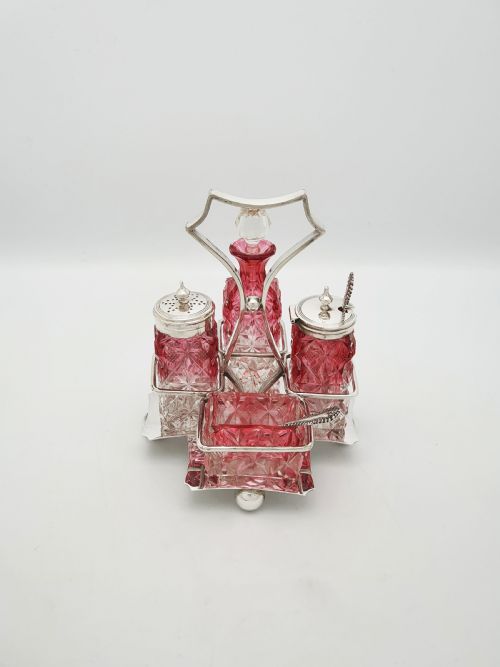


Vintage Silver Plated Cruet
A vintage silver plated cruet brings distinct dining elegance to the table, holding essential condiments within polished frames of silver plate and cut glass.
Vintage Silver Plated Cruet
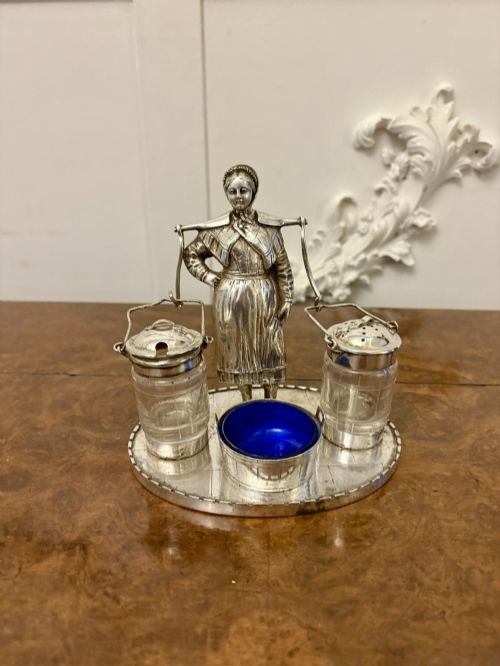
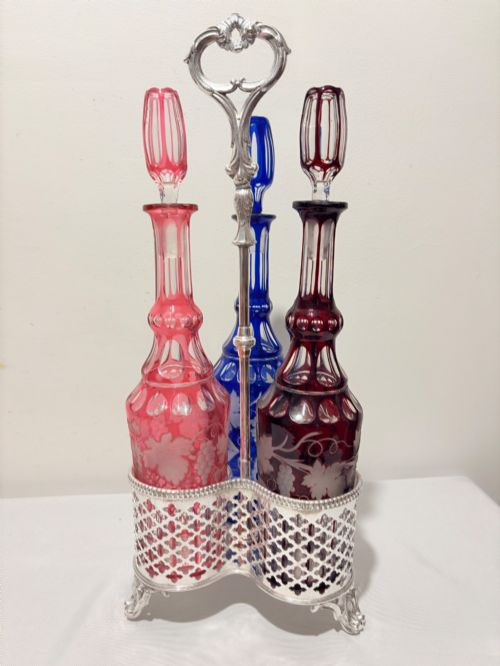
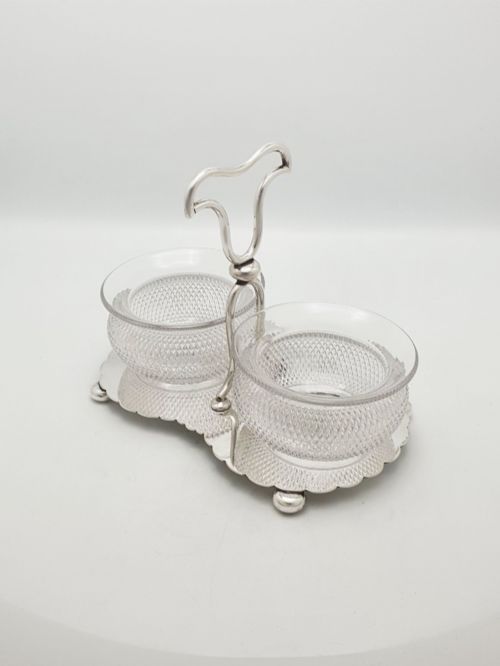
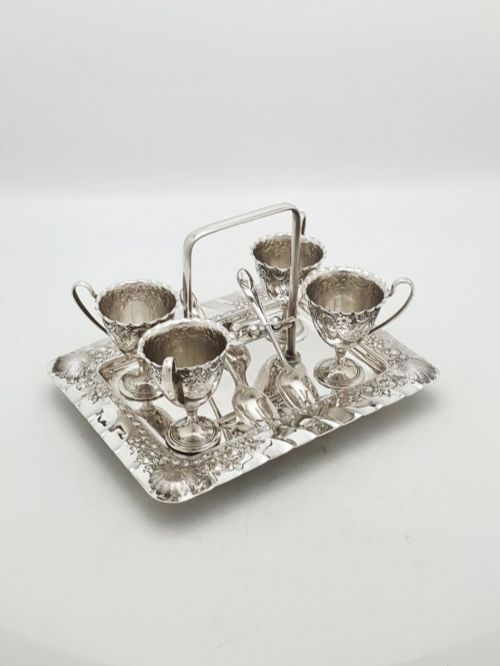
A vintage silver plated cruet encompasses condiment sets, decanter stands, and egg cruet sets spanning the Victorian, Edwardian, and Art Deco periods. These table arrangements organise mustard pots, pepper shakers, and oil bottles within structured metal frameworks.
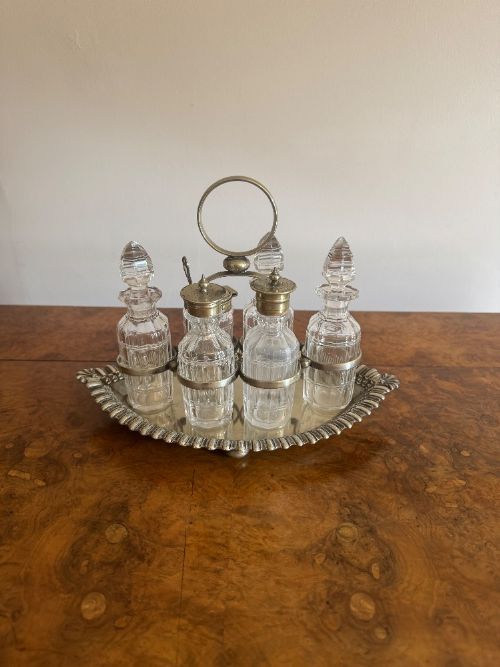
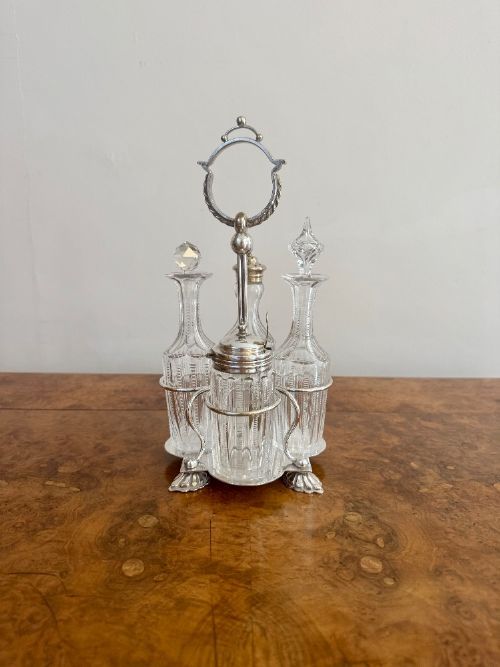
The most common examples on this page date from the Edwardian era and the late nineteenth century, often featuring multiple glass bottles fitted into silver plated stands. Buyers encounter everything from compact four-person egg cruets to large six-bottle and seven-bottle condiment carriers.
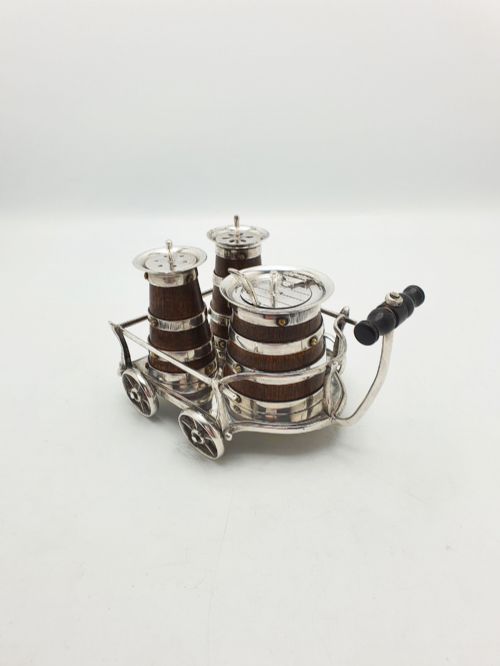
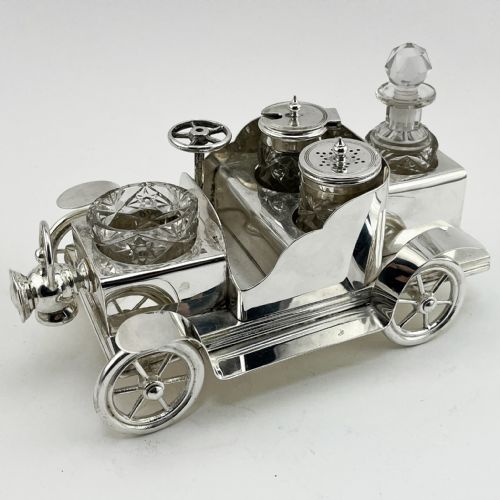
Specialist variations include oak barrel condiments, novelty car or carriage shapes, and cranberry flashed glass inserts. Each piece reflects the formal dining habits of past decades, uniting metalwork with functional glassware.
Evaluating design and execution
Quality rests in the balance between the metal framework and the fitted glass bottles, where matching original glassware elevates a set. Heavier frames with crisp embossing or figural novelty details demonstrate superior craftsmanship compared to simpler production pieces.
The integrity of the silver plating over the underlying metal, alongside the complexity of the stand - such as multi-bottle capacity or oak barrel construction - defines the upper tier of these dining accessories.
Vintage Silver Plated Cruet Retail Price Guide 2026
Typical asking prices for vintage silver plated cruet among the pieces listed under this phrase on Sellingantiques today, from the lower quarter to the upper quarter. They describe what is for sale here now, not the wider market.
Materials span silver plate, electroplated nickel silver, cut glass, cranberry glass, and oak wood.
Walker & Hall·Wade Wingfield Wilkins
The Vintage Silver Plated Cruet Glossary
- Cruet set
- A matched assembly of bottles, jars, or cruets for holding condiments at the dining table. They typically sit within a dedicated metal stand featuring a central carrying handle.
- Electroplated nickel silver
- A common base metal composition coated with a thin layer of silver through an electrolytic process. This method gained widespread use for domestic metalware during the nineteenth century.
- Cranberry glass
- A rich red glass produced by adding gold chloride to the molten batch. It appears frequently in Victorian and Edwardian decorative tablewares.
- Old Sheffield plate
- A composite material made by fusing a sheet of silver to a thicker copper ingot before rolling them together. This precursor to electroplate reveals thin lines of copper along edges.
- Egg cruet
- A specialised dining stand designed to hold boiled eggs alongside individual salt cellars and spoons. They often incorporate small frames with integrated egg cups.
Vintage Silver Plated Cruet: Frequently Asked Questions
What is a vintage silver plated cruet used for?
These sets serve to hold and present condiments such as oil, vinegar, salt, pepper, and mustard during meals. They keep the tabletop organised while offering accessible seasoning for diners.
Historically, larger versions held numerous bottles for complex dining courses, whereas smaller four-person formats suited intimate household meals or breakfast egg service.
How do I clean silver plated cruet stands?
Cleaning requires a soft cloth and a specialised silver polish formulated for plated surfaces to preserve the metallic finish. Vigorous scrubbing should be avoided to prevent wearing through the thin silver layer.
Glass bottles and liners remove easily from the metal frames for separate washing in warm soapy water. Thorough drying prevents moisture spots on both the glass and the metal mounts.
How can I tell the period of a cruet set?
Dating relies on stylistic clues, registration marks, and the specific manufacturing techniques visible on the metal frame. Victorian pieces often display heavy embossing or novelty figural elements, while Edwardian examples favour lighter, refined frames.
The presence of electroplated nickel silver points towards mid-nineteenth century development and later, whereas Old Sheffield plate indicates an earlier manufacturing origin.
Are the glass bottles usually original to the stand?
Many sets retain their original cut glass or coloured glass bottles, which fit precisely into the designated rings of the metal frame. Original bottles share matching design motifs and wear patterns consistent with the stand.
Replacement bottles sometimes appear due to accidental breakage over time, though matching sets remain highly desirable for collectors.