



Vintage Silver Plate Candle Stands
These vintage silver plate candle stands bring dining tables and mantelpieces alive with the warm glow of reflected candlelight.
Vintage Silver Plate Candle Stands
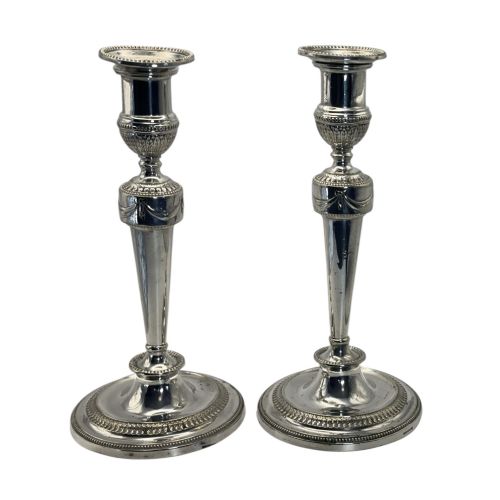
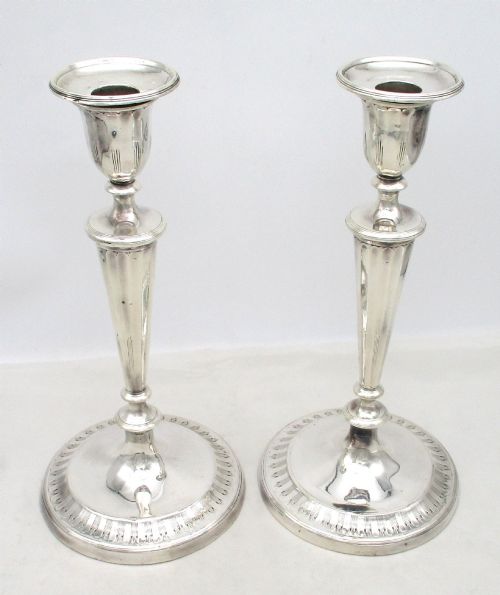
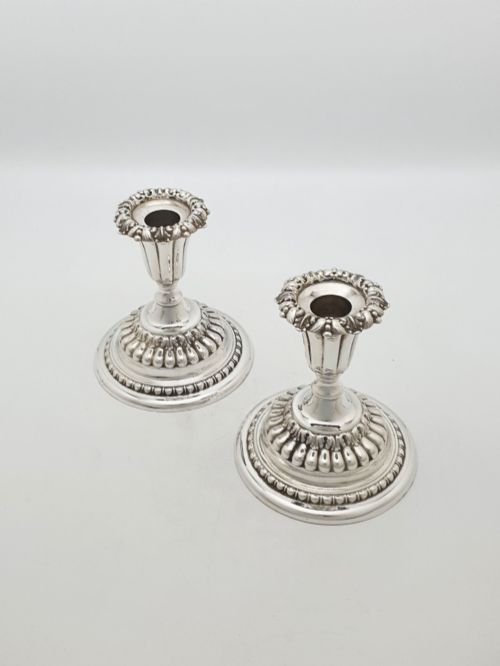
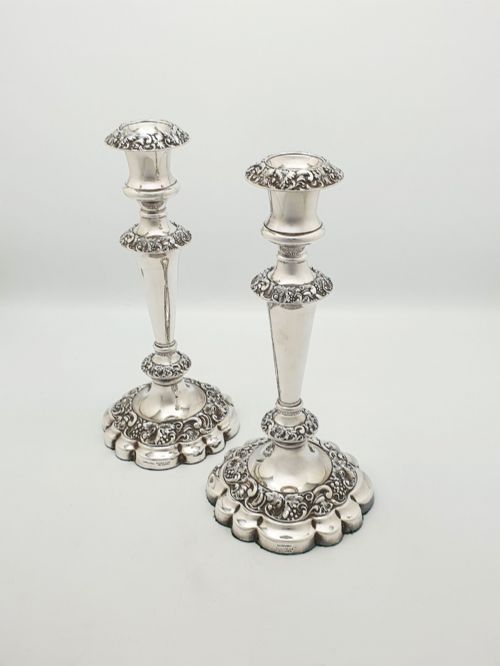
Vintage silver plate candle stands encompass tall column candlesticks, low desk pieces, and multi-light candelabra designed for domestic illumination. Buyers searching this phrase encounter examples originating primarily from the nineteenth and twentieth centuries, spanning periods from late Georgian through Edwardian and Art Deco designs. Most pieces appear in matched pairs, though sets of four and single table items also arise.
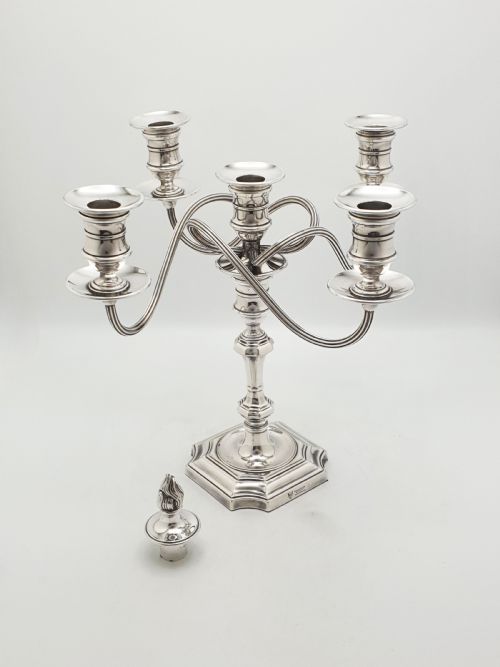
The assortment relies heavily on Victorian and Edwardian manufacturing, alongside Georgian and Neoclassical revivals that imitate earlier forms. Object types range from simple single-socket holders to telescopic columns and branching candelabra incorporating brass, copper, and ruby glass elements. These variations reflect the changing domestic lighting requirements across different decades.
Materials and construction methods
Makers built these pieces upon a base metal core, frequently utilising copper, brass, or nickel silver beneath the exterior plating. Electroplating methods applied a thin coating of silver to the substrate, while older Sheffield plate techniques fused a sheet of silver onto a copper ingot before shaping. This metal combination provided structural rigidity while maintaining the appearance of solid silver.
Designers incorporated weighted bases filled with resin, pitch, or wood to ensure stability when supporting tall candles. Detachable nozzles or drip pans frequently accompanied the main shaft to catch melting wax and protect the plated surface below.
Listings feature silver plate, copper, brass, and nickel silver across Victorian, Edwardian, and Art Deco periods.
Distinctions in standard and execution
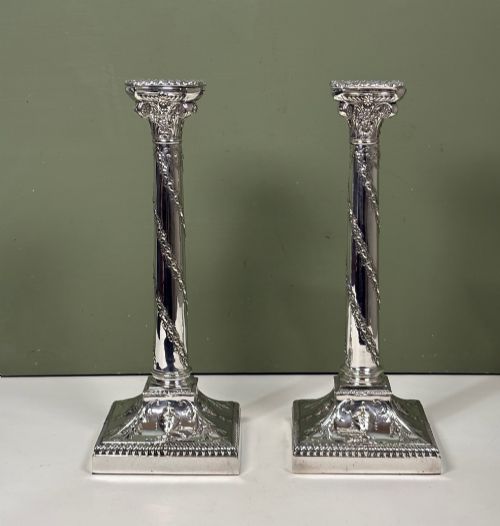
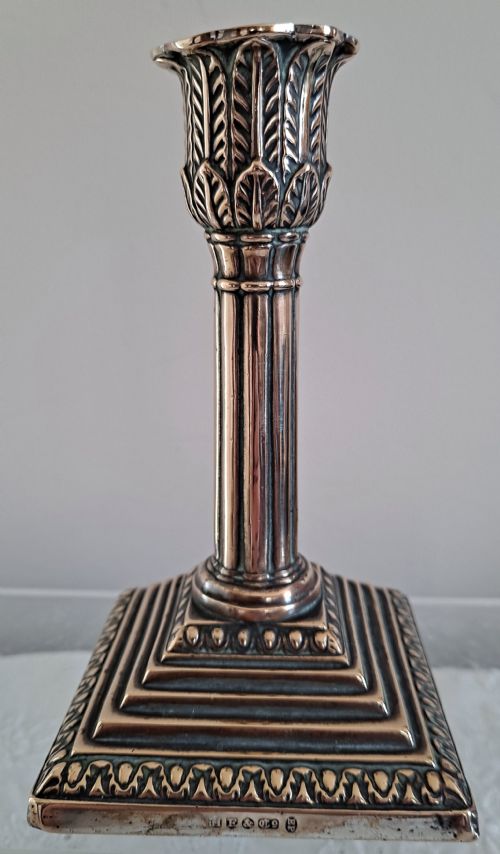
The thickness of the applied silver and the durability of the underlying base metal dictate the longevity of each stand. Better examples exhibit crisp casting to decorative motifs such as Corinthian capitals or Rococo scrolls, whereas mass-produced items often display softened details.
Proportion and structural integrity separate standard utility items from finer workshop output. Telescopic mechanisms move smoothly on superior models, and weighted bases remain firmly sealed without internal rattling.
Mappin & Webb·Smith & Sissons & Co·Elkinton & Co·Barker Ellis·Liberty & Co
The Vintage Silver Plate Candle Stands Glossary
- Old Sheffield Plate
- A composite material made by fusing a thin sheet of silver onto a thicker copper base before rolling. This technique predates nineteenth-century electroplating and often reveals a reddish copper tinting where the silver layer wears thin.
- Electroplated Nickel Silver
- A durable alloy composed of copper, nickel, and zinc that serves as the foundation for chemical silver plating. The acronym EPNS frequently appears stamped near the base.
- Telescopic Candlestick
- A column design featuring an adjustable shaft that alters the height of the candle nozzle. This mechanism relies on inner and outer sliding tubes.
- Corinthian Column
- A classical architectural order featuring an ornate capital decorated with acanthus leaves. Makers frequently adopted this column style for formal dining table candle stands.
Vintage Silver Plate Candle Stands: Frequently Asked Questions
How do I clean silver plate candle stands?
Use a soft cloth and a gentle silver cream formulated to protect plated surfaces from excessive abrasion. Avoid harsh dips that strip the remaining silver layer away from the base metal.
Buff the metal lightly after cleaning to restore the original lustre without pressing too hard on raised decorative borders.
What is the difference between Old Sheffield plate and electroplate?
Old Sheffield plate involves physically fusing a layer of solid silver to a copper block before hammering or rolling it into sheets. This method leaves characteristic copper seams visible along edges and borders.
Electroplate uses an electrical current to bond silver particles onto a nickel or brass base metal substrate, a process introduced during the nineteenth century.
Why do some candle stands feel heavy at the base?
Makers filled the hollow interior of the base with resin, plaster, pitch, or wood to provide necessary stability. This weighting prevents tall or heavy candelabra from tipping over during use.
A green baize or felt covering typically conceals and protects this filling underneath.
How can I tell a Georgian style piece from an original?
Original Georgian items display construction techniques and weight distribution characteristic of eighteenth-century workshops, alongside characteristic hallmarks or maker marks. Revivals from the Victorian or Edwardian eras copy earlier aesthetic forms but utilise nineteenth-century manufacturing methods.
Examining the base lining and plating wear helps determine the actual period of manufacture.