
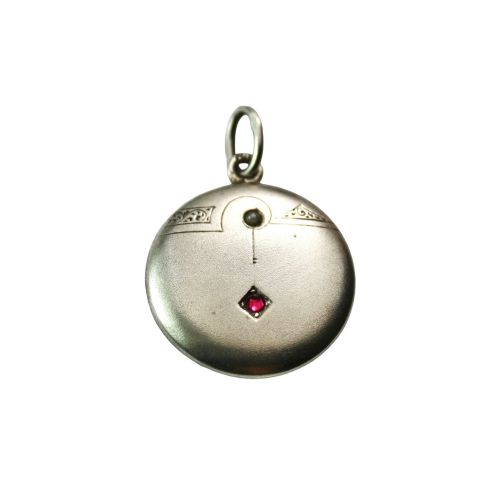


Vintage Silver Pearl Necklace
A vintage silver pearl necklace brings together lustrous pearls and gleaming silver settings across periods from Victorian to mid-century design.
Vintage Silver Pearl Necklace
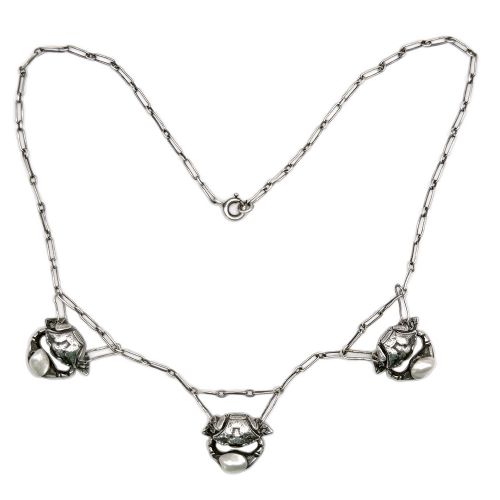
A vintage silver pearl necklace spans several distinct eras, bringing together silver work and pearls in forms ranging from delicate multi-strand necklaces to dramatic pendants. When searching for this phrase, buyers encounter pieces from the Victorian and Edwardian periods alongside Art Nouveau, Arts and Crafts, Art Deco, and mid-century designs. The pieces recorded here include simple single strands with decorative silver clasps, complex drop chain necklaces, and elaborate pendants incorporating pearls alongside other stones.
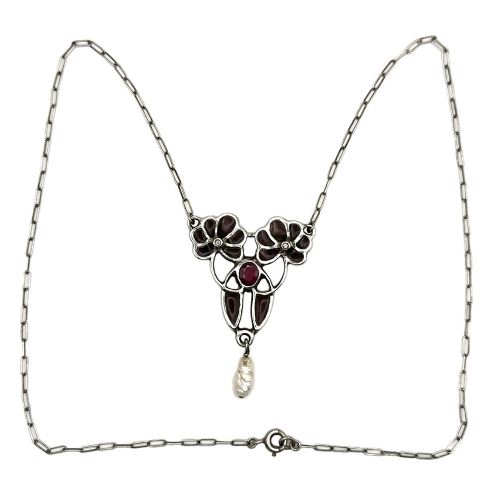
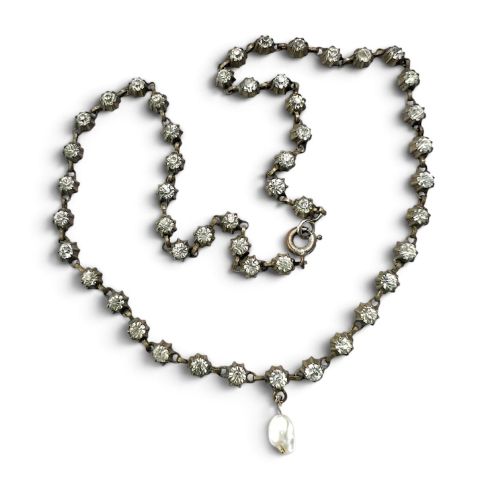
The materials paired with pearls in these pieces reflect the aesthetic priorities of their makers. Alongside silver and standard pearls, one finds cultured pearls, seed pearls, and blister pearls accompanied by enamel, paste, diamonds, amethysts, turquoise, opals, and rock crystal. Forms vary from straightforward bead necklaces to intricate filigree lockets and plique-a-jour enamel settings that showcase the metalwork alongside the pearls.
Materials and construction
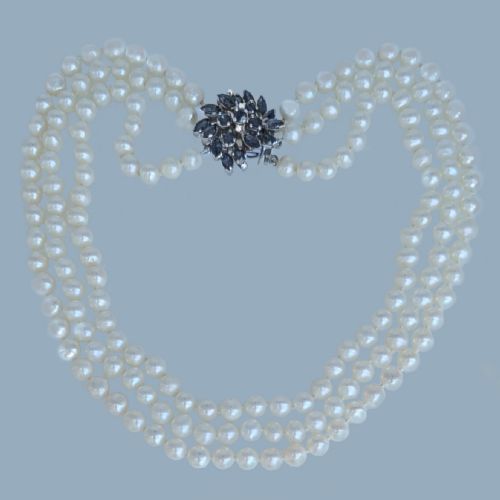
Makers set pearls into silver mounts, using filigree wirework, cast settings, and hand-finished clasps to secure the gems. In multi-strand examples, strands of cultured or freshwater pearls attach to intricate silver clasps set with marcasite, paste, diamonds, or sapphires.
Art Nouveau and Arts and Crafts pieces often incorporate plique-a-jour enamel and silver gilt, suspending pearl drops from botanical or geometric frames. Stones such as amethyst, moonstone, opal, and turquoise join pearls within these silver frameworks, demonstrating a mastery of colour and metal manipulation.
A swallow bird design flutters in silver and pearls, proving that vintage makers loved a winged clasp just as much as we do.
Distinguishing quality in design and execution
Quality reveals itself in the harmony of the design and the precision of the silver work. Pieces originating from notable workshops demonstrate superior metal manipulation, whether through delicate filigree, complex plique-a-jour enamel, or well-executed gemstone settings that complement the lustre of the pearls.
The integration of the clasp or suspension loop with the main body of the necklace also dictates the calibre of a piece. Fine examples feature custom-designed silver clasps adorned with pavé-set diamonds, sapphires, or detailed floral motifs, whereas simpler items rely on functional commercial findings.
Archibald Knox·Liberty and Co·Murrle Bennett·Knoll and Pregizer·Heinrich Levinger·Eduard Loss·Meyle and Meyer·Theodor Fahrner
The Vintage Silver Pearl Necklace Glossary
- Cultured pearl
- A pearl formed with human assistance by inserting a nucleus into an oyster or mollusc. These cultured specimens appear frequently in twentieth-century strands and pendants.
- Seed pearl
- A very small natural or cultured pearl, often pierced and threaded or used in clusters. Victorian and Edwardian jewellers utilised seed pearls to create delicate floral and geometric patterns.
- Paste
- Hand-cut and polished lead glass used to imitate gemstones in antique and vintage jewellery. High-grade paste stones sit alongside pearls in Victorian and Art Deco pieces.
- Blister pearl
- A pearl that has grown attached to the inside shell of an oyster rather than within the tissue. Arts and Crafts jewellers favoured their irregular, organic shapes in silver pendants.
Vintage Silver Pearl Necklace: Frequently Asked Questions
How do I date a silver pearl necklace?
Dating relies on stylistic clues and construction methods rather than hallmarks alone. Art Nouveau and Arts and Crafts pieces from the early twentieth century feature organic motifs and enamel, while mid-century designs often showcase geometric clasps.
The type of pearls also helps establish an era. Natural and seed pearls dominate earlier Victorian and Edwardian pieces, whereas cultured and freshwater varieties become standard in mid-century examples.
What is the difference between cultured and natural pearls?
Natural pearls form entirely without human intervention inside wild molluscs, making them exceptionally scarce in antique jewellery. Cultured pearls are grown by introducing a nucleus into the oyster.
Most vintage strands utilise cultured pearls, which offer a uniform appearance while retaining the warm lustre characteristic of genuine pearl material.
How should I clean a silver pearl necklace?
Pearls are organic gems that require gentle care to avoid damage from harsh chemicals, perfumes, or ultrasonic cleaners. Wipe them softly with a damp cloth after wearing and store them flat to prevent stretching the silk thread.
Silver components can be polished with a specialised jewellery cloth, taking care to avoid direct contact between metal polish and the pearls themselves.
Are these necklaces suitable for daily wear?
Vintage silver pearl necklaces can be worn regularly provided they receive appropriate care. Single or multi-strand pearl necklaces benefit from periodic restringing to ensure the thread remains secure.
Pendant designs with delicate elements like plique-a-jour enamel or delicate stone settings require more cautious wear to prevent impact damage.