



Vintage Silver Magnifier
These vintage silver magnifier pieces offer practical desktop utility combined with refined period design.
Vintage Silver Magnifier
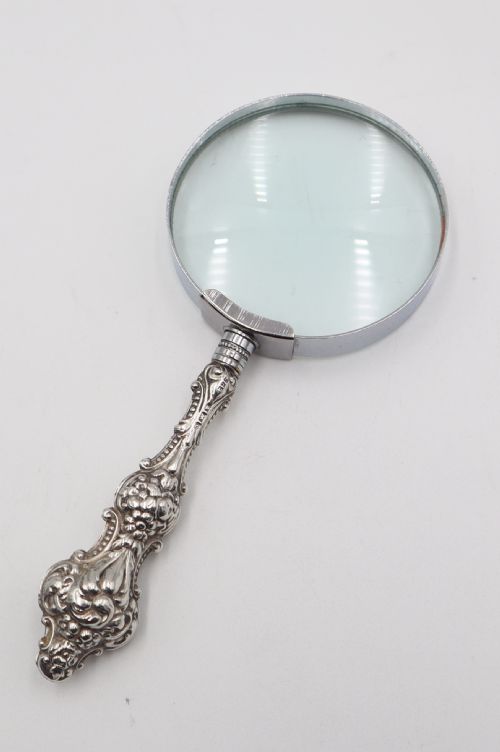
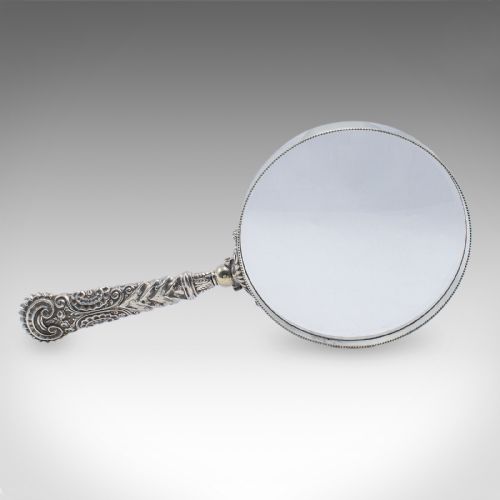
A vintage silver magnifier brings functional optical aid together with decorative craftsmanship for the desk, library or pocket. When searching for a vintage silver magnifier, buyers encounter library aids, map readers and smaller handheld items.
The selection ranges from Victorian library pieces to Art Deco designs from the 1920s and 1930s, alongside mid-century examples. English makers predominate in the available pieces.
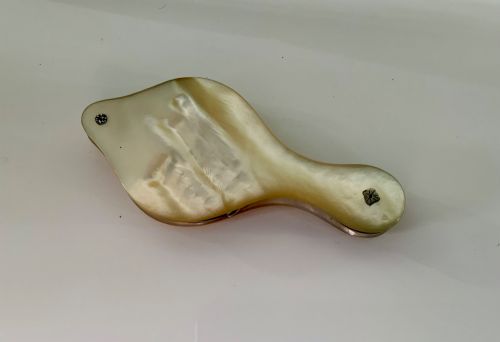
Forms vary from standard reading glasses to specialised items such as fly fishing thumb magnifiers and equestrian themed pieces. Handles combine sterling silver or silver plate with materials like shagreen and leatherette.
How they were made
Metals such as sterling silver and silver plate form the structural handles and mounts, often paired with brass or guilloche enamel detailing. Birmingham assay marks frequently appear on the silver components.
Textured coverings like shagreen and leatherette wrap the handles of specific Art Deco pieces, providing grip and visual contrast. Glass lenses are secured within metal rims.
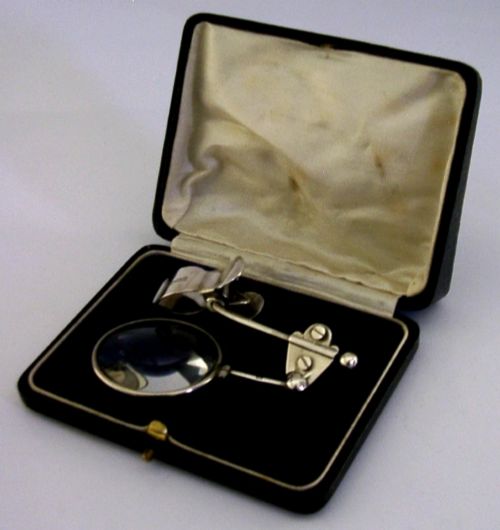
Presentation and storage involve interior linings of velvet and silk found within fitted cases for certain pocket or desk instruments.
Vintage Silver Magnifier Retail Price Guide 2026
Typical asking prices for vintage silver magnifier among the pieces listed under this phrase on Sellingantiques today, from the lower quarter to the upper quarter. They describe what is for sale here now, not the wider market.
Listings feature sterling silver, silver plate, glass, shagreen, and velvet across periods from the Victorian era to the mid-twentieth century.
What varies in quality
Quality differences stem from the fineness of metalwork and the integration of specialist decorative elements like guilloche enamel or exotic materials such as shagreen. Superior examples showcase distinct maker attributions from notable houses.
The clarity of the glass lens and the structural integrity of the handle mounting dictate the overall standard of each piece. Finer items balance optical utility with balanced weight and proportion.
Hermes, Paris·Broadway and Co·Mappin and Webb·Asprey
The Vintage Silver Magnifier Glossary
- Sterling silver
- A silver alloy containing 92.5 percent pure silver by mass, widely used in British silversmithing for desk accessories. It bears hallmarks indicating the assay office and year.
- Silver plate
- A layer of silver applied to a base metal core, offering the appearance of solid silver at a different cost level. Many Victorian and twentieth-century utility items utilise this technique.
- Shagreen
- Undyed sharkskin or rayskin with a pebbled texture, utilised by luxury makers during the Art Deco period for handle coverings. It provides a tactile surface for handheld objects.
- Guilloche enamel
- A decorative technique where intricate geometric patterns are engraved beneath translucent enamel, seen on mid-period pieces. Birmingham makers frequently applied this to small accessories.
- Hallmark
- A series of official marks stamped on precious metals in Britain to indicate standard of purity, maker and assay town. These marks help date items accurately.
Vintage Silver Magnifier: Frequently Asked Questions
What periods do these magnifiers cover?
The available pieces span from the Victorian era through Edwardian times and the Interwar Period into the mid-twentieth century. Art Deco designs from the 1920s and 1930s are particularly well represented.
Earlier Victorian examples generally emphasise traditional library use, while later twentieth-century pieces incorporate diverse materials and specialised forms.
How do I care for silver and glass?
Silver components benefit from gentle cleaning with a specialist polishing cloth to maintain the finish without removing delicate hallmarks or enamel work. Glass lenses require simple glass cleaner applied with a soft cloth.
Care should be taken to avoid exposing shagreen or leatherette handle coverings to excessive moisture during the cleaning process.
Were these items meant for desks?
Many pieces function as desk accessories and library aids designed for reading small print, maps or detailed documents. Others serve as portable pocket items or specialised tools such as thumb magnifiers.
Their dual role as functional optics and decorative objects made them popular gifts and executive accessories throughout the twentieth century.
What materials accompany the silver?
Makers combined sterling silver and silver plate with glass, brass, and textured organic materials like shagreen. Velvet and silk frequently line the storage cases associated with these items.
Enamel decoration in guilloche patterns also appears on specific Art Deco pieces from Birmingham makers.