







Vintage Silver Kettle
A vintage silver kettle brings warmth and theatre to the tea table, combining period craftsmanship with practical elegance.
Vintage Silver Kettle
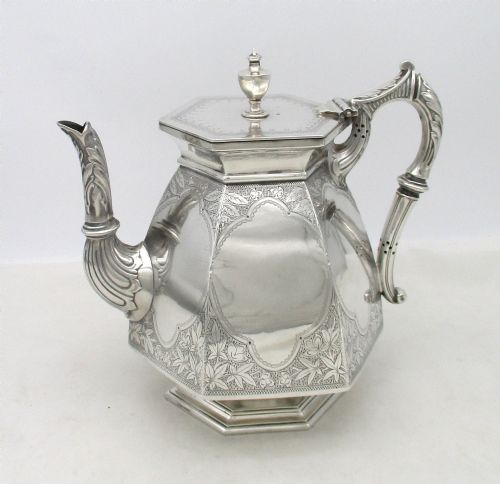
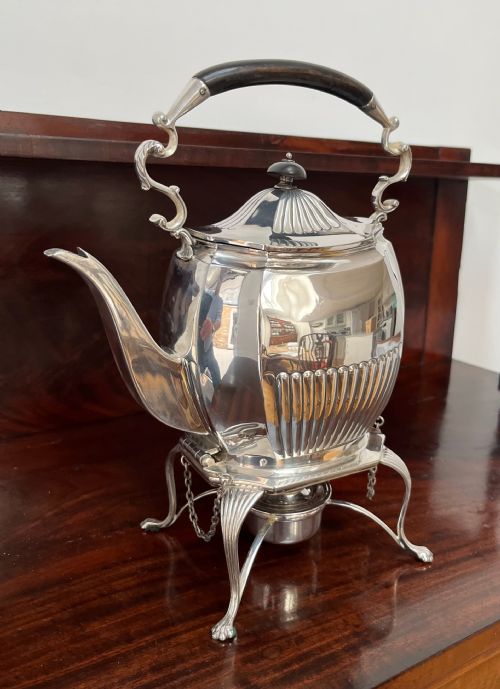
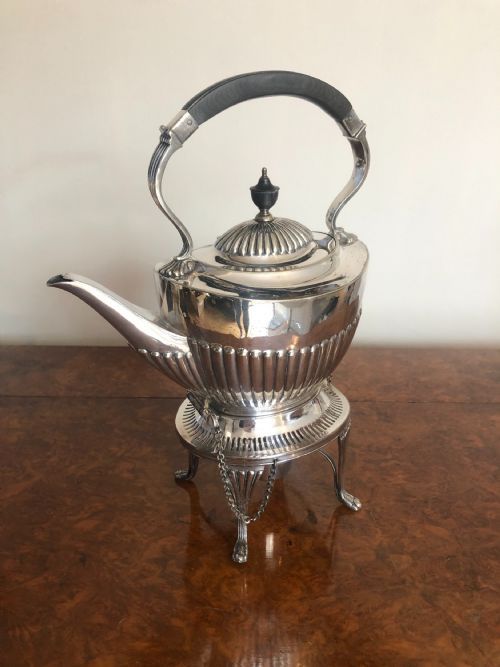
When you search for vintage silver kettle, you are looking at hollowware designed to heat and pour water, frequently mounted on dedicated metal stands with spirit burners.
The selections here span from the mid-nineteenth century through the Edwardian era and mid-century, encompassing Victorian, Aesthetic Movement, and Georgian Revival styles.
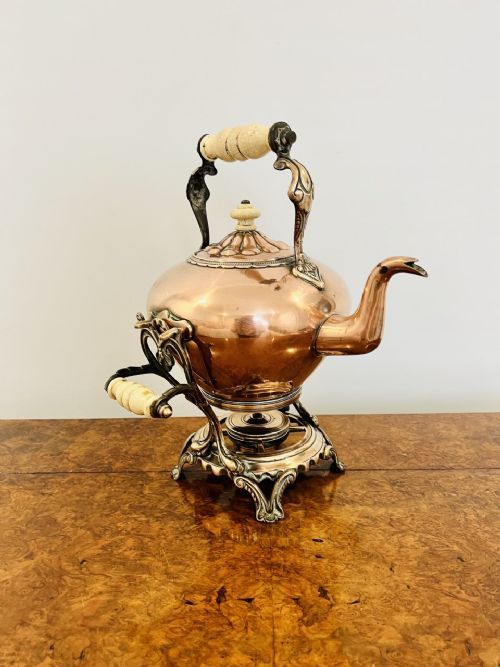
Spirit kettles, tea urns, and teapots dominate the offerings, often rendered in silver plate or electroplated nickel silver alongside related metals like copper.
How they were made
The pieces rely heavily on silver plating over nickel silver or standard metal bases, frequently utilising electroplated techniques developed to mirror solid silver.
Handles and insulators incorporate contrasting materials such as ebony, wood, and bone to protect hands from heat during use.
Stands and burners require precise metalwork, integrating hinged handles, spouts, and taps in Victorian and Edwardian examples.
Vintage Silver Kettle Retail Price Guide 2026
Typical asking prices for vintage silver kettle among the pieces listed under this phrase on Sellingantiques today, from the lower quarter to the upper quarter. They describe what is for sale here now, not the wider market.
Materials documented across the inventory include silver plate, electroplated nickel silver, copper, ebony, bone, and stainless steel.
What varies in quality
Quality rests in the crispness of decorative chasing, the weight of the metal, and the structural integrity of stands, burners, and handles.
Makers such as Walker & Hall demonstrate superior execution in Sheffield plate and tea urn construction, separating standard production from finer workshop output.
The survival of original matching components - including the burner, stand, and insulating handle inserts - determines the integrity of the piece.
Walker & Hall
The Vintage Silver Kettle Glossary
- Spirit kettle
- A water kettle mounted on a metal stand with an under-mounted spirit burner to keep the water hot at the table.
- Silver plate
- A thin layer of silver bonded to a base metal such as nickel silver or copper, offering the appearance of solid silver.
- Electroplated nickel silver
- A durable alloy base coated with silver using an electrical current, widely utilised from the nineteenth century onwards.
- Aesthetic Movement
- A late nineteenth-century style focusing on visual beauty rather than narrative meaning, seen in decorative metalwork.
- Tea urn
- A large vessel fitted with a tap for dispensing hot water, operating on a similar principle to a samovar.
Vintage Silver Kettle: Frequently Asked Questions
What is a spirit kettle used for?
A spirit kettle was designed to keep water hot at the tea table using a small under-mounted burner filled with methylated spirit.
This allowed hosts to top up the teapot without leaving the room, adding a touch of Victorian and Edwardian theatre to social gatherings.
How can I date my kettle?
Dating relies on stylistic clues, proportions, and any maker marks stamped onto the base of the vessel or stand.
Victorian and Edwardian pieces often display specific aesthetic traits, such as Aesthetic Movement engraving or Georgian Revival proportions.
Are these kettles safe to boil water in?
Most antique spirit kettles and tea urns are collected for display and historical appreciation rather than daily kitchen use.
Using the original spirit burner requires caution, and modern users often check the interior lining and taps for operational integrity before attempting to heat water.