
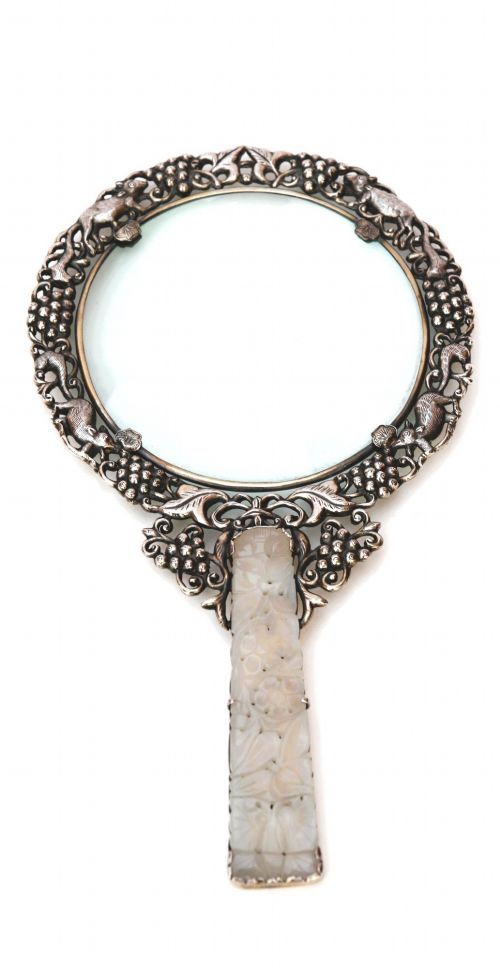


Vintage Silver Hand Glass
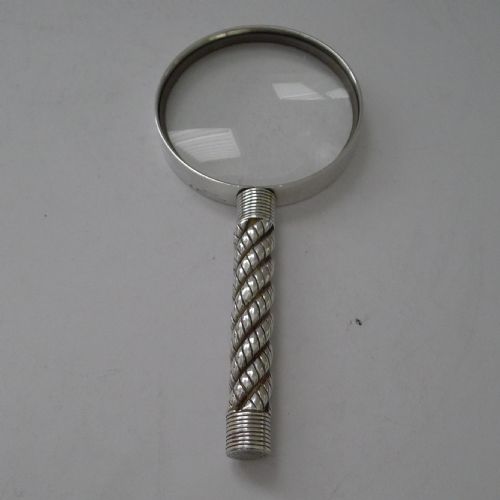
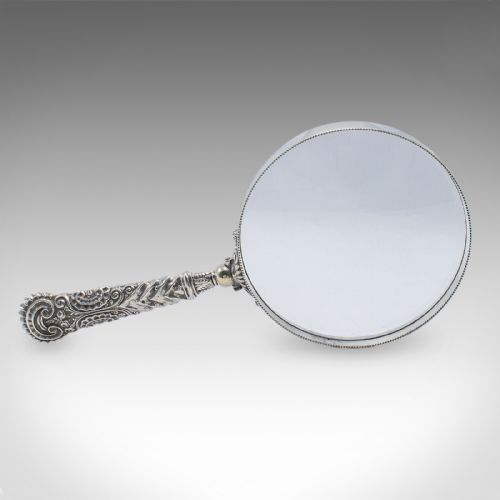
A vintage silver hand glass combines a practical optic with precious metal, offering a tactile reading aid designed for desk or library use.
Vintage Silver Hand Glass
When you search for a vintage silver hand glass, you are looking at portable magnifying glasses featuring silver, silver plate, or sterling mounts alongside glass lenses. The examples you meet on this page span the Victorian era, the Edwardian period, and the Art Deco years of the 1920s and 1930s.
These pieces primarily function as desk accessories and library aids, often created by makers in Birmingham and London. While some pieces pair plain silver with hand-blown glass, others incorporate coloured enamel, shagreen, or jade into the handle design.
The forms range from small pocket magnifiers to substantial reading glasses intended for desks and dressing tables. They reflect the stylistic shifts of their periods, moving from ornate Victorian and Gothic Revival styles to clean-lined Art Deco geometry.
Materials and construction
The handles are fashioned from sterling silver, silver plate, or silver gilt, frequently decorated with guilloche enamel, shagreen, or carved jade. Metalsmiths stamped hallmarks onto the silver components to indicate the assay office, maker, and year of production.
The optics utilise glass and crystal lenses, sometimes hand-cut or hand-blown, held securely within metal bezels. Artisans joined the handle to the frame using pins or threaded screws to ensure the lens remained stable during daily use.
Quality variations
The distinction between standard and superior pieces rests on the weight of the silver and the clarity of the lens. Heavy gauge silver handles and flawless crystal lenses indicate a higher grade of production than lightweight plated alternatives.
Detailing such as hand-applied guilloche enamel, shagreen wrapping, or signed maker marks elevates a piece above standard utilitarian examples. The precision of the joinery between handle and frame further marks the skill of the original maker.
Broadway & Co·P H Vogel & Co·Garrard & Co·Archibald Knox for Liberty
The Vintage Silver Hand Glass Glossary
- Guilloche enamel
- A decorative technique involving precise mechanical engraving beneath translucent enamel layers. It creates repeating geometric patterns that catch the light.
- Silver plate
- A base metal coated with a thin layer of silver through electroplating or older fusion methods. It offers the appearance of solid silver at a lower weight and cost.
- Sterling silver
- An alloy consisting of silver and other metals, standardised at a purity of nine hundred and twenty-five parts per thousand. It provides durability alongside a bright metallic lustre.
- Hallmark
- A series of official marks stamped onto precious metal items to guarantee purity and origin. These marks identify the maker, assay office, and year of testing.
- Shagreen
- Undressed sharkskin or stingray skin with a characteristically rough, granulated texture. Craftsmen dyed and polished this material for luxury decorative surfaces.
Vintage Silver Hand Glass: Frequently Asked Questions
What is a vintage silver hand glass?
A vintage silver hand glass is a portable magnifying lens set into a silver or silver-plated handle, designed for reading text or examining fine details.
These objects served as functional items on desks and dressing tables throughout the Victorian, Edwardian, and Art Deco periods.
How do I date a silver hand glass?
You can date these items by examining the hallmarks stamped onto the silver mount, which indicate the assay office and the year of manufacture.
Stylistic elements such as guilloche enamel colours, geometric Art Deco frames, or ornate Victorian scrollwork also point to specific decades.
Are the handles solid silver?
Some handles are made from solid sterling silver, while others consist of silver plate over a base metal core.
Hallmarks on the metal will confirm whether the piece is solid sterling or plated.
How should I clean a silver hand glass?
Clean the silver components gently with a specialised microfibre polishing cloth to remove tarnish without disturbing any enamel or shagreen.
Keep moisture away from the rim where the lens meets the metal frame to prevent liquid from seeping behind the glass.