



Vintage Silver Castors
These vintage silver castors and associated cruet sets bring practical table elegance, offering the refined gleam that dining rooms require.
Vintage Silver Castors
Buyers seeking vintage silver castors frequently encounter related dining pieces including sterling silver sugar shakers, silver plated cruet sets, and novelty pepperettes. These items emerge from various periods, predominantly spanning the Victorian and Edwardian eras.
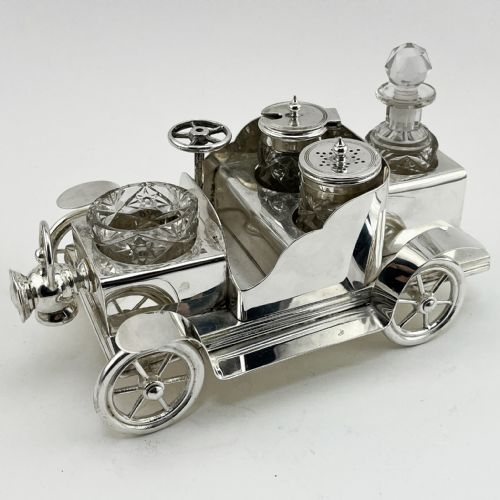
The assortment on this page includes multi-bottle cruet frames alongside standalone shakers and novelty animal pieces. Most examples combine metalwork with glass components, such as cut glass bottles or cranberry preserve dishes.
Originating mostly from the late nineteenth and early twentieth centuries, these table items reflect the formal dining habits of past decades. They appear in styles ranging from standard Victorian tableware to novelty carriage designs.
How they were made
Craftsmen utilised sterling silver and silver plate over base metals to construct the frames and shaker bodies, often incorporating cut glass for the condiment bottles. Some domestic items also integrated oak and iron or featured delicate textile elements like silk and velvet.
Manufacturing techniques involved traditional silversmithing alongside glass cutting and plating processes. Metal mounts and hinged fittings required precise hand assembly to ensure secure containment for sugar, pepper, and condiments.
Listings feature items from the Victorian and Edwardian periods, utilising silver plate, sterling silver, cut glass, and oak.
What varies in quality
Quality differences stem from the weight of the silver or the thickness of the plating, alongside the clarity and cut of the associated glass bottles. Pieces that retain their original matched sets of bottles display higher cohesion than assembled groups.
Fine detailing in novelty forms, such as the casting of animal pepperettes or carriage frames, separates standard utilitarian pieces from superior decorative examples. The crispness of hallmarks on sterling silver items also indicates the standard of production.
Bricks & Sons
The Vintage Silver Castors Glossary
- Cruet set
- A matched collection of condiment bottles or shakers held within a fitted frame. These typically house oil, vinegar, mustard, and pepper for the dining table.
- Castor
- A small perforated container used for sprinkling sugar or fine spices over food. Sterling silver versions often feature pierced lids.
- Silver plate
- A thin layer of silver fused to a base metal substrate. This technique provided an accessible alternative to solid sterling silver for domestic tableware.
- Pepperette
- A small vessel designed specifically for dispensing ground pepper. Novelty examples often take the form of animals or figures.
Vintage Silver Castors: Frequently Asked Questions
What is a vintage silver castor used for?
These vessels were designed to hold and dispense sugar or fine spices at the dining table. Their perforated tops allowed for an even dusting over food.
Over time, many of these pieces transitioned from functional dining implements into decorative table ornaments collected for their craftsmanship.
How do I clean silver plate castors?
Maintenance requires a soft cloth and a specialised silver cleaner formulated for plated items. Harsh abrasives must be avoided to prevent wearing away the thin silver layer.
Glass components can be removed and washed in warm soapy water separately from the metal frames to protect both materials.
Are cruet sets and castors the same thing?
A castor is a single container for sugar or pepper, whereas a cruet set typically comprises multiple bottles and shakers held within a shared metal frame.
Many multi-bottle cruet sets include at least one mustard pot or pepper castor alongside oil and vinegar cruets.
How can I tell the period of a silver castor?
Stylistic details such as Victorian ornamentation or Edwardian proportions offer initial clues to a piece's age. Hallmarks stamped onto sterling silver shakers provide definitive assay office and date letter information.
Unmarked silver plated items rely more heavily on manufacturing style, glass type, and overall construction methods for dating.