

Vintage Silver Band
A vintage silver band encompasses diverse forms from ring bands to napkin rings, sought after for period craftsmanship and enduring metallic lustre.
Vintage Silver Band
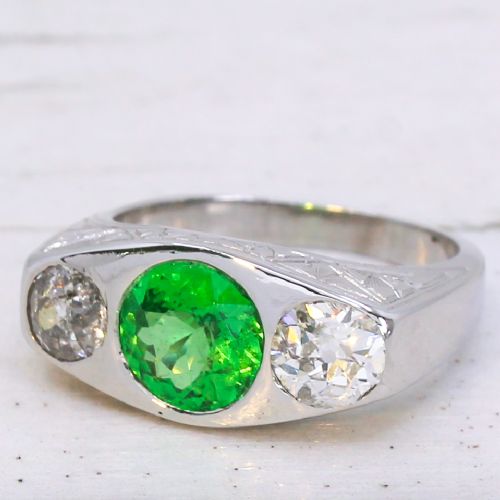
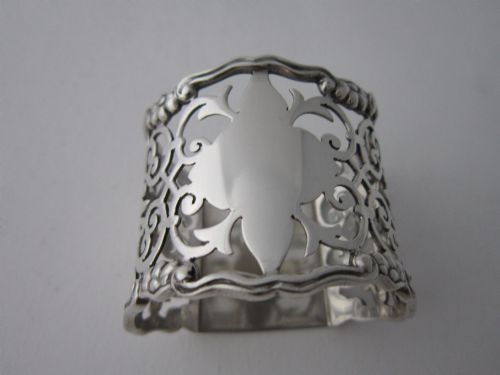
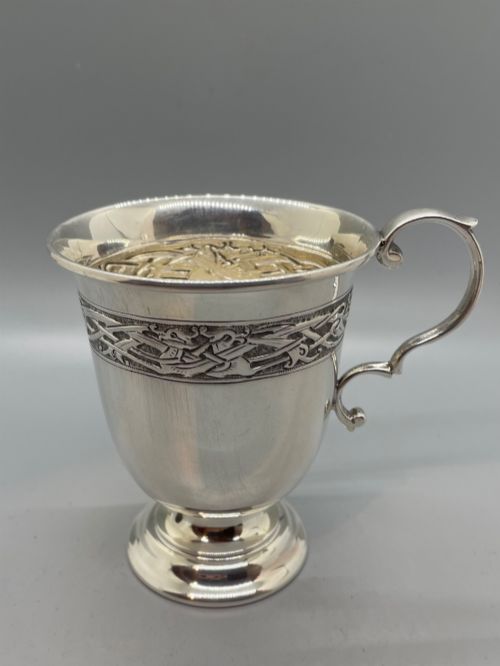
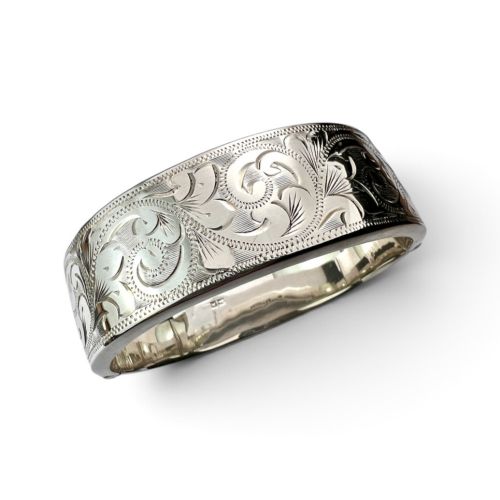
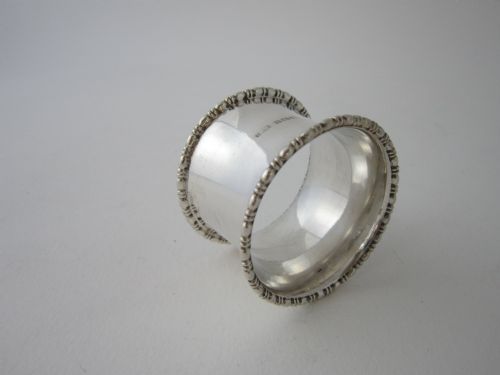
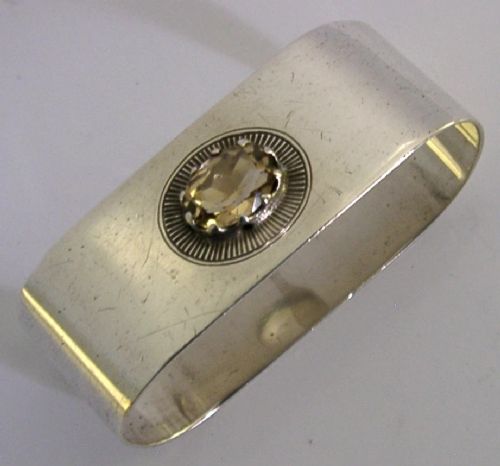
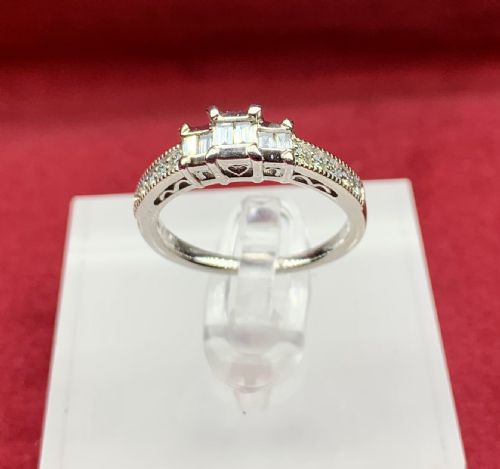
A vintage silver band covers several distinct object types, ranging from finger rings such as platinum wedding bands and eternity rings to functional tableware including napkin rings. Pieces span multiple eras from the Victorian period through Edwardian, Art Deco, and mid-century designs, reflecting shifting aesthetic movements over decades of metalwork production.
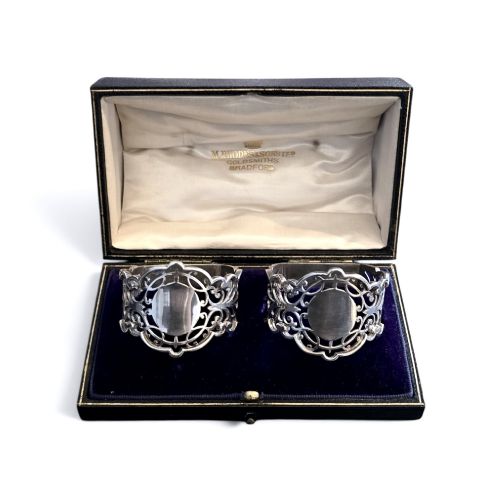
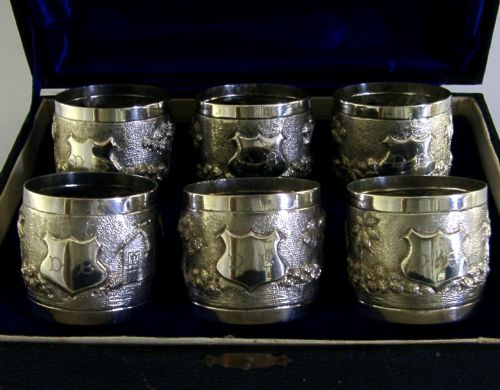
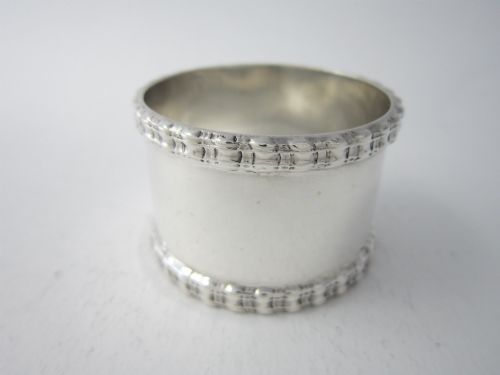
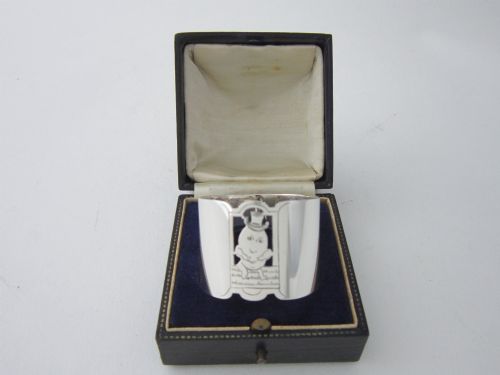
Napkin rings in sterling silver and silver plate frequently appear on this page, often found within original presentation cases either individually or in matched sets of six. Ring bands for personal wear also emerge regularly, incorporating gemstones like diamonds, moonstones, citrines, and coral set into platinum, gold, or sterling silver.
How They Were Made
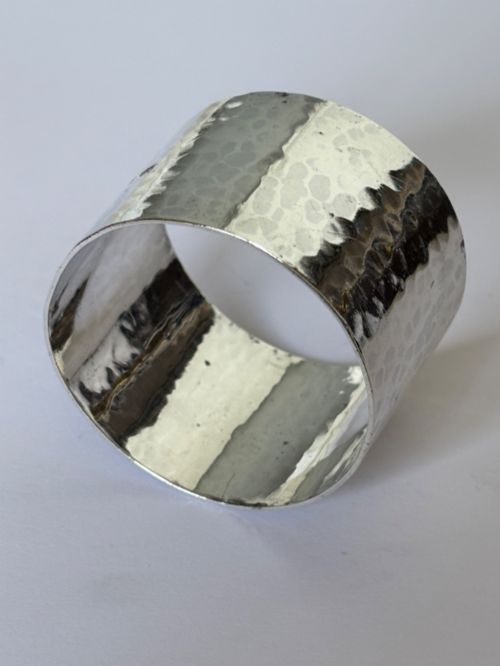
Makers utilised sterling silver, silver plate, and platinum as primary metals, frequently pairing them with gemstones, enamel, or organic materials like oak, leatherette, and silk. Construction methods combined hand-hammering, engraving, and casting, particularly evident in Arts and Crafts pieces and Art Deco geometric designs.
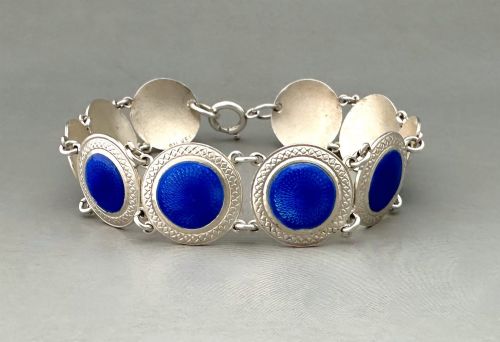
Techniques such as guilloche enamelling added coloured glass layers over engine-turned metal grounds, while stones were secured using collet settings or bezel mounts. Cased sets often utilised velvet and silk linings fitted precisely to the contours of the silver items.
Day and night swivel rings let wearers flip their finger band to reveal entirely different gemstone faces.
What Varies in Quality
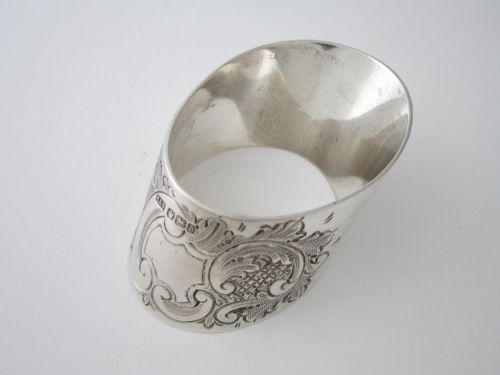
Quality rests upon the crispness of hand-engraving, the complexity of applied decorative techniques like enamel work, and the integrity of structural joins on items such as hinged bangles and napkin rings. Pieces bearing clear hallmarks from established makers or retailers generally reflect higher standards of period metalwork.
The selection of materials dictates distinction, with platinum and high-grade sterling silver supporting intricate gemstone arrangements like full diamond eternity settings. Preservation of original fitted cases and the absence of distortion in thin metal bands further distinguish superior examples.
Martin Hall & Co·Albert Edward Jones·Liberty & Co·Cartier·David Andersen·Kutchinsky
The Vintage Silver Band Glossary
- Sterling silver
- An alloy consisting of pure silver and other metals, usually copper, meeting a specific fineness standard. It provides durability while maintaining a bright metallic appearance.
- Hallmark
- An official stamp applied to precious metals indicating standard of purity, place of assay, and year of manufacture. These marks assist in dating items accurately.
- Guilloche enamel
- A decorative technique where a precise geometric pattern is mechanically engraved beneath translucent enamel. This creates depth and plays with light across the surface.
- Cabochon
- A gemstone shaped and polished with a smooth, rounded dome rather than faceted edges. This cut is common in antique moonstone and coral rings.
- Eternity ring
- A finger band set continuously with gemstones symbolising endless love. Versions appear in platinum and silver across twentieth-century styles.
Vintage Silver Band: Frequently Asked Questions
How are napkin rings usually presented?
Many antique and vintage napkin rings survive alongside their original fitted cases lined with silk, velvet, or leatherette. They appear singly, in pairs, or in complete sets of six.
Matching boxed sets frequently indicate high-end retail origin or presentation as specific gifts during the Edwardian and George V periods.
What materials accompany the silver?
Metal components are frequently combined with gemstones including diamonds, citrines, opals, moonstones, and natural coral. Enamel work, particularly coloured guilloche, also appears on select pieces.
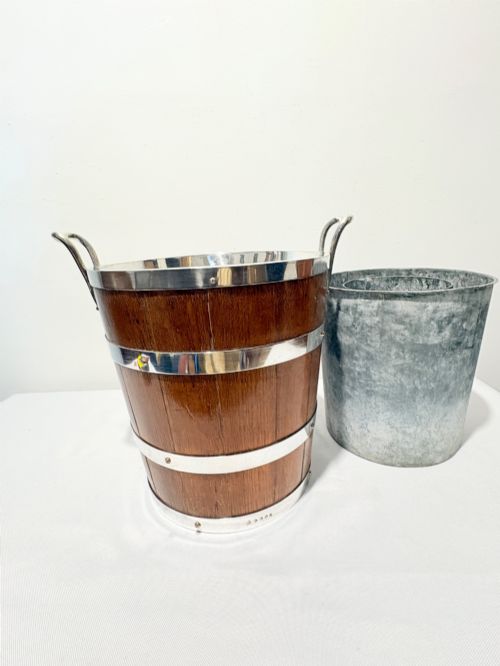
Some larger items integrate organic elements such as oak bodies or crocodile leather alongside silver mounts and banding.
How do I identify the age of a piece?
Dating relies primarily upon official hallmarks stamped into the metal, which record assay offices and specific date letters. Stylistic indicators like Art Deco geometric lines or Edwardian filigree also point to distinct periods of origin.