

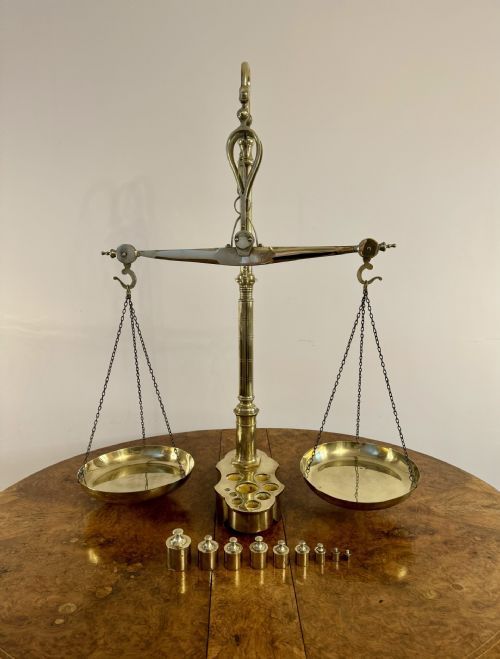


Vintage Shop Counter Scale
These vintage shop counter scale pieces bring utilitarian history straight to your kitchen or workspace, offering robust mechanical presence.
Vintage Shop Counter Scale
When searching for a vintage shop counter scale, you are looking at heavy-duty trade instruments built for weighing goods in grocers, butchers, and cooperatives. The pieces on this page span the Victorian era, the Edwardian period, and the early twentieth century.
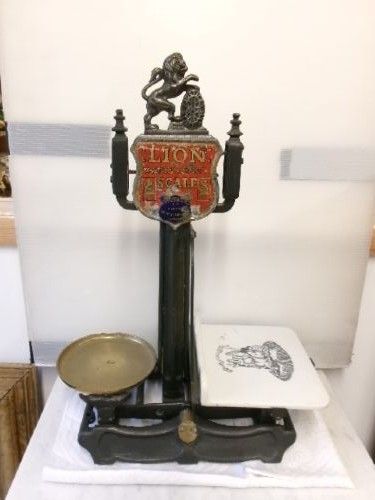
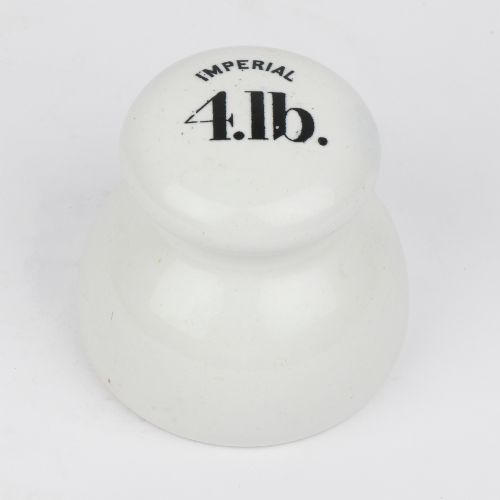
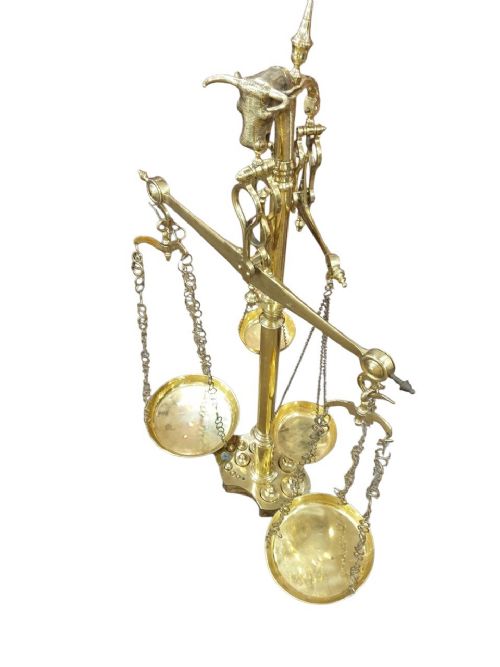
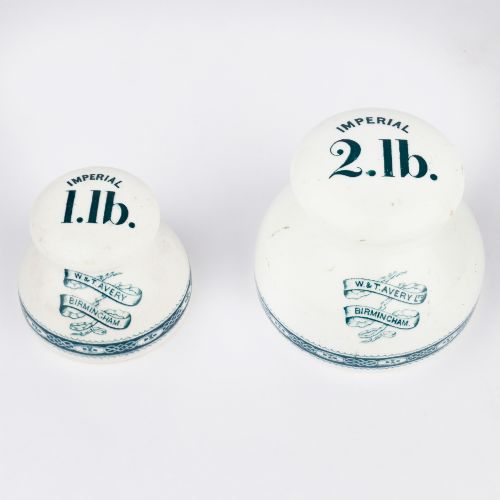
You will encounter various configurations here, ranging from large brass beam scales and butcher's balances to grocer's scales paired with cast iron bases or ceramic pans. Some listings include accompanying iron weights or ceramic weight sets.
Originating from makers such as Herbert & Sons, W & T Avery, and Parnall & Sons, these items often reflect British and French commercial life. They bridge the gap between utilitarian shop equipment and striking decorative objects.
Materials and construction
Cast iron and brass form the structural backbone of these instruments, providing the immense weight and rigidity required for accurate commercial measurement. Iron provides the heavy foundational bases, whilst brass forms the responsive beams and indicator arms.
Secondary materials such as copper, mahogany, and glazed ceramic or earthenware introduce contrast and function. Ceramic pans offer a hygienic surface for foodstuffs, and mahogany occasionally grounds the base of larger balance arrangements.
Vintage Shop Counter Scale Retail Price Guide 2026
Typical asking prices for vintage shop counter scale among the pieces listed under this phrase on Sellingantiques today, from the lower quarter to the upper quarter. They describe what is for sale here now, not the wider market.
Materials across these listings include cast iron, brass, copper, mahogany, and glazed ceramic.
Distinctions in quality
Quality in these commercial scales lies in the crispness of maker markings, the retention of original finish across the cast iron, and the integrity of the brass components. Maker stamps from prominent firms elevate a piece above unmarked workshop output.
The presence of matching original elements, such as corresponding weights, ceramic pans, and manufacturer branding, distinguishes an intact working ensemble from a pieced-together display.
Herbert & Sons London·W & T Avery·Parnall & Sons of Bristol
The Vintage Shop Counter Scale Glossary
- Balance scales
- A weighing device operating on the principle of equal arms, where an object in one pan is balanced by known weights in the other.
- Beam scale
- A heavy-duty weighing apparatus featuring a central horizontal beam supported by a fulcrum, often mounted on a sturdy pedestal.
- Grocer's scales
- Commercial weighing instruments utilised in retail shops for dispensing dry goods and provisions across a counter.
- Kitchenalia
- Domestic or commercial utilitarian objects and utensils originating from past kitchens and trade environments.
Vintage Shop Counter Scale: Frequently Asked Questions
How do balance scales work?
Balance scales operate by placing goods on one side and adding standard metal or ceramic weights to the opposite pan until the pointer rests at the centre.
This mechanical equilibrium provides a direct measurement of mass through gravity without the use of internal springs.
Where were these scales used?
These commercial scales stood on the wooden counters of Victorian and Edwardian grocers, butchers, and cooperative stores.
Merchants relied on them daily to weigh out loose produce, meat, and dry goods for customers.
How do I clean brass and iron?
Cast iron surfaces benefit from light dusting and occasional treatment with neutral oils to prevent oxidation.
Brass beams can be left with their aged patina or polished gently depending on personal preference.
Are these scales still accurate?
While many retain their mechanical movement and balance correctly, they are sold primarily as decorative antiques rather than certified trade instruments.
Calibration can drift over time due to wear on the central pivot and fulcrum.