











Vintage Ship Diorama
A vintage ship diorama brings the sea into a room through carved hulls and painted waves set deep within a wooden box or glass bottle.
Vintage Ship Diorama
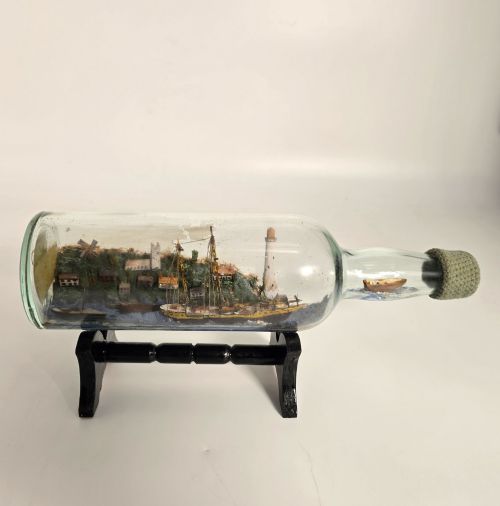
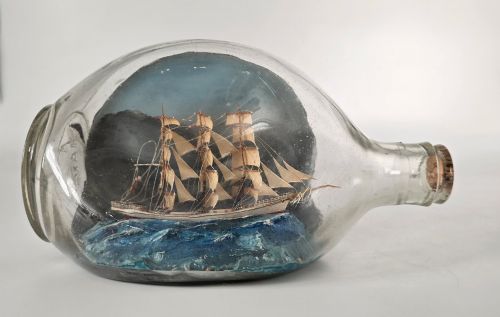
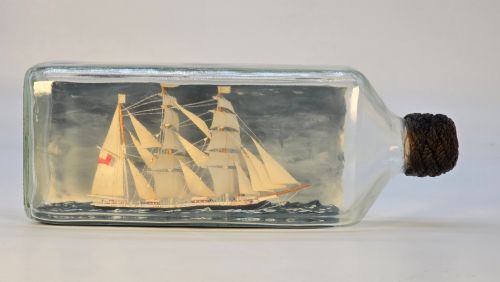
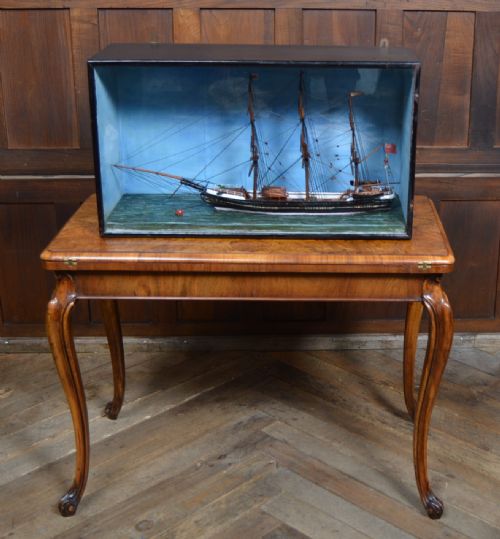
A vintage ship diorama represents maritime scenes captured inside wooden boxes, glazed shadow boxes, or glass bottles. These pieces capture sailing vessels, racing ships, and named vessels such as the Glynllifon or Queen Anne.
The selections available run from nineteenth-century folk art and Victorian maritime works to early twentieth-century pieces from the nineteen-twenties and nineteen-thirties. Forms range from wall art and shadow box dioramas to half-model hulls and ships enclosed in glass.
Makers span English, French, and Cornish origins, often working in a vernacular style that blends precise rigging with naive painted backdrops. Collectors find both single vessels at sea and complex multi-vessel racing scenes.
Materials and construction
Makers constructed these works using carved wood for hulls, canvas and thread for sails and rigging, and plaster or oil paint to render coastal backdrops and rolling seas. Pine provides the housing for many shadow boxes and glazed frames.
Meticulous scratch-built techniques allowed builders to fold masts down for insertion into narrow bottle necks before erecting them inside. Glass fronts and bottles protect delicate threadwork and painted canvas from dust and moisture.
Vintage Ship Diorama Retail Price Guide 2026
Typical asking prices for vintage ship diorama among the pieces listed under this phrase on Sellingantiques today, from the lower quarter to the upper quarter. They describe what is for sale here now, not the wider market.
Some nineteenth-century makers utilised real human hair for the tiny painted sailors.
Variations in quality
Quality rests upon the proportion and fidelity of the model ship relative to its painted background. Superior examples integrate the carved hull smoothly with painted canvas waves, creating a convincing sense of depth within a shallow box.
The complexity of the rigging and the preservation of original oil paint determine the standing of a piece. Finer works display exact miniature block-and-tackle detailing alongside well-maintained glass and pine surrounds.
The Vintage Ship Diorama Glossary
- Diorama
- A three-dimensional scene featuring models set against a painted background. In maritime pieces, this typically encloses a sailing vessel within a glazed wooden box.
- Half model
- A representation of one side of a ship's hull, mounted on a backboard. These often include coastal landmarks like castles or towns painted in the background.
- Shadow box diorama
- A deep picture frame enclosing a complete model ship. The recessed space creates perspective behind a glass front.
- Scratch-built
- Constructed entirely by hand from raw materials without commercial kits. This method defines traditional folk art ship models.
- Coble
- A traditional open fishing boat originating from the northeast coast of England. These feature distinct flat floors for launching from beaches.
Vintage Ship Diorama: Frequently Asked Questions
What is a ship diorama?
A ship diorama is a three-dimensional maritime model enclosed within a glazed box or bottle. It combines carved wooden hulls and fabric sails with painted canvas backgrounds representing the sea.
These pieces were constructed by sailors, hobbyists, and folk artists to record specific vessels or general maritime scenes. They function primarily as wall art or tabletop display items.
Where were these dioramas made?
Maritime dioramas originate from coastal communities across England, France, and Cornwall. Makers worked in ports and inland towns alike, drawing inspiration from local shipping and naval history.
Regional styles often emerge through specific vessel types, such as Cornish subjects or northeast English cobles depicted against local landmarks.
How can you tell the age of a diorama?
Dating relies on materials, construction methods, and stylistic cues present in the framing and the painted backdrop. Nineteenth-century examples often feature naive oil paintings on canvas or wood alongside hand-knotted thread rigging.
Dated inscriptions on bottles or painted panels occasionally provide precise years, while nineteenth-century and early twentieth-century pieces show distinct patination on the pine and old glass.