

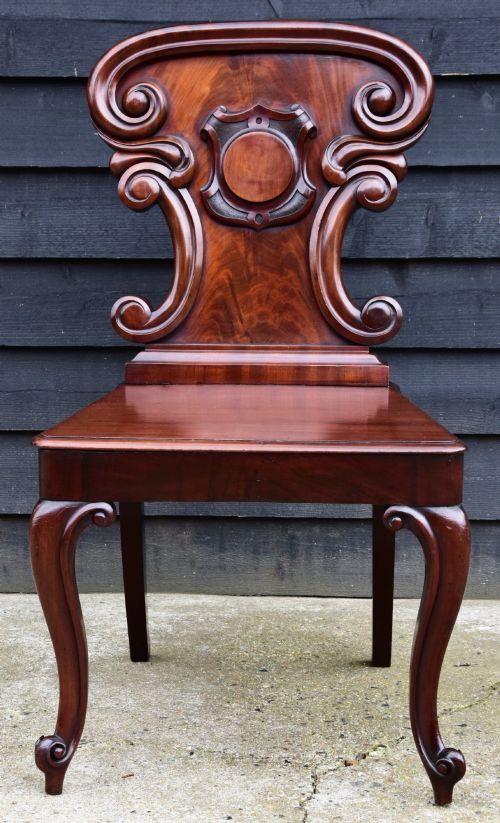
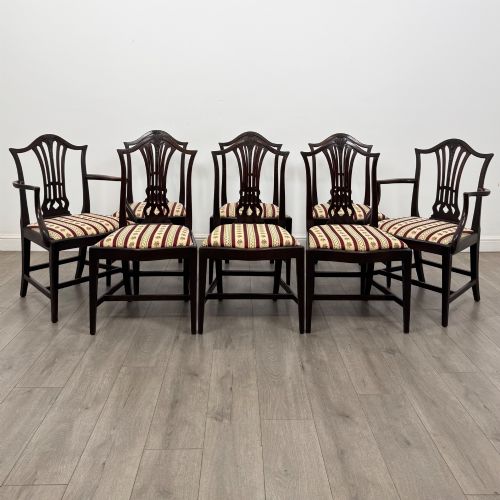
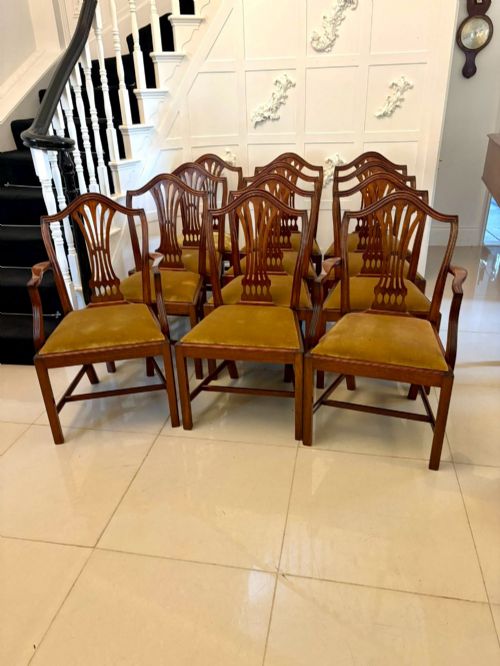
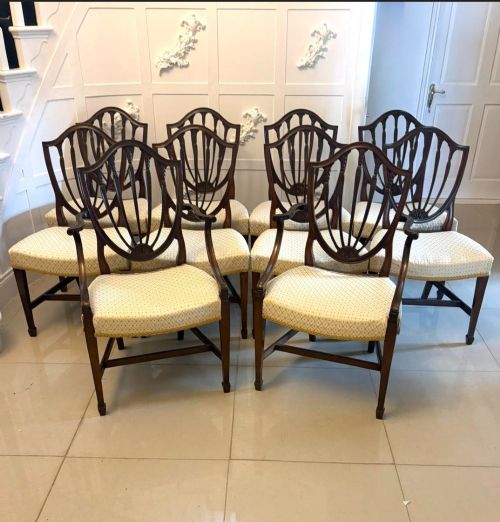




Vintage Shield Back Seats
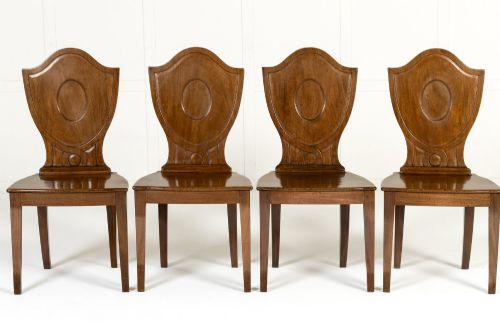
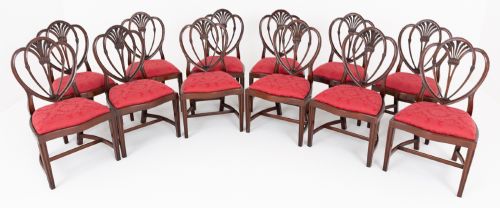
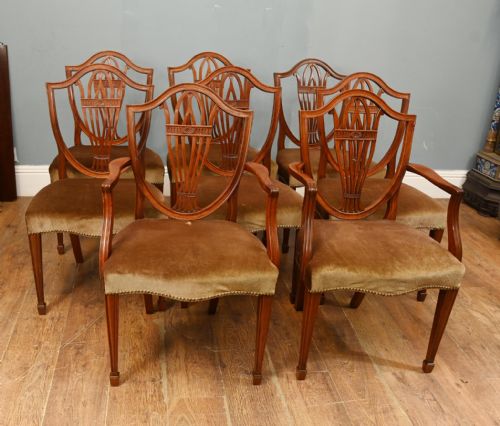
These vintage shield back seats bring classic revival styling to the dining room through carved timber and upholstered pads.
Vintage Shield Back Seats
Vintage shield back seats draw heavily on 18th century design principles, frequently appearing as sets of dining chairs or carvers in revival styles. The form centres on a distinct heart or shield shaped backrest that often incorporates carved splats and Prince of Wales feathers.
Most examples found here date from the 19th century and the early decades of the 20th century, spanning Victorian, Edwardian, and Regency revivals. Alongside standard dining chairs, buyers will encounter occasional armchairs, desk chairs, hall chairs, and settees.
Mahogany remains the dominant timber across these pieces, frequently paired with upholstered pads in leather, damask, or plain fabric. Sets range from small pairs to larger dining collections intended for formal tables.
Materials and construction
Makers relied primarily on solid mahogany to construct the frames, utilising the timber's grain and strength to shape the delicate curves of the shield backrest. Selected pieces incorporate inlaid details to accent the timber frames.
Seat pads were traditionally built up using webbed bases and traditional stuffing before being covered in leather, velvet, or woven fabric upholstery. Brass fixings and studs sometimes secure the textile edges to the wooden rails.
Vintage Shield Back Seats Retail Price Guide 2026
Typical asking prices for vintage shield back seats among the pieces listed under this phrase on Sellingantiques today, from the lower quarter to the upper quarter. They describe what is for sale here now, not the wider market.
Available seating options range from single hall chairs to large matched dining sets intended for formal tables.
Assessing quality and craftsmanship
Quality shows in the crispness of the pierced splat carving within the shield frame and the robustness of the underlying mahogany joinery. Superior sets maintain consistent timber grain and colour across all chairs, particularly in larger dining sets.
The choice and execution of the upholstery elevate certain pieces, with supple original leather or heavy damask fabrics indicating higher status. Frame rigidity and the neatness of hand-finishing distinguish standard commercial production from finer revival workshop output.
Maple and Co
The Vintage Shield Back Seats Glossary
- Shield back
- A chair backrest shaped like a heraldic shield, typically narrow at the base and curving outwards towards the top rail.
- Carver
- An armchair designed to match a set of dining chairs, usually placed at the head of the table.
- Splati
- The vertical central strip of wood within a chair back connecting the seat to the top rail.
- Hepplewhite revival
- A style popular in the 19th and early 20th centuries that imitates the lighter, neoclassical designs associated with the cabinetmaker George Hepplewhite.
- Settee
- A long upholstered seat with a back and arms, designed to accommodate multiple people.
Vintage Shield Back Seats: Frequently Asked Questions
How do I date a shield back chair?
Dating relies on timber characteristics, secondary woods, and the style of the revival period rather than the original 18th-century design. Victorian and Edwardian iterations often display machine-assisted precision alongside traditional hand-carved details.
Examining the underside of the seat frame and the wear on the upholstery webbing provides further clues regarding age and subsequent restoration work.
Can I mix these with modern tables?
The rich mahogany tones and classic silhouettes pair effectively with simple contemporary dining tables to create a contrasted interior scheme. The upright posture of shield back designs also suits traditional wooden desks.
Ensuring the seat height aligns comfortably with modern table clearances is the main practical consideration when mixing eras.
Are leather or fabric seats better?
Leather provides a durable, wipe-clean surface that suits daily dining use and ages with a distinct patina over decades. Damask and velvet fabrics offer a softer texture and align closely with formal Edwardian and Victorian interiors.
Choice depends on the intended room usage and personal preference for maintenance.
What is a Hepplewhite revival piece?
A Hepplewhite revival piece is a later copy or interpretation of the neoclassical furniture forms popularised in the late 18th century. These pieces were produced in volume during the Victorian and Edwardian eras using period joinery methods.
They capture the aesthetic elegance of the earlier designs while fitting the domestic scale of later homes.