




Vintage Shell Cameo
A vintage shell cameo is a carved relief portrait set in precious metal, offering collectors classic hand-carved artistry.
Vintage Shell Cameo
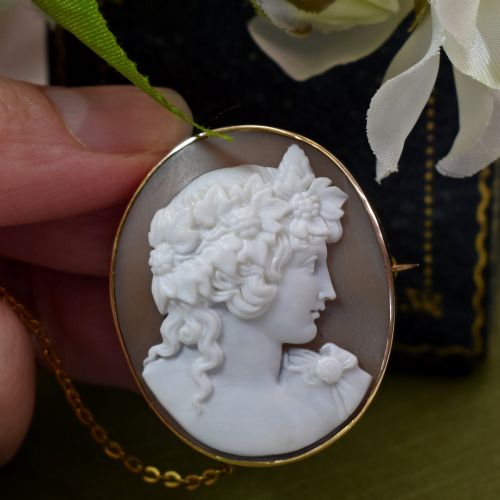
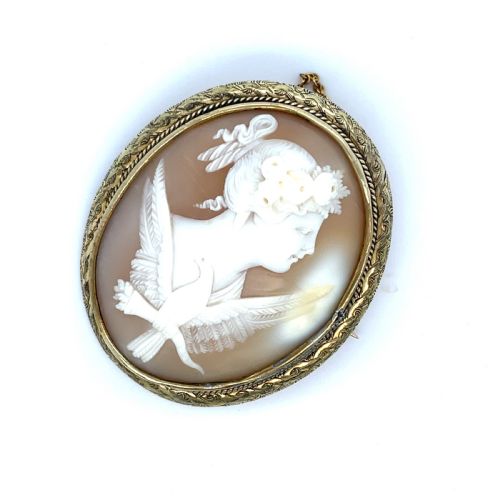
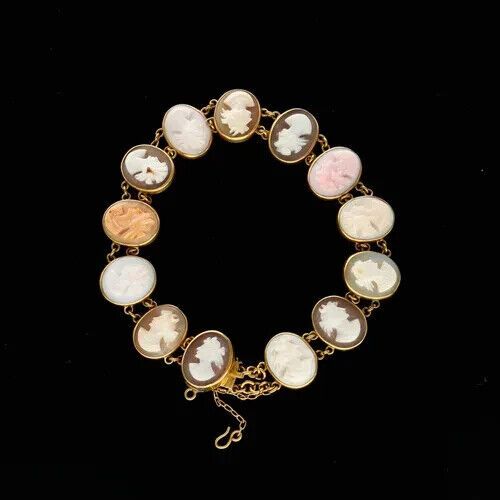
A vintage shell cameo represents a carved relief portrait or classical scene worked into the natural layers of mollusc shell. When you search for a vintage shell cameo, you encounter various forms including brooches, earrings, rings, bracelets, and matched suites.
The pieces appearing on this page span several distinct periods from the nineteenth century through the mid twentieth century. Victorian and Edwardian examples dominate the selection, often featuring classical profiles mounted in gold or silver frames.
Materials and Carving Techniques
Carvers utilise the contrasting colour layers of sea shells, particularly queen conch and other suitable varieties, to create a raised white figure against a darker background. This subtractive sculpture requires steady hands and deep familiarity with the natural curvature of the shell.
Mounts play an essential structural role, fashioned from yellow gold, nine carat gold, fifteen carat gold, silver, pinchbeck, or gilt metals to house the fragile carvings securely. Frames range from simple bezel settings to elaborate wirework and detailed chased designs.
Listings demonstrate a strong presence of Victorian and Edwardian pieces, with materials ranging from queen conch shell to fifteen carat gold.
Judging Quality in Shell Carvings
Depth of relief and crispness of detail distinguish finer carvings from simpler commercial work. Superior examples show subtle facial expressions, well-defined drapery folds, and careful utilisation of the shell's natural colour gradients.
The substance and weight of the metal mount often match the ambition of the carving. Solid gold frames and substantial silver settings indicate higher initial workshop investment than lighter pinchbeck or base metal alternatives.
R. Pernice
The Vintage Shell Cameo Glossary
- Cameo
- A method of carving an object such as a engraved gem, item of jewellery, or vessel where a relief is created on a contrasting background. It relies on layered materials like shell or agate to separate the subject from the field.
- Conch shell
- The material derived from large marine gastropods utilised by carvers for its pinkish or orange hues and layered depth. Queen conch is particularly prized for sizeable classical motifs.
- Pinchbeck
- An alloy of copper and zinc invented in the eighteenth century to imitate gold. It provides a warm yellow metallic appearance without the high cost of precious metal.
- Bezel setting
- A method of securing a stone or shell where a metal strip wraps entirely around the edge of the carved object. It offers robust protection for fragile antique pieces.
Vintage Shell Cameo: Frequently Asked Questions
What is a shell cameo made from?
A shell cameo is carved from the outer layers of marine mollusc shells, specifically species that possess contrasting natural colours between the upper relief and the darker backing.
Carvers select shells with sufficient depth to allow detailed sculptural work without piercing through the darker base layer.
How do I date a vintage cameo?
Dating relies heavily on the style of the metal mount, the clasp mechanism, and the depicted subject matter. Victorian and Edwardian pieces often exhibit distinct bezel styles and pin fittings.
Examining hallmarks on gold or silver frames also provides precise manufacturing years and assay office locations.
Are cameo brooches also pendants?
Many antique cameo brooches include a concealed or fold-down loop on the reverse side to accommodate a chain. This dual functionality allowed nineteenth century owners to wear the same piece pinned to clothing or suspended from the neck.
Inspecting the reverse of the frame reveals whether a hinged bail or loop was incorporated into the original design.
How should I care for shell jewellery?
Shell is a relatively soft organic material that reacts poorly to harsh chemical cleaners, ultrasonic baths, and prolonged exposure to water. Gentle dusting with a dry microfibre cloth preserves the polished surface.
Storing pieces away from direct sunlight and hard objects prevents fading and surface scratching.