



Vintage Serpentine Couch
A vintage serpentine couch brings fluent curves and formal grace into a room, offering generous seating rooted in centuries of fine upholstery tradition.
Vintage Serpentine Couch
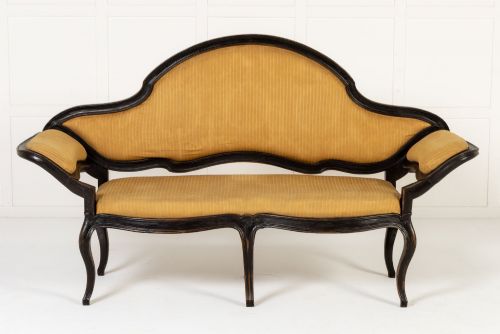
A vintage serpentine couch unites structural woodwork with deep upholstery, taking its name from the undulating wave of the front rail or back. These seating pieces appear across various historic periods, ranging from earlier Georgian inspirations to later Edwardian and Victorian iterations.
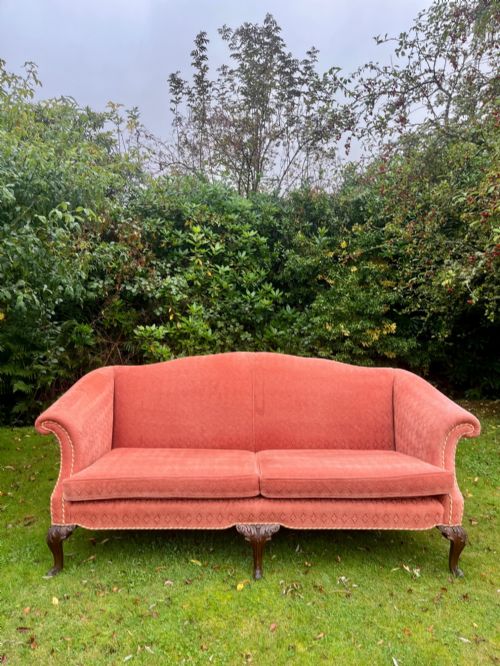
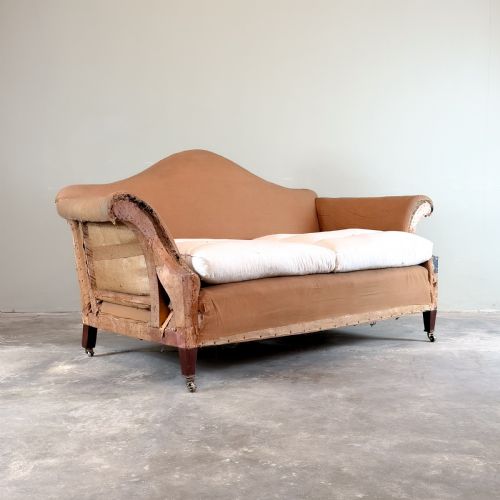
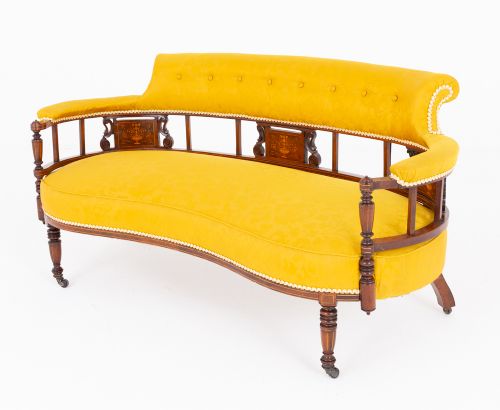
Most examples encountered on this page take the form of the classic camel back sofa, where the upper rail rises and falls in smooth, continuous arcs. Alongside these, robust leather Chesterfields and carved rosewood settees represent the broader spectrum of serpentine seating.
The origins span formal drawing room furniture to substantial library seating, reflecting the shifting tastes of the eighteenth, nineteenth, and early twentieth centuries. Buyers encounter both light wood frames and heavier, darker timbers depending on the specific period of manufacture.
How they were made
Makers shaped the characteristic frames using dense hardwoods such as mahogany, walnut, and rosewood, often employing intricate carving along the rails and legs. These structural elements provided the rigid foundation necessary to support continuous tension from the upholstered sections.
Traditional stuffing relied on natural materials like jute and cotton to build up the resilient padded surfaces found on both backrests and seats. Leather or woven fabric then secured the exterior, finished with careful hand-dying or tailored seams to accentuate the undulating contours.
Vintage Serpentine Couch Retail Price Guide 2026
Typical asking prices for vintage serpentine couch among the pieces listed under this phrase on Sellingantiques today, from the lower quarter to the upper quarter. They describe what is for sale here now, not the wider market.
Whisky brown leather Chesterbeds bring an undeniable gentleman's club atmosphere directly into a domestic sitting room.
What varies in quality
Quality rests primarily in the fluidity of the carved line and the proportional balance between the serpentine curves of the front rail and the rise of the backrest. Superior pieces exhibit a confident rhythm in their woodwork that looks deliberate from every angle rather than stiff or constrained.
The integrity of the underlying frame construction and the caliber of the surface finish distinguish finer examples from standard production. Rich timber grains and responsive, supportive padding elevate a couch far above utilitarian seating of similar age.
The Vintage Serpentine Couch Glossary
- Serpentine
- A shape featuring a central convex curve flanked by two concave curves, creating a gentle rolling wave along the front rail of a couch.
- Camel back
- An upholstered sofa style characterised by an undulating top rail that resembles the humps of a camel, popular across multiple design periods.
- Chesterfield
- A traditional deep-buttoned couch featuring arms and back of the same height, frequently upholstered in hand-dyed leather.
- Settee
- A long upholstered seat with a back and arms, sharing its functional purpose with a sofa but often lighter in scale and earlier in origin.
- Rosewood
- A dense, heavily figured exotic timber utilised for high-end furniture frames during the nineteenth century.
Vintage Serpentine Couch: Frequently Asked Questions
How do I date a vintage couch?
Dating relies on examining the timber species, the profile of the legs, and the underlying construction methods visible beneath the upholstery.
Earlier pieces often display refined mahogany or rosewood frames with classical revival details, while later examples incorporate softer woods or distinct Edwardian proportions.
Are these couches comfortable for daily use?
Most period couches offer firm, supportive seating designed for upright formal entertaining rather than relaxed lounging.
The depth and rake of the backrest vary significantly between a light camel back model and a heavily padded leather Chesterfield.
How should I care for leather upholstery?
Leather upholstery requires regular dusting and periodic conditioning to maintain its supple texture and prevent the natural hide from drying out.
Keeping antique leather away from direct sunlight and strong heat sources preserves the rich hand-dyed colour.