



Vintage Seed Pearl Ring
These vintage seed pearl ring examples combine tiny saltwater spheres with gold and gemstones across Georgian, Victorian, and Edwardian periods.
Vintage Seed Pearl Ring
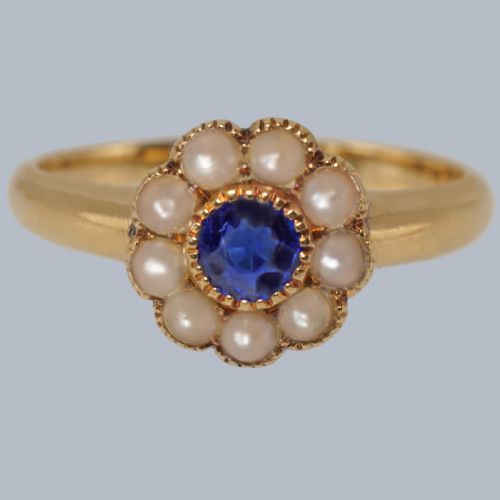
A vintage seed pearl ring brings together delicate, minuscule pearls with colourful gemstones set in gold. When searching for a vintage seed pearl ring, buyers encounter cluster configurations, halo designs, and mourning pieces originating from the Georgian era through to the twentieth century.
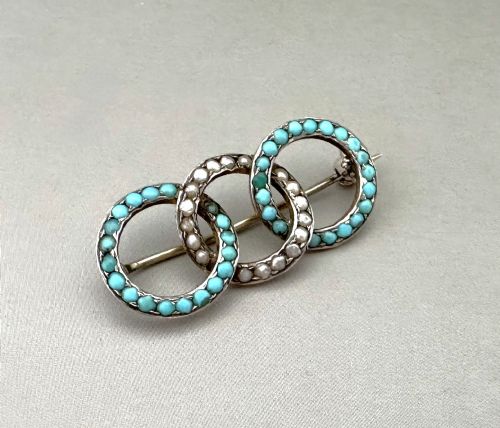
The most common versions on this page are Victorian and Edwardian cluster rings featuring central garnets, amethysts, peridots, or turquoise surrounded by tiny pearls. These jewels showcase the intricate metalwork and stone combinations typical of late nineteenth and early twentieth-century jewellery production.
How they were made
Makers set tiny seed pearls and split pearls into mounts of nine-carat, fifteen-carat, and eighteen-carat gold, as well as silver gilt. Stones are secured in claw settings or close bezels alongside larger gems like almandine garnets, amethysts, turquoises, and rubies.
Gold work from the Victorian and Edwardian periods often incorporates detailed wirework and rose gold alloys. Georgian mourning examples integrate woven hair beneath crystal alongside seed pearl ornamentation.
Vintage Seed Pearl Ring Retail Price Guide 2026
Typical asking prices for vintage seed pearl ring among the pieces listed under this phrase on Sellingantiques today, from the lower quarter to the upper quarter. They describe what is for sale here now, not the wider market.
Listings span multiple eras from Georgian mourning pieces to Edwardian turquoise and pearl designs, using nine-carat, fifteen-carat, and eighteen-carat gold.
What varies in quality
Quality separates pieces by the uniformity, lustre, and secure setting of the tiny pearls. Finer examples retain all their original pearls with matching lustre and minimal glue or replacement stones.
The weight, carat of the gold mounting, and quality of the central gemstone determine the overall standard. Superior pieces display crisp detailing in the surrounding gold cluster work and well-matched coloured stones.
The Vintage Seed Pearl Ring Glossary
- Seed pearl
- A tiny, naturally formed saltwater pearl, typically under two millimetres in diameter. These small spheres form the decorative borders and pavé patterns on cluster rings.
- Split pearl
- A pearl that has been sliced in half, usually to allow it to be set flat against a gold backing or mount. This technique was common in Victorian cluster and mourning jewellery.
- Cluster ring
- A ring design featuring a central gemstone encircled by a group of smaller stones. In these listings, that outer border almost invariably consists of seed pearls or split pearls.
- Halo ring
- A setting style where a central coloured gemstone is entirely surrounded by a ring of smaller accent stones. The accent stones are frequently seed pearls creating a bright contrast against amethyst or garnet.
Vintage Seed Pearl Ring: Frequently Asked Questions
How do I care for my ring?
Seed pearls are organic and sensitive to harsh chemicals, perfumes, and prolonged moisture. Clean them gently with a dry or slightly damp soft cloth rather than chemical dips.
Store the ring separately from harder diamond or gemstone jewellery to prevent the soft pearl surfaces from scratching or rubbing against metal edges.
Are these pearls natural?
The pearls found in Georgian, Victorian, and Edwardian pieces are natural saltwater pearls gathered before cultured pearl farming began in the twentieth century. Their minute size reflects the natural limitations of finding small pearls in historical fisheries.
Because they are antique, individual pearls may show subtle variations in shape and lustre that distinguish them from modern factory-produced beads.
What is an Edwardian cluster ring?
An Edwardian cluster ring dates from the reign of King Edward VII or the early nineteen-hundreds, typically showcasing lighter, more delicate filigree work than heavier Victorian designs. These pieces frequently pair seed pearls with peridots, turquoises, or diamonds.
The mountings often utilise higher carats of yellow or white gold, emphasising graceful, airy proportions inspired by earlier Georgian aesthetics.
Can I wear this ring daily?
While these rings were made to be worn, seed pearls are softer and more delicate than standard gemstones or solid gold bands. Regular daily wear requires extra care to avoid knocks, water immersion, and abrasive contact.
Many collectors reserve these antique rings for occasional wear to preserve the delicate seed pearls and secure settings over time.