



Vintage Sectional Shelving
Vintage sectional shelving offers modular flexibility, combining period timber and glass into adaptable bookcases for modern rooms.
Vintage Sectional Shelving
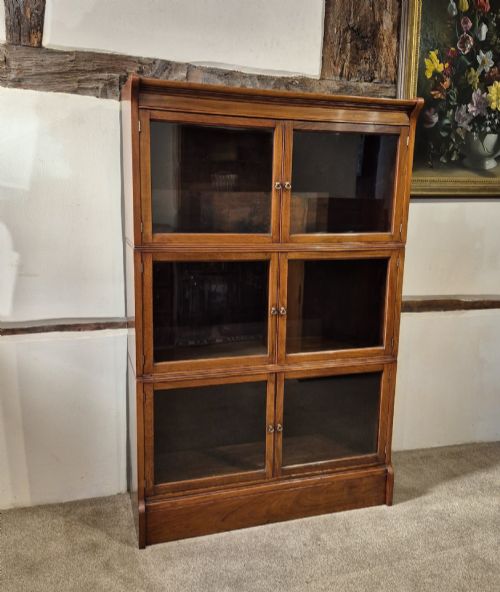
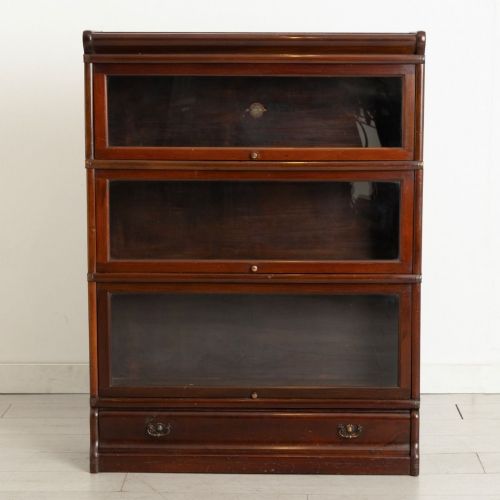
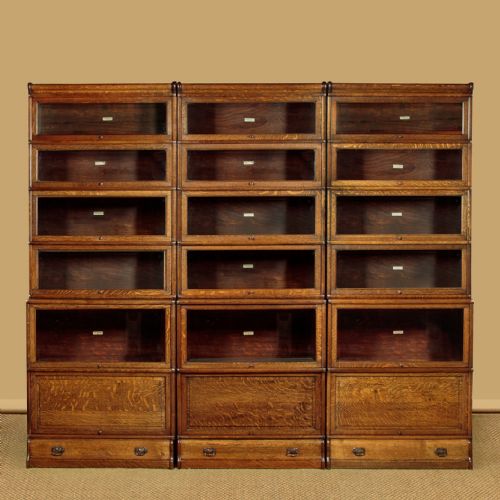
Vintage sectional shelving brings modular flexibility to your home, offering stackable units designed to house growing libraries without taking up excess floor space. When you search for vintage sectional shelving, you encounter barrister and stacking bookcases built from individual tiers that sit one upon the other.
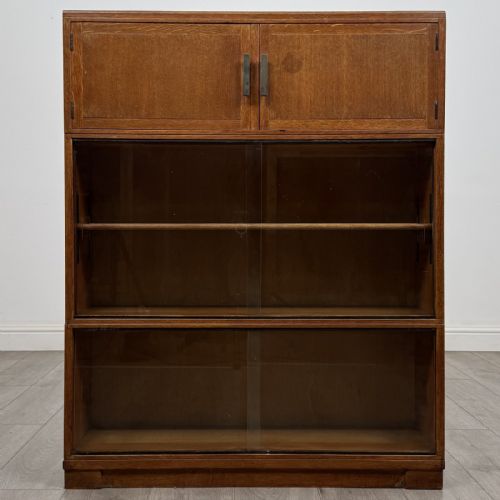
The versions most commonly found here date from the Edwardian era through the 1930s, reflecting commercial and domestic office designs from the early twentieth century. These pieces combine functional glass doors with modular wooden carcases to create adaptable storage solutions.
How they were made
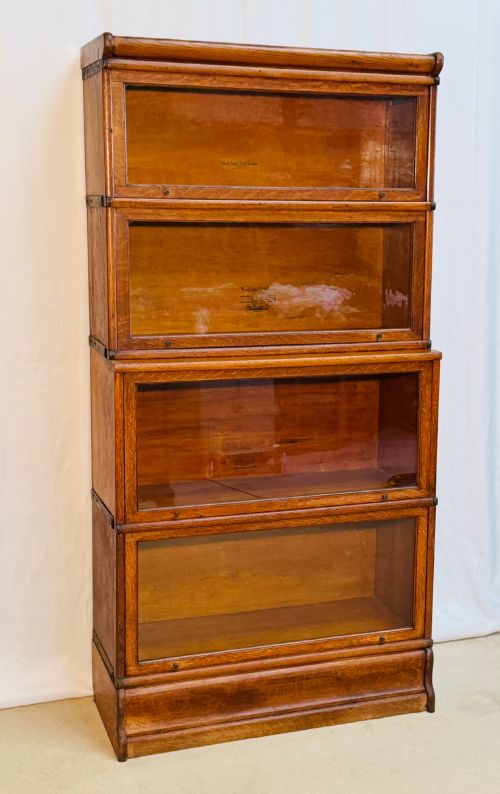
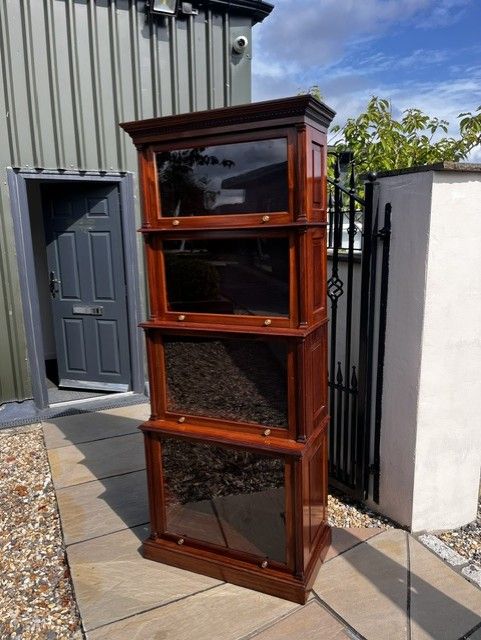
Cabinetmakers constructed these stacking systems primarily using oak and mahogany, selecting both solid timber and veneers for the individual tier frames. Metal mechanisms and brass hardware were integrated to support the upward-sliding door action characteristic of barrister bookcases.
Glass panels were fitted into wooden frames to protect books while keeping titles visible, and individual sections were designed to interlock securely without permanent fixings.
Vintage Sectional Shelving Retail Price Guide 2026
Typical asking prices for vintage sectional shelving among the pieces listed under this phrase on Sellingantiques today, from the lower quarter to the upper quarter. They describe what is for sale here now, not the wider market.
Listings span the Edwardian period through the 1930s, featuring oak and mahogany woods alongside brass and glass components.
What varies in quality
Quality in these modular systems lies in the precision of the joinery and the matching of timber grains across multiple stacking tiers. Finer examples display superior wood selection and robust mechanical door actions that operate smoothly across every section.
Maker attribution and period integrity also dictate standing, with recognised firms achieving more refined proportions and higher standards of cabinetwork than unmarked commercial alternatives.
Wernicke System·Macey·Globe Wernicke·Heal's·Lebus
The Vintage Sectional Shelving Glossary
- Sectional bookcase
- A modular bookcase composed of separate stacking tiers that can be assembled to various heights. Each tier typically houses its own glass-fronted compartment.
- Barrister bookcase
- A specific form of stacking bookcase designed with glazed, up-and-over doors that slide into the cabinet above each shelf. These were originally used by lawyers to transport and house law libraries.
- Elastic bookcase
- An alternative late nineteenth and early twentieth-century term for an expandable sectional bookcase system. The description highlights the ability to add further sections as a collection grows.
- Up and over door
- A pivoting door mechanism that lifts upwards and slides back into the interior recess of the bookcase tier. This hardware allows access to books without swinging doors outward into the room.
Vintage Sectional Shelving: Frequently Asked Questions
How do sectional bookcases assemble?
Individual wooden tiers stack one on top of another using simple gravity and interlocking lips rather than permanent fixings. Base plinths and top cornices finish the modular stack.
This construction method allows the entire shelving unit to be dismantled easily for transport and reconfigured to different heights.
What are up and over doors?
Up and over doors feature specialised metal hardware that guides the glazed front panel upwards and into the top of the shelf compartment. This allows you to retrieve books without doors swinging outward.
Such mechanisms are characteristic of barrister bookcases from the Edwardian period onwards.
How do I date these bookcases?
Dating relies on stylistic clues, timber choices, and maker marks stamped on the interior woodwork or hardware. Edwardian pieces often feature richer mahogany tones, while 1930s examples introduce Art Deco influences.
Quarter-sawn oak is frequently seen on pieces from the 1910s and 1920s office supply traditions.
Can I add more sections later?
Adding sections requires finding tiers of the exact same manufacturer, width, and depth to ensure the interlocking mechanism aligns properly. Standardised systems from major firms often allowed modular expansion.
Matching the timber grain and finish across different decades remains the main challenge when extending a stack.