



Vintage Scottish Jewellery
Vintage scottish jewellery brings together silver, agates and Celtic motifs, offering wearable history from Victorian times to the mid-century.
Vintage Scottish Jewellery
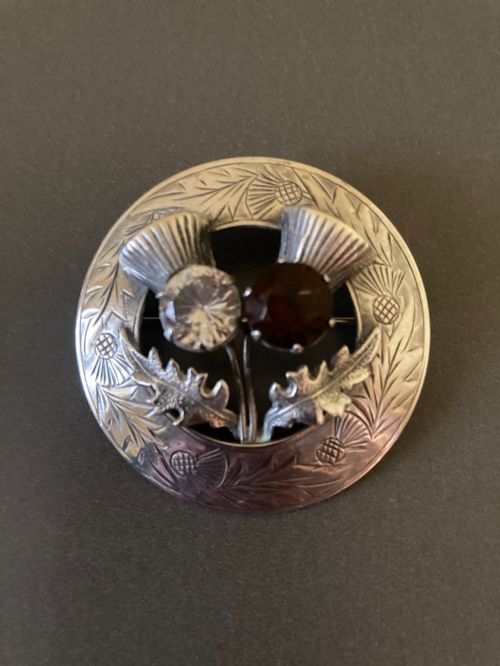
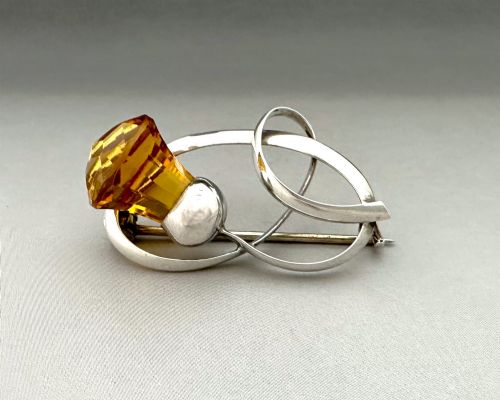
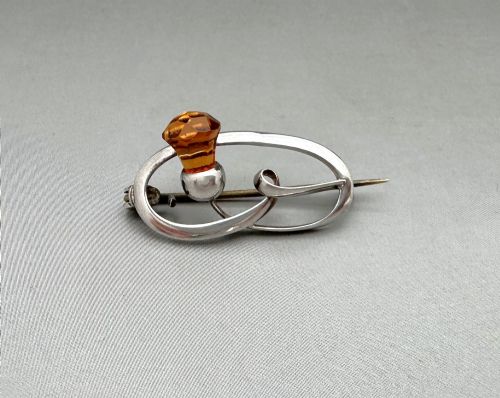
When buyers search for vintage scottish jewellery, they encounter a distinctive array of brooches, pendants, earrings and charms rooted in northern traditions. These pieces draw heavily on regional iconography, featuring thistles, swords, shields and intricate knotwork executed in silver and gold.
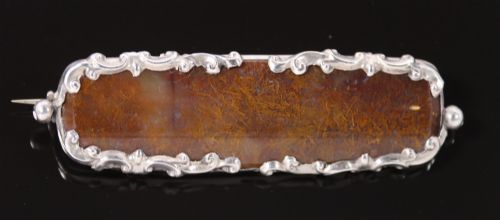
The selections available here span multiple eras, stretching from Georgian moss agate examples and Victorian silver and agate pieces through to Edwardian thistle designs. Later twentieth-century items, including mid-century shield brooches and Celtic revival work, also appear regularly across the inventory.
Forms range from practical kilt pins and hat pins to delicate stud earrings, drop earrings and statement pendants. Buyers are most likely to meet silver brooches set with native stones or amber glass, reflecting enduring stylistic revivals.
Materials and construction
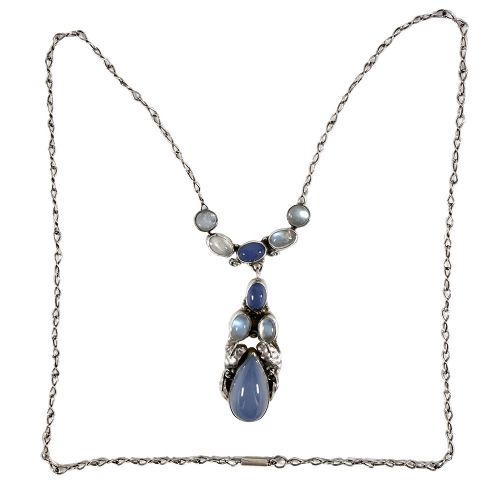
Maker workshops utilised sterling silver, 9ct gold and rolled metals as the foundational chassis for these ornaments. Precious and semi-precious elements such as moss agate, moonstone, chalcedony, citrine, mother of pearl and diamonds were then hand-set into the metalwork.
Techniques combined traditional metalsmithing with specialised lapidary work, shaping hardstones into smooth cabochons or faceting glass to mimic natural gems. Pieces often incorporated cast or hand-engraved details like thistles and Celtic Revival motifs.
Vintage Scottish Jewellery Retail Price Guide 2026
Typical asking prices for vintage scottish jewellery among the pieces listed under this phrase on Sellingantiques today, from the lower quarter to the upper quarter. They describe what is for sale here now, not the wider market.
Some lucky buyers might even secure a whistle charm pendant to summon assistance or a dog.
Distinctions in quality
Quality rests upon the crispness of the metal casting and the precision of the hand-engraving on elements like thistle leaves and shields. Superior examples display sharply defined motifs rather than soft, worn edges from repetitive production.
The selection and matching of stones also drive distinction, where natural moss agates, moonstones and citrines exhibit superior depth and polish compared to moulded glass substitutes. Maker attribution further elevates standing, particularly when associated with recognised regional silversmiths.
Charles Horner·Mary Thew·John Hart·Celtic Art Industries
The Vintage Scottish Jewellery Glossary
- Moss agate
- A form of chalcedony containing microscopic green hornblende minerals that resemble natural moss or foliage. These distinctive inclusions are cut and polished into cabochons for brooches.
- Kilt pin
- A traditional fastening garment pin used in Scottish Highland dress, often styled as a sword or broadsword in sterling silver. They serve both a decorative and a functional purpose.
- Cabochon
- A gemstone shaped and polished with a smooth, convex top rather than faceted edges. This cut is frequently applied to agates and moonstones in regional silverwork.
- Celtic Revival
- An artistic movement reviving ancient Celtic art forms, interlaced patterns and knotwork during the nineteenth and twentieth centuries. It heavily influenced regional jewellery design.
Vintage Scottish Jewellery: Frequently Asked Questions
How do I date a silver thistle brooch?
Dating often relies on stylistic cues, hallmarks and the specific materials used in construction, such as Victorian agates or Edwardian silver work.
Assay office marks and maker stamps provide precise chronological indicators when present on the metal.
Are moss agate brooches natural?
Yes, moss agates are natural forms of chalcedony featuring mineral inclusions that create organic, plant-like patterns within the stone.
Lapidaries cut and polish these stones into cabochons specifically for mounting in silver settings.
How were kilt pins worn?
Kilt pins were traditionally fastened to the apron of a kilt to prevent it from blowing open in the wind.
In modern styling, similar pieces function effectively as statement lapel brooches or scarf fasteners.