





Vintage Score Counter
These vintage score counter pieces keep track of play during parlour games and billiard halls, offering a tactile way to manage scores.
Vintage Score Counter
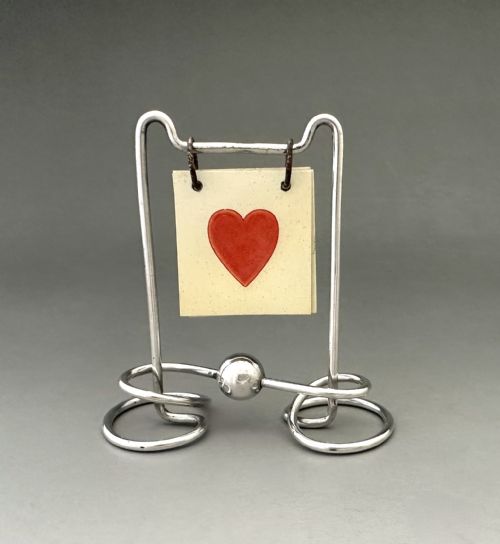
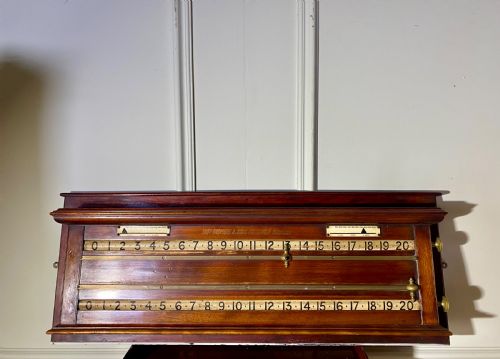
A vintage score counter handles the tallying for pastimes like cribbage, whist, and snooker, bringing mechanical utility to the games room. The selection spans compact table-top boxes and large wall-mounted boards designed for communal play.
Most examples hail from the Victorian and Edwardian eras, reflecting an age when domestic gaming formed a cornerstone of social life. You are likely to encounter mahogany and pale oak boards alongside smaller bone and silver-plated accessories.
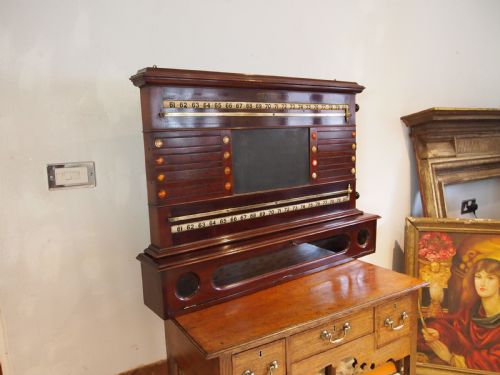
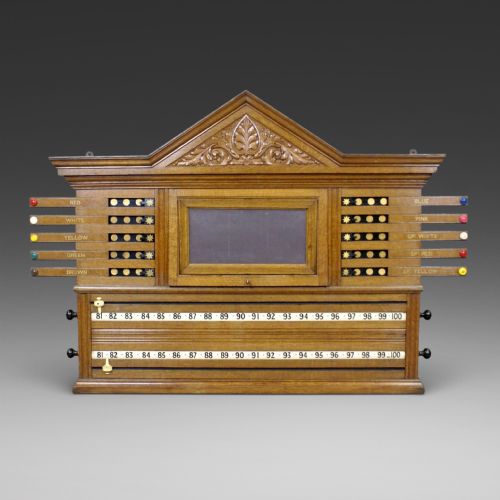
These items range from personal card game counters to large snooker scoreboards built for dedicated billiard rooms. Each object reveals the specific sporting and domestic pursuits of the nineteenth and early twentieth centuries.
Materials and construction
Timbers such as mahogany and pale oak provide the sturdy framework for larger wall-mounted snooker scoreboards and gaming boxes. These woods are often polished to a rich finish that highlights the grain.
Details and markers utilise brass, bone, stag horn, and silver plate, adding contrasting textures and clear numbering for play. Card and slate also appear in specific counters, showing the varied materials employed by makers.
Vintage Score Counter Retail Price Guide 2026
Typical asking prices for vintage score counter among the pieces listed under this phrase on Sellingantiques today, from the lower quarter to the upper quarter. They describe what is for sale here now, not the wider market.
Stag horn and bone cribbage boards bring a delightfully organic touch to the serious business of nineteenth-century card tallying.
Judging quality and craftsmanship
The distinction between ordinary and superior pieces rests on the precision of the mechanical dials, pointers, and revolving indicators. Finely made boards operate smoothly, with clearly etched numbers and securely fitted indices that withstand repeated use.
Material selection and cabinetry elevate certain items, particularly when makers incorporate solid hardwoods, quality brass fittings, and original leather cases. The presence of well-executed maker signatures further separates standard workshop output from distinguished production.
Orme and Sons Manchester·Cox and Yeman London
The Vintage Score Counter Glossary
- Cribbage board
- A traditional score board used to track points in the card game cribbage, typically featuring parallel rows of small holes for pegs. These boards are frequently fashioned from wood, bone, or horn.
- Trump marker
- A small device utilised in card games to indicate the current suit designated as trumps. Silver-plated examples often sit on the table during play.
- Snooker scoreboard
- A large wall-hanging board designed to record scores for cue sports using sliding wooden pointers on numbered tracks. They are commonly constructed from mahogany or oak.
- Whist counter
- A specialised accessory employed during the card game whist to keep track of tricks or points won. They are often found housed in fitted boxes.
Vintage Score Counter: Frequently Asked Questions
What games use these score counters?
These counters serve traditional pastimes such as cribbage, whist, and snooker or billiards. Each design relates directly to the specific rules and scoring needs of the game it accompanies.
Smaller pieces sit on tables for card games, while larger boards hang on walls for cue sports.
How do I date a score counter?
Dating relies on the materials, mechanical style, and stylistic markers associated with the Victorian and Edwardian periods. Mahogany and heavy brass fittings often point to the nineteenth century.
Maker signatures and hallmarks on silver components provide further chronological clues.
Where were these scoreboards used?
Smaller counters belonged in drawing rooms and parlours for evening card games. Large snooker scoreboards hung in dedicated billiard rooms, clubs, and country houses.
Their placement reflects the social habits of the Victorian era.
Can I still use these counters for games?
Many mechanical score counters and peg boards remain fully functional for modern games. The sliding pointers and rotating dials still operate as intended.
Careful handling ensures these historic items continue working during play.