





Vintage Saucepans
Vintage saucepans bring heavy metal utility and centuries of hearth craftsmanship directly into modern kitchens.
Vintage Saucepans
Vintage saucepans encompass utilitarian metal cookware originating from the Georgian, Victorian, and nineteenth-century periods. Buyers searching for vintage saucepans encounter heavy copper vessels, brass kitchen pots, and iron hearth cookware built for open fire and early stove cooking.
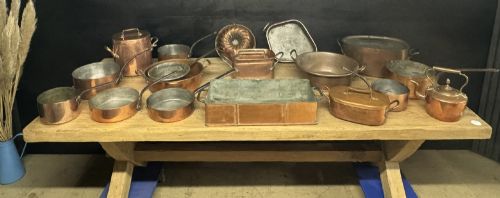
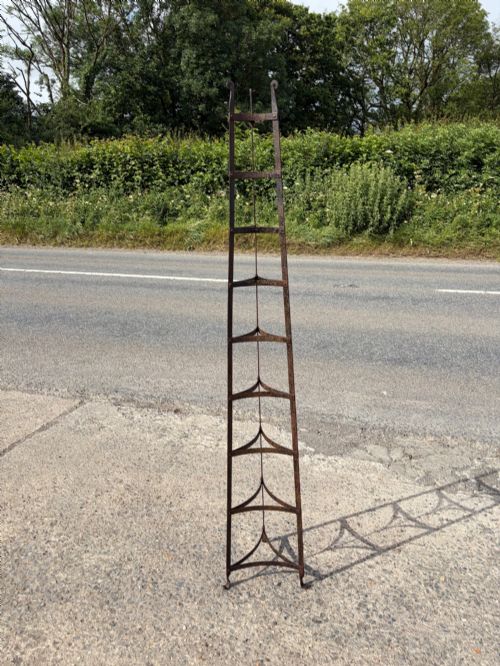
The pieces appearing on this page include individual lidded saucepans, matched sets of four copper pans, and tall wrought iron pan stands designed to hold them. English and French provincial examples dominate the selection, ranging from pint measures to large capacity kitchen vessels.
Most items reflect domestic and institutional food preparation before the advent of modern mass production. Heavy gauge metals and hand-beaten surfaces define the physical form of these kitchen survivors.
How they were made
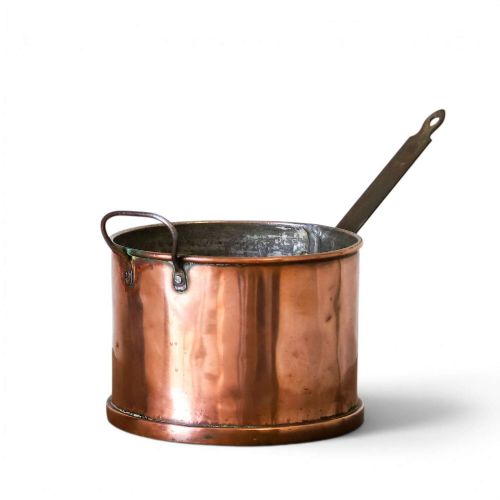
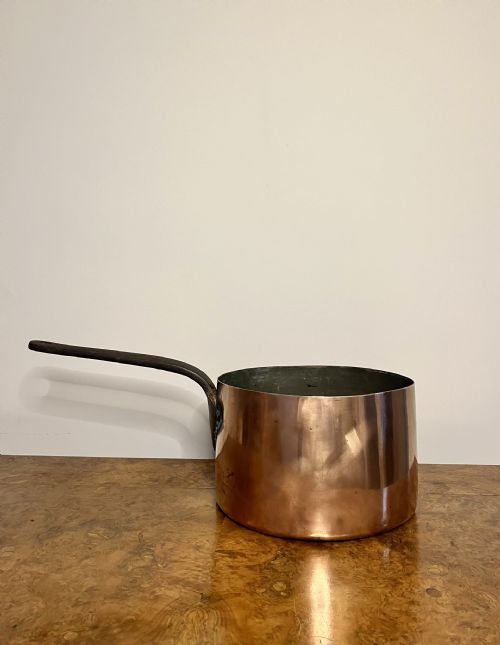
Makers formed these vintage saucepans primarily from heavy gauge copper, cast iron, and brass, often pairing bodies of copper with distinct iron handles. Blacksmiths and metalworkers shaped the vessels by hand, applying hand-beaten textures and securing handles with robust rivets.
Interiors received protective coatings of tin to prevent the toxic reaction of acidic foods with copper. Wrought iron and cast iron stands utilised traditional forging techniques to create tiered storage frames for heavy cookware collections.
Vintage Saucepans Retail Price Guide 2026
Typical asking prices for vintage saucepans among the pieces listed under this phrase on Sellingantiques today, from the lower quarter to the upper quarter. They describe what is for sale here now, not the wider market.
Listings feature copper, iron, brass, and wood across Victorian and Georgian periods.
What varies in quality
Metal thickness and structural integrity separate everyday kitchenware from top-tier examples. Heavy gauge copper retains structural rigidity through centuries of use, whereas thin metal succumbs easily to denting and warping around the base.
Original makers' stamps, intact hand-beaten hammer marks, and surviving internal tin linings elevate individual pieces. Maker signatures like Hodges and Sons, Liptons, or Griffiths Patent indicate workshops of higher standing.
Hodges & Sons·Liptons·Griffiths Patent
The Vintage Saucepans Glossary
- Gauge
- The thickness of the metal sheet used to form the pan body. Heavy gauge copper indicates a sturdier vessel designed for professional or sustained domestic heat.
- Tin lining
- A protective layer applied to the interior surface of copper and brass pans. This coating prevents copper toxicity during food preparation.
- Wrought iron
- Iron heated and worked by a blacksmith using tools. This material appears frequently in the pan stands and handles associated with early cookware.
- Hand-beaten
- A surface texture created by manually hammering the metal sheet into shape. This technique hardens the metal and leaves characteristic indentations.
- Skillet
- A shallow metal cooking vessel equipped with a long handle and often short legs for hearth placement. Georgian examples frequently combine brass bowls with iron handles.
Vintage Saucepans: Frequently Asked Questions
Can I cook with antique copper saucepans?
Many of these vintage saucepans remain structurally sound for modern use provided the interior tin lining is intact and thick enough.
Cooks should inspect the inner surface carefully before food preparation to ensure the bare copper is not exposed to acidic ingredients.
How do I clean vintage brass and copper?
Traditional non-abrasive metal cleaners restore the shine to copper and brass without wearing away the historic surface texture.
Avoid harsh scouring pads that leave scratches and diminish the tactile character of hand-beaten metal.
How can I tell a Georgian pan from a Victorian one?
Georgian copper pans often display earlier hand-forging techniques with distinct dovetailed base construction and heavier hand-beaten marks.
Victorian pieces frequently utilise standardised heavy gauge rolled sheets and carry maker stamps or patent marks from firms like Griffiths.
What were pan stands used for?
Multi-tiered wrought iron and iron stands provided vertical storage for heavy collections of kitchen saucepans in large country houses.
These freestanding racks kept heavy copper and brass vessels organised and accessible near the hearth or range.