






Vintage Sampler Frame
A vintage sampler frame holds needlework passed down through generations, offering a glimpse into domestic history through stitched alphabets and pictorial scenes.
Vintage Sampler Frame
A vintage sampler frame encloses historical needlework, protecting fragile textile art created centuries ago. Buyers searching for a vintage sampler frame typically encounter works originating from the eighteenth and nineteenth centuries, spanning Georgian and Victorian periods.
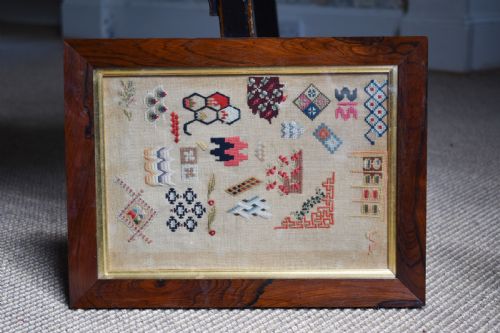
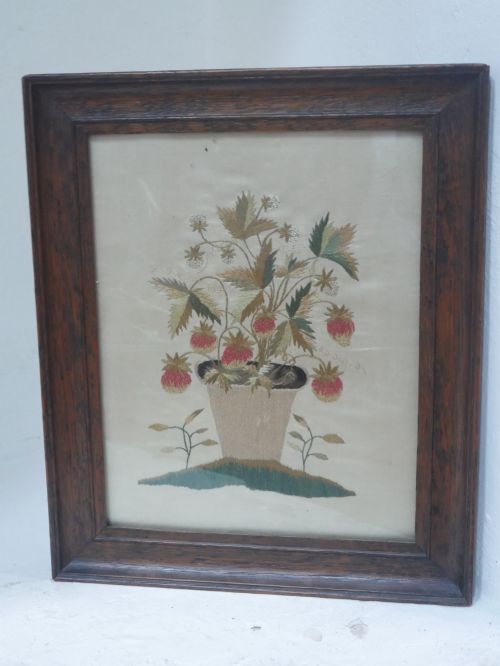
The objects displayed within these enclosures include alphabet samplers, map pieces, and pictorial needlework such as floral studies and figures. Many surviving examples record the name and age of the maker, often a young girl working linen with wool or silk thread.
The enclosures themselves range from simple timber mouldings to ornate gilt wood surrounds designed to showcase delicate needlepoint. These pieces reflect diverse stylistic traditions, from traditional English band samplers to French lace panels and folk art creations.
Materials and construction
These items combine traditional textiles with wooden framing and protective glass to preserve organic fibres. Makers worked coloured wool, silk thread, and plain thread onto a fine linen ground, stitching alphabets, numbers, and pictorial motifs by hand.
The housings utilise timber and gilt wood, joined to hold the glass securely away from the delicate embroidery surface. Historic enclosures often retain their original glass and backboards, which contribute to the authenticity of the piece.
Vintage Sampler Frame Retail Price Guide 2026
Typical asking prices for vintage sampler frame among the pieces listed under this phrase on Sellingantiques today, from the lower quarter to the upper quarter. They describe what is for sale here now, not the wider market.
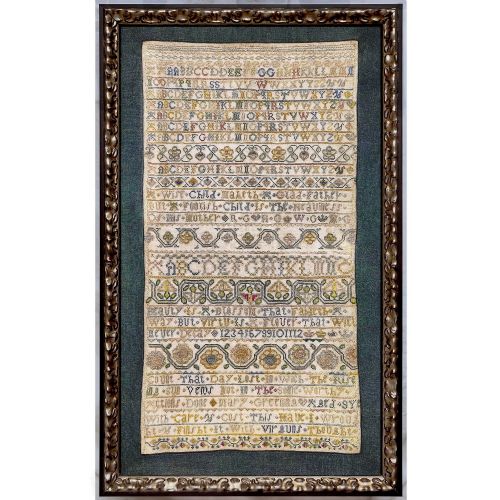
Mary Greening worked a band sampler when William and Mary were on the throne, proving childhood homework outlasts empires.
Assessing quality and preservation
Quality rests upon the preservation of the textile and the harmony between the needlework and its housing. Examples featuring clear maker inscriptions, dated signatures, and intricate pictorial elements command greater attention from collectors.
The condition of the linen ground and the vibrancy of the remaining silk or wool threads determine the merit of the textile art. Original frames that complement the period of the needlework without causing damage elevate the overall integrity of the piece.
The Vintage Sampler Frame Glossary
- Band sampler
- A long, narrow piece of linen featuring various rows of embroidery stitches and patterns practiced by the maker. These early formats often date to the seventeenth or eighteenth centuries.
- Needlework picture
- A pictorial textile composition depicting scenes, animals, or botanical studies rather than standard alphabets. These works showcase advanced pictorial stitching techniques.
- Map sampler
- An educational textile piece embroidered with geographical boundaries and place names. Young makers stitched these to demonstrate both needlework skill and geographical knowledge.
- Gilt wood
- Wood coated with a thin layer of gold leaf or metallic gilt paint. This finish frequently appears on formal antique picture frames.
Vintage Sampler Frame: Frequently Asked Questions
What is a sampler?
A sampler is a piece of needlework created to demonstrate a maker's proficiency in various stitches and patterns. They frequently include alphabets, numbers, and the name of the person who stitched it.
Historically, young girls produced these textile pieces as educational exercises. Surviving examples provide dated records of domestic needlecraft traditions.
How do I date a sampler?
Many samplers include embroidered dates and the age of the maker directly on the textile. Stylistic clues such as letter fonts, motifs, and framing materials also help determine the period.
Eighteenth-century examples often feature band formats and muted tones, whilst Victorian pieces commonly display alphabet grids and vibrant wool threads.
Can frames be changed?
Changing the enclosure of a historic textile requires careful consideration to avoid damaging the delicate linen and stitching. Many collectors prefer keeping pieces in their historic housings to preserve authenticity.
If re-framing is necessary, conservation-grade materials prevent acidic contact and protect the textile from environmental moisture.
Where should I hang textile art?
Textile art requires placement away from direct sunlight to prevent the fading of historic wool and silk threads. Stable indoor humidity levels protect the fragile linen ground from deterioration.
Positioning the piece on an interior wall ensures the needlework remains secure and protected from temperature fluctuations.