



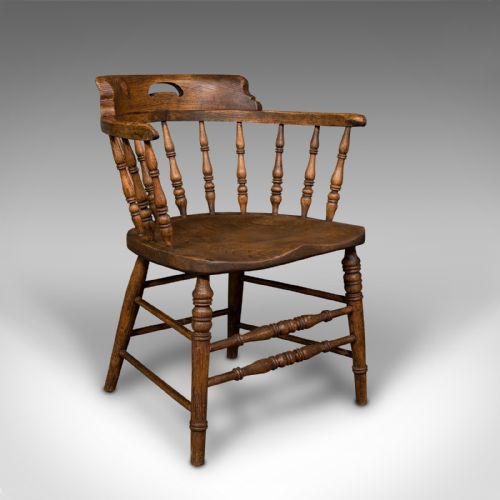
Vintage Saddle Seat Chair
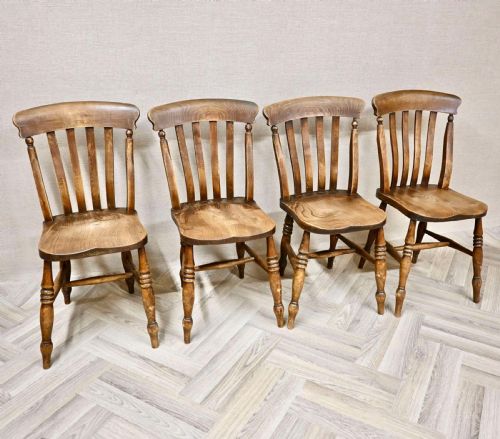
These vintage saddle seat chairs are solid timber seating built for comfort and hard work, offering deep-dished seats and sturdy spindles that anchor a traditional room.
Vintage Saddle Seat Chair
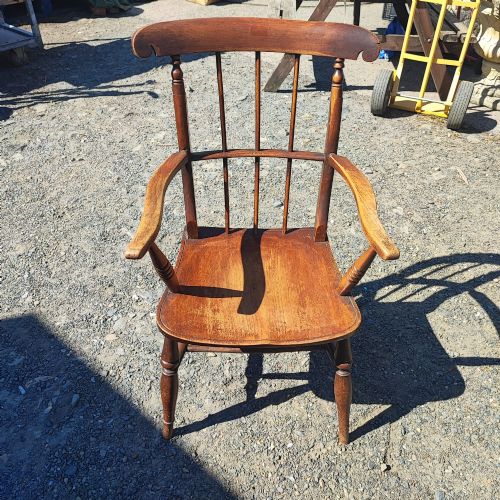
A vintage saddle seat chair is a piece of vernacular seating, most commonly found as a Windsor armchair, high back, or smoker's bow in English country styles. These pieces range from Georgian and Regency eras through the Victorian period and up to nineteen hundred, taking the form of armchairs, dining chairs, and kitchen sets.
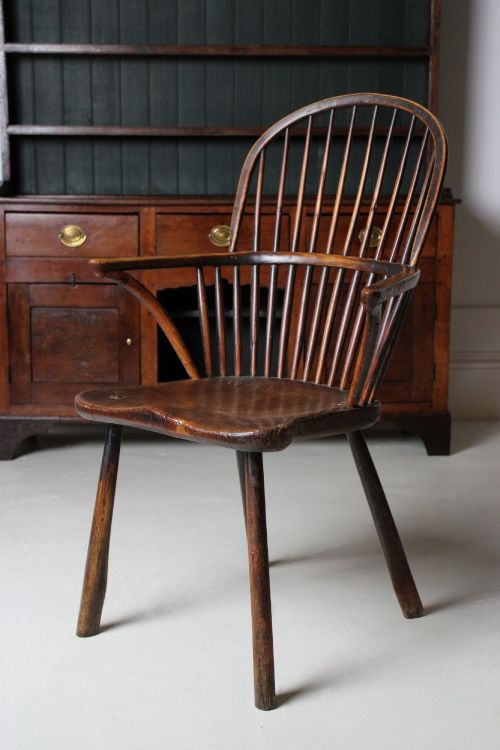
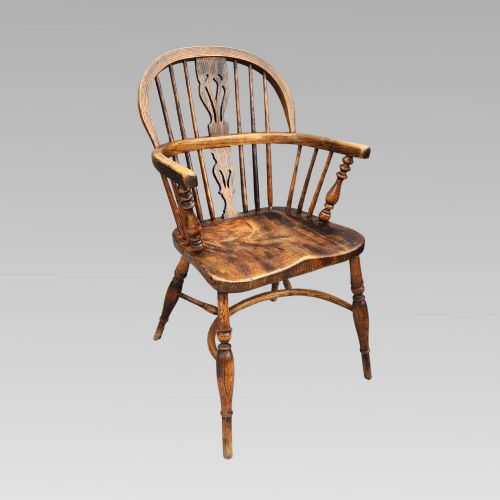
The most common version to meet on this page is the ash and elm Windsor armchair, often featuring a bowed back, spindle supports, and a deeply scooped wooden seat. You also encounter yew wood, fruitwood, beech, and oak variations, including wheel back designs and low smoker's bows.
How they were made
Maker-joiners built these chairs using a combination of turned greenwood spindles and thick solid timber seats. They bored holes directly into the elm saddle seats to wedge the legs and back uprights securely in place.
The construction relies on contrasting timbers for strength and visual depth, pairing flexible ash for the bows and spindles with dense elm for the carved seats. Yew and fruitwood also appear in select frames, shaped with drawknives and pole lathes.
Many an eighteenth-century farmer polished the elm seat of his Windsor chair to a mirror shine simply by sitting in it every evening.
What varies in quality
Quality in these chairs rests upon the depth and comfort of the sculpted saddle seat and the grace of the bentwood bow. Finer examples show deeply hollowed seats that fit the body naturally, alongside well-proportioned arm supports and balanced spindle turnings.
The choice of timber significantly shifts the character of the piece, with figured yew wood or rich ash-and-elm combinations sitting at the higher end of regional craftsmanship. A harmonious patina developed through decades of daily use further separates an ordinary utility chair from a distinguished country vernacular piece.
The Vintage Saddle Seat Chair Glossary
- Windsor chair
- A wooden chair built with a solid carved seat into which the back and legs are separately dowelled. This design forms the backbone of English country seating.
- Saddle seat
- A wooden seat base carved with hollows and contours resembling a horse saddle for seated comfort. Elm is the timber most frequently shaped for this purpose.
- Smoker's bow
- A low-backed armchair with a continuous curved armrail, also known as a captain's chair. These are typically constructed in ash and elm.
- Vernacular
- Objects designed by local tradesmen for everyday use rather than following strict high-style architectural blueprints. English country furniture is a primary expression of this tradition.
- Spindle back
- A chair back filled with narrow, turned wooden vertical rods. These provide lightweight structural support to the upper rail.
Vintage Saddle Seat Chair: Frequently Asked Questions
What is a saddle seat chair?
A saddle seat chair is a wooden seat carved with hollows to match the human form, paired with a stick or spindle back. These designs evolved for utilitarian comfort in farmhouses, kitchens, and vernacular workshops.
Most examples employ a thick elm base combined with ash or yew timbers. Their solid construction allows them to endure daily use across centuries.
How do I date a Windsor chair?
Dating relies on observing tool marks, timber combinations, and the assembly of the joints. Earlier eighteenth-century models often feature multi-piece construction and heavier proportions.
Victorian and later nineteenth-century versions introduce steam-bent continuous bows and standardised turnings. Regional styles also help pinpoint the era of production.
Are these chairs comfortable to sit in?
These chairs offer surprising ergonomic comfort because the solid wooden seats are deeply scooped by hand. The reclined angles of the spindle backs support the torso during extended sitting.
Adding a loose cushion can soften the timber seat for modern dining or desk use. Their sturdy frames provide reliable daily support.
Where should I place one at home?
These armchairs suit dining tables, studies, or quiet corners as standalone reading seats. Their natural wood tones blend easily with both rustic interiors and modern minimalist spaces.
Kitchens and hallways benefit from their durable surfaces and compact footprints. They add warmth and historical texture to a room.