


Vintage Rush Seat
Vintage rush seat chairs bring honest vernacular craft into a room, offering tactile woven texture alongside sturdy wooden frames.
Vintage Rush Seat
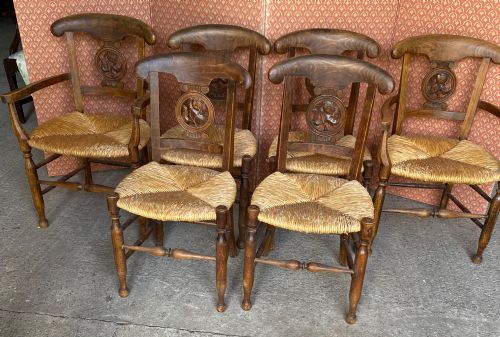
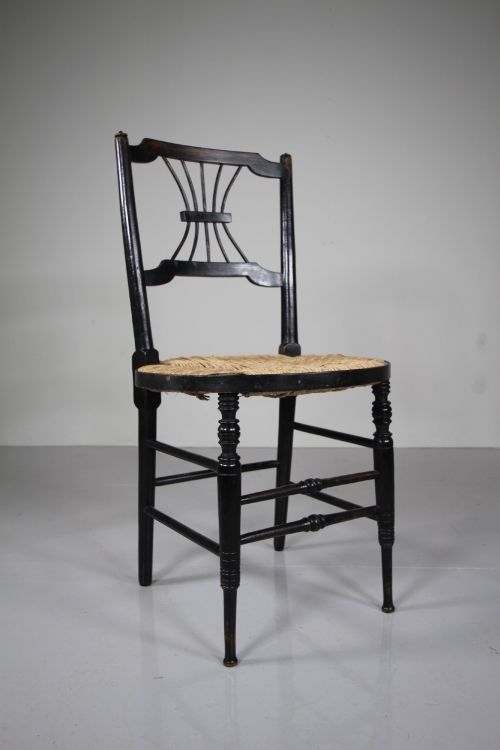
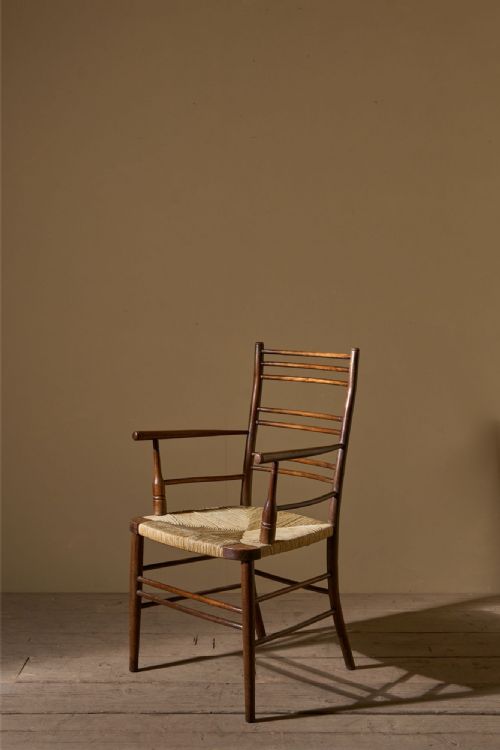
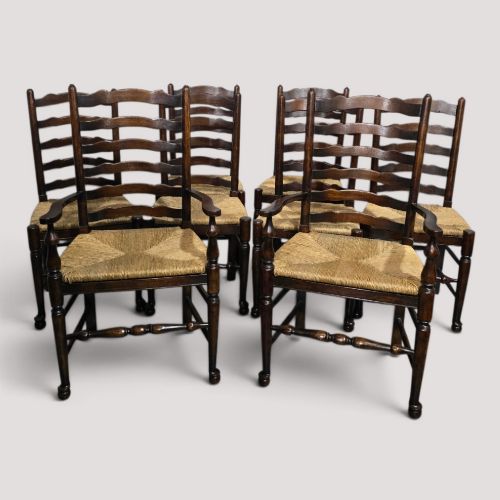
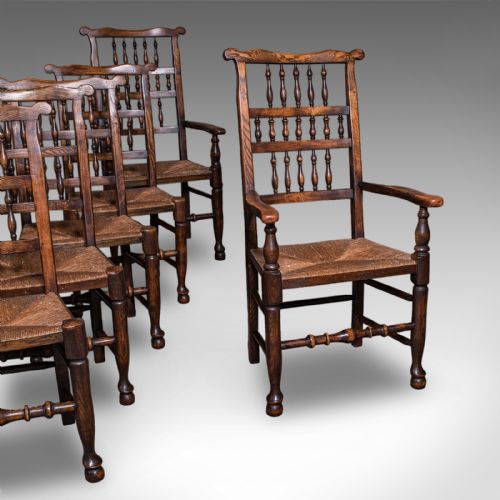
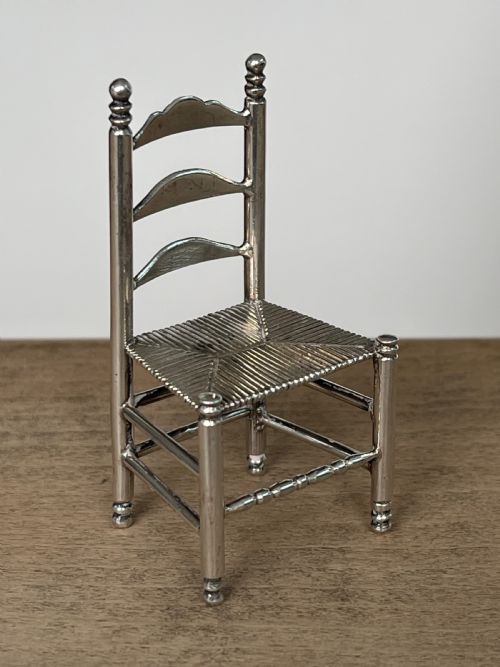
A vintage rush seat encompasses everything from sturdy nineteenth-century ladder backs to Arts and Crafts armchairs and French provincial dining sets. Buyers search this phrase when looking for seating that brings rustic warmth and traditional woven textures into domestic interiors.
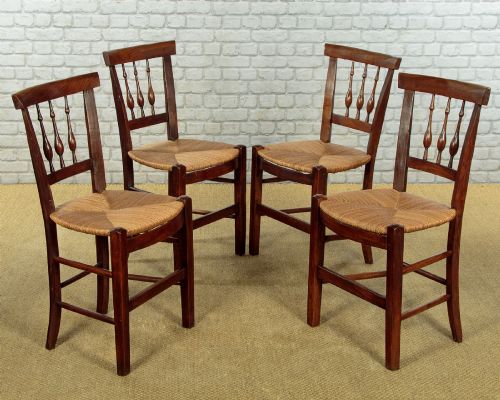
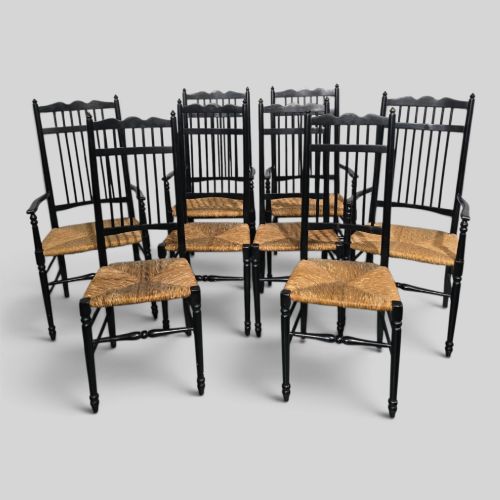
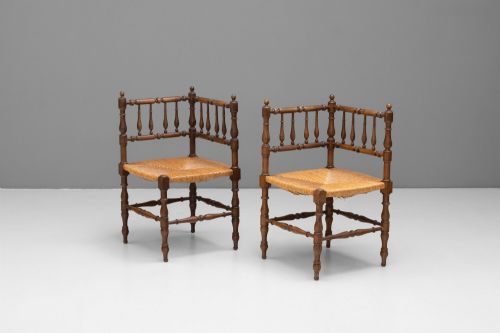
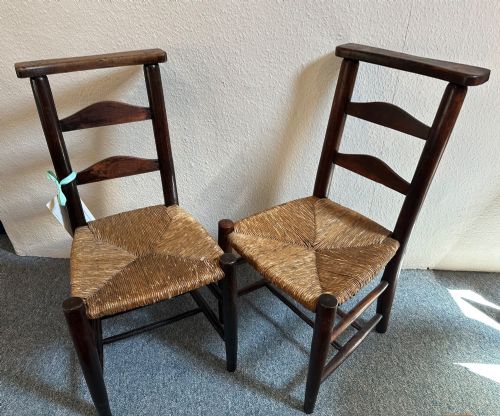
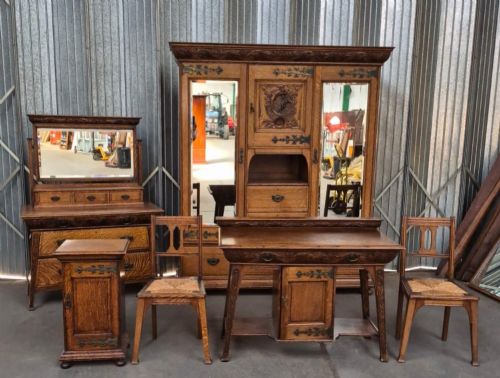
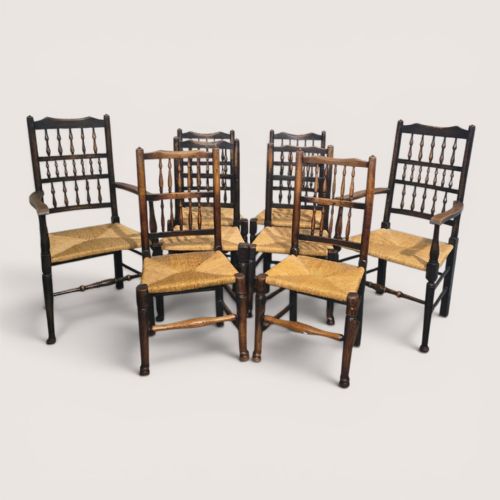
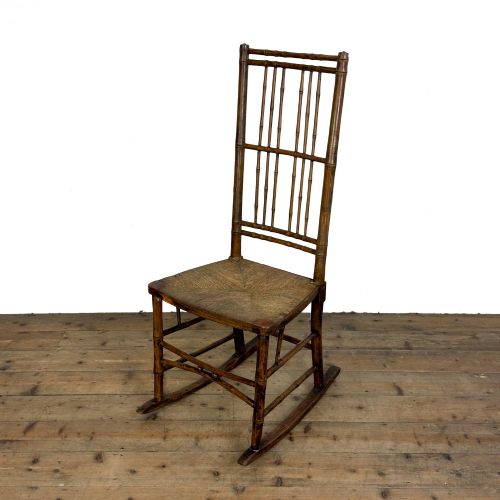
The most common forms on this page include oak and elm dining chairs, spindle backs, and low armchairs produced across the nineteenth and early twentieth centuries. These pieces reflect vernacular traditions ranging from English country workshops to French provincial and Arts and Crafts studios.
How they were made
Makers constructed the frames using native timbers such as oak, elm, beech, ash, and fruitwood, often turning spindles on a lathe or shaping ladder backs by hand. These structural elements provide the rigid skeleton required to support the tension of the woven seating.
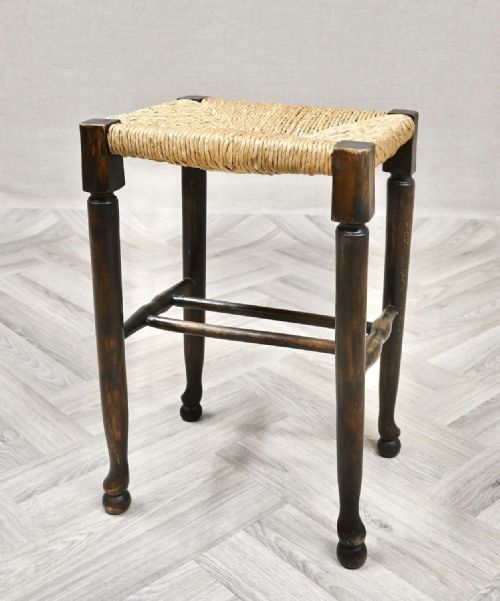
The characteristic seats are woven from dried marsh rush or similar natural cordage, wrapped tightly around wooden rails to form a durable, supportive pad. Frames frequently display original painted finishes, polish, or untreated patinated wood developed through decades of daily use.
Listings feature oak, elm, beech, and fruitwood frames paired with traditional rush seating across the nineteenth and early twentieth centuries.
What varies in quality
Quality depends upon the tightness and regularity of the rush weaving, as well as the structural integrity of the underlying wooden frame. Examples with crisp turning, substantial timber scantlings, and well-preserved original surfaces sit at the upper end of the scale.
The harmony of matched sets and the presence of maker attribution or provenance elevate certain pieces above standard vernacular furniture. Conversely, loose weaving, heavily altered frames, or mismatched replacements within a set diminish the overall integrity.
William Morris·Liberty and Co·Dicon Nance·Lawrence Neal
The Vintage Rush Seat Glossary
- Rush
- Dried marsh grass or sedge twisted into cord and woven tightly to form resilient chair seats. It yields a natural texture that patinates smoothly over time.
- Ladder back
- A chair style featuring horizontal arched slats between the upright rear posts. This vernacular form provides sturdy lumbar support in traditional seating.
- Spindle back
- A chair design incorporating numerous thin turned wooden rods in the backrest. It creates a lighter structural appearance while maintaining durability.
- Carver
- An armchair, typically designed to sit at the head of a dining table or function as a standalone seat. It often mirrors the side chairs in a larger matched set.
- Vernacular
- Everyday furniture built by regional craftsmen to local patterns rather than high court styles. These pieces prioritise practical utility and regional timber supplies.
Vintage Rush Seat: Frequently Asked Questions
How do I care for a rush seat?
Keep woven rush seats away from excessive moisture and direct heat sources that can dry out and snap the natural fibres. Regular dusting with a soft brush helps maintain the material.
Avoid sitting on these chairs with sharp objects or buckles that might catch and fray the tightly wound strands. Minor sagging can sometimes be supported from underneath, but professional re-weaving is required for damaged sections.
Are rush seats strong enough for daily dining?
Traditional rush seats are surprisingly resilient and designed for everyday domestic use in kitchens and dining rooms. Well-woven marsh cord distributes weight evenly across the wooden frame.
Older examples benefit from sensible handling rather than heavy strain. Selecting sets with solid oak or elm frames ensures dependable stability for regular meals.
How do I date a rush seated chair?
Dating relies on examining timber species, tool marks, joinery methods, and the style of the ladder back or spindles. Nineteenth-century examples often feature hand-turned parts and deep timber patination.
Later Arts and Crafts pieces from around nineteen hundred show specific stylistic revivals and sometimes bear maker marks or stamps. Comparing the turnery against documented regional vernacular styles helps narrow down the period.