



Vintage Rush Seat Dining
Vintage rush seat dining furniture brings together sturdy timber frames and woven cord seating, offering solid utility and understated country character.
Vintage Rush Seat Dining
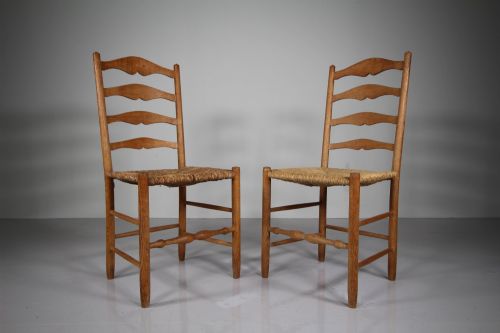
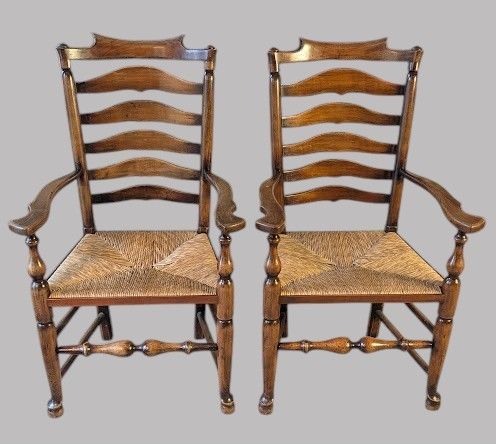
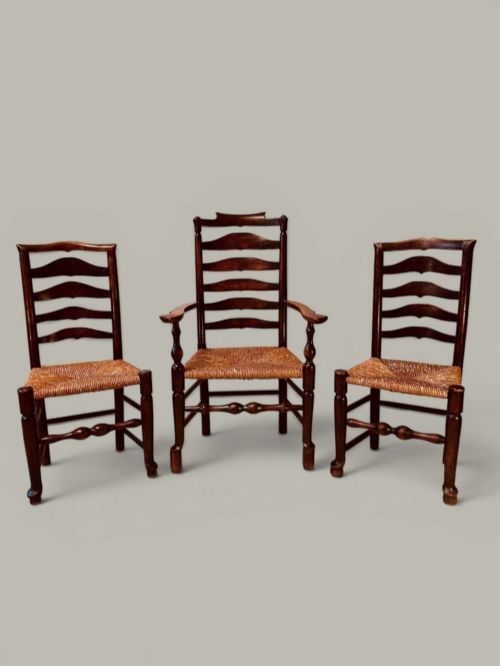
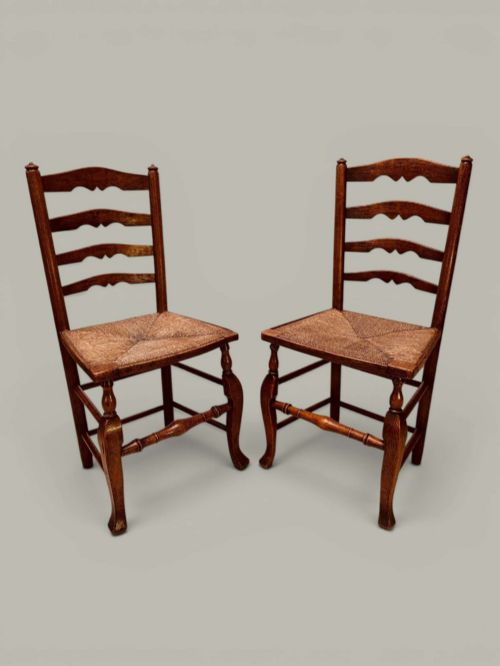
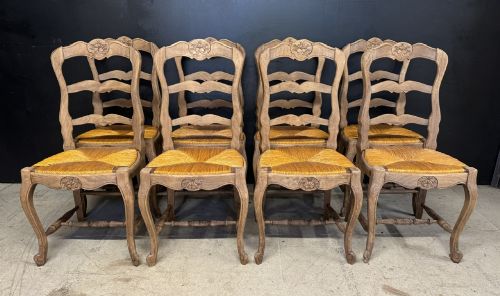
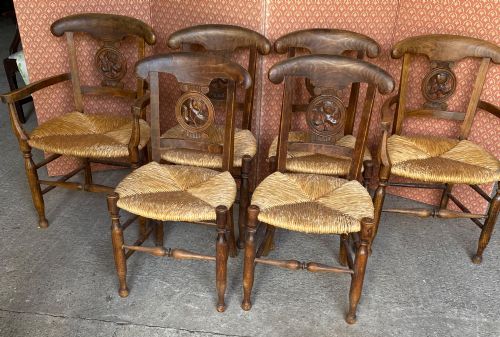
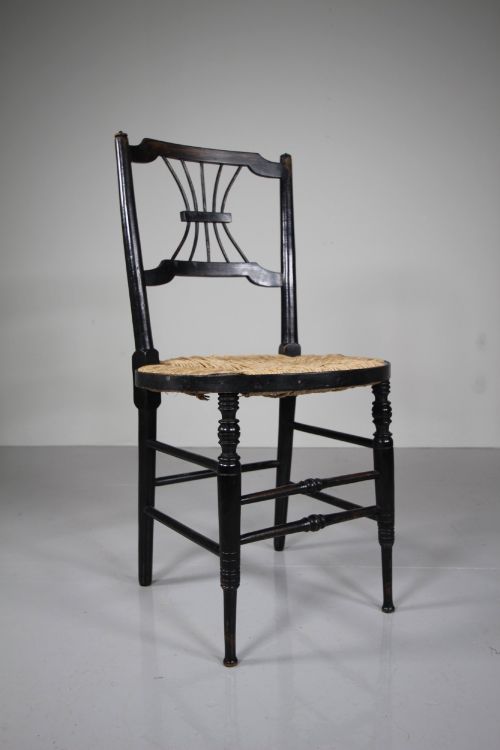
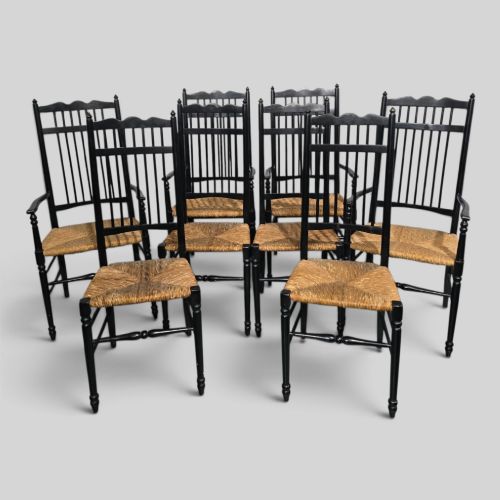
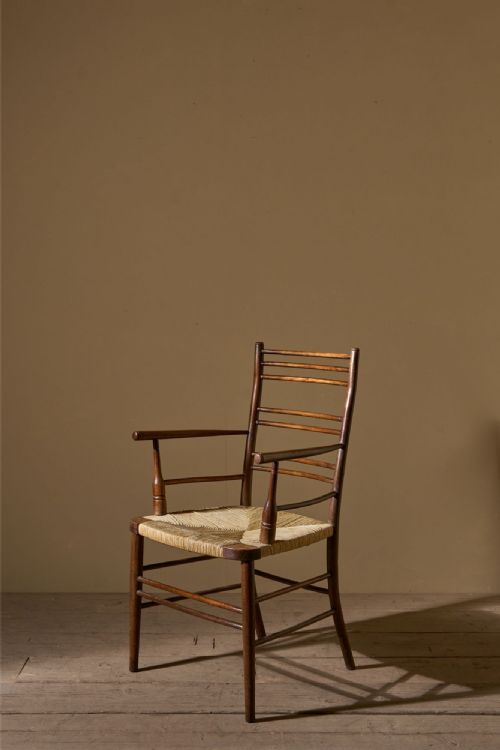
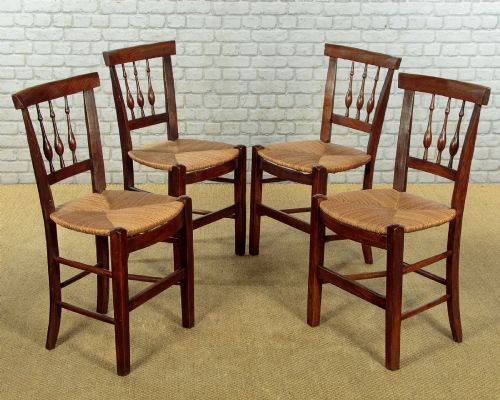
Vintage rush seat dining pieces encompass chairs built for everyday use, primarily featuring woven seating paired with wooden frames in styles ranging from English Country and French Provincial to Arts and Crafts. Buyers exploring this category encounter side chairs, armchairs, and carvers suitable for traditional dining spaces.
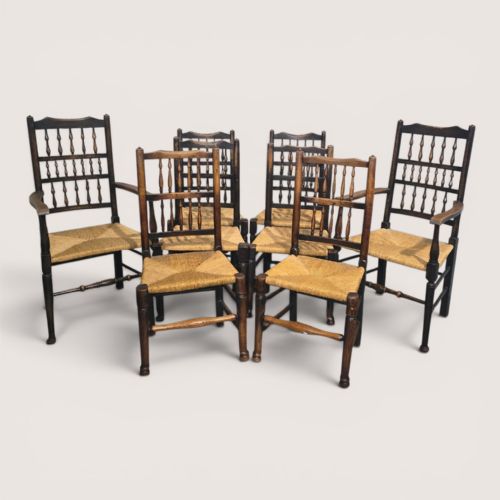
The selection includes single examples alongside large matching sets and harlequin collections originating across the eighteenth, nineteenth, and early twentieth centuries. Common regional variations include Lancashire spindle backs, ladder backs, and rustic farmhouse forms constructed from native timbers.
Makers and workshops from specific design movements are represented, alongside vernacular pieces shaped by local tradition. These chairs serve functional dining roles while anchoring an interior in historical domestic craft.
Materials and Construction
Construction relies on local hardwoods selected for strength and flexibility, with oak, elm, beech, ash, fruitwood, and painted bamboo forming the structural frames. Artisans shaped spindles, ladder backs, and bar backs using traditional turning and joining techniques to support daily seating demands.
Seats are tightly woven from natural rush, a pliable marsh plant material wound around cordage and hand-threaded across the seat rails in a square or envelope pattern. This weaving method creates a resilient, supportive surface that yields slightly under weight.
Vintage Rush Seat Dining Retail Price Guide 2026
Typical asking prices for vintage rush seat dining among the pieces listed under this phrase on Sellingantiques today, from the lower quarter to the upper quarter. They describe what is for sale here now, not the wider market.
A solitary child's rush seated high chair stands ready for the smallest diner in the household.
Factors That Separate the Best Examples
Quality rests in the integrity of the timber frame, the tightness of the joinery, and the condition of the woven rush. Superior examples retain their original structural rigidity without excessive movement in the joints.
Finer pieces demonstrate balanced proportions, careful wood turning, and uniform rush weaving that shows minimal sagging. Age-related surface wear on the timber adds depth, provided the underlying frame remains unaltered and sound.
William Morris·Dicon Nance·Lawrence Neal·Heals
The Vintage Rush Seat Dining Glossary
- Rush
- A marsh plant used for centuries to weave durable, textured seats for vernacular and designer chairs. It provides a firm yet flexible surface that patinates with age and use.
- Ladder back
- A chair style featuring horizontal slats set between the upright rear posts, frequently found in country and Arts and Crafts dining seating. The number of rails typically defines the specific regional form.
- Spindle back
- A chair design incorporating numerous thin turned wooden rods along the backrest for support. This construction offers light visual weight combined with robust structural strength.
- Carver
- An armchair designed with elbow rests, traditionally placed at the head of a dining table. These pieces match or complement the smaller side chairs in a dining set.
Vintage Rush Seat Dining: Frequently Asked Questions
How do I care for rush seats?
Keep woven rush dry and clean by brushing it gently to remove dust, avoiding excessive moisture that can weaken the natural fibres. Applying a light humidity level in the room prevents the material from becoming brittle over time.
Protect the seat from sharp objects and heavy localized weight to maintain the tension of the weave. Periodic inspection ensures the frame and cordage remain stable during everyday dining use.
Can I mix these chairs with modern tables?
These wooden and woven chairs pair naturally with plain timber, glass, or stone dining tables, adding warmth and historical texture to contemporary spaces. The variety of ladder back and spindle designs allows them to complement clean architectural lines.
Matching different regional woods creates an eclectic dining arrangement without disrupting the room's overall balance. The neutral tones of natural rush and oak or elm bridge different interior styles easily.
How do I identify Arts and Crafts chairs?
Arts and Crafts dining chairs display honest construction methods, exposed joinery, and simplified forms rooted in traditional craftsmanship rather than mass production. They often feature clean ladder backs or substantial oak frames paired with rush seating.
Look for workshop labels or distinctive turning patterns associated with prominent designers and regional guilds from the late nineteenth and early twentieth centuries. The focus remains on functional utility and the natural grain of the wood.
Are these chairs suitable for daily use?
Constructed from solid hardwoods like oak, elm, and beech, these dining seats are built to withstand regular family meals and extended gatherings. Their sturdy joinery provides reliable daily support.
While the wooden frames endure heavy use, the woven rush seating requires sensible care to avoid puncturing or stretching. With proper maintenance, they function as practical dining furniture for everyday living.