



Vintage Rush Chair
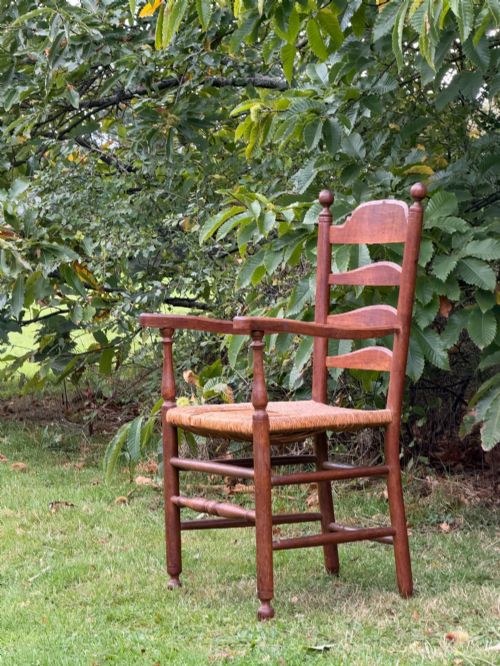
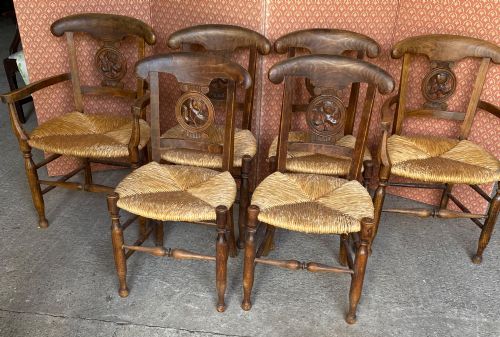
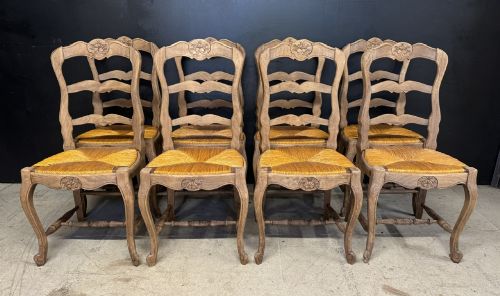
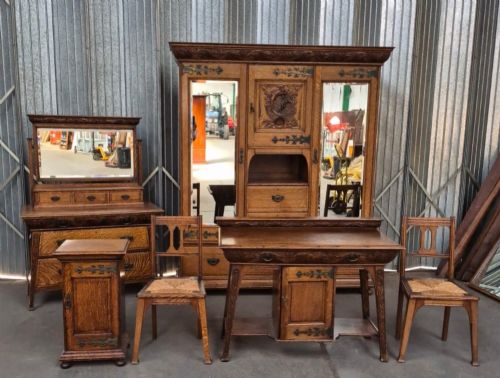
A vintage rush chair brings rustic texture and straightforward traditional craft to a room, whether you choose a French farmhouse dining set or an Arts and Crafts armchair.
Vintage Rush Chair
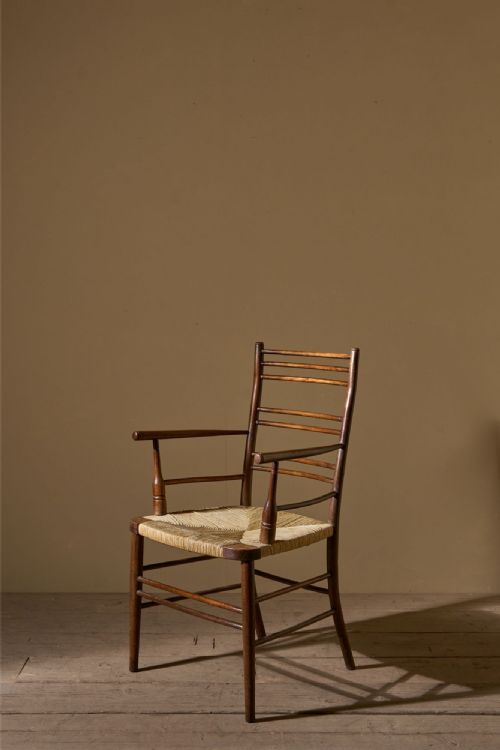
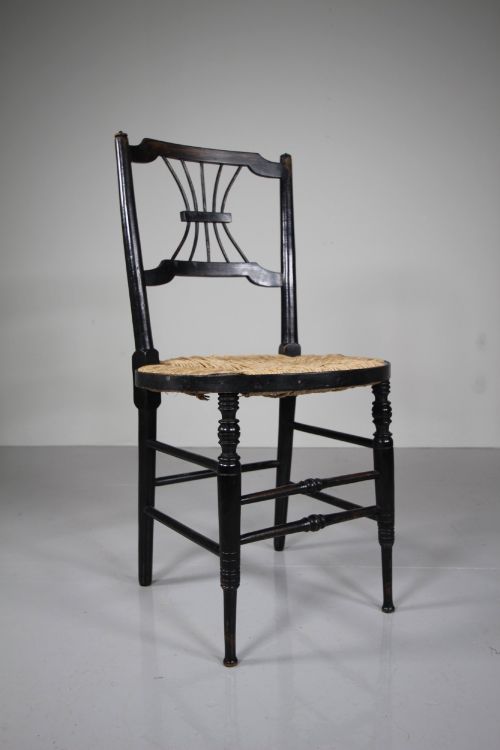
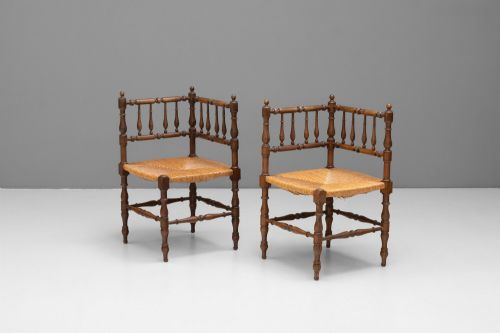
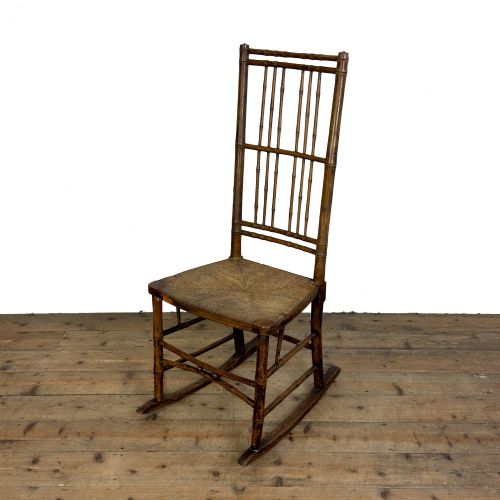
A vintage rush chair spans utilitarian country seating, Arts and Crafts workshop productions, and vernacular farmhouse designs dating from the eighteenth century through the early twentieth century. When exploring this selection, buyers encounter dining chairs, armchairs, rocking chairs, and low corner chairs shaped by regional traditions.
The material identity rests on woven rush seats combined with timber frames in oak, elm, beech, fruitwood, and ash. Many examples reflect English country, French provincial, and Scottish vernacular movements, alongside notable London workshop pieces.
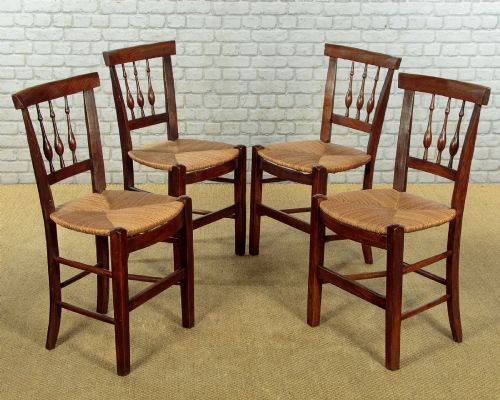
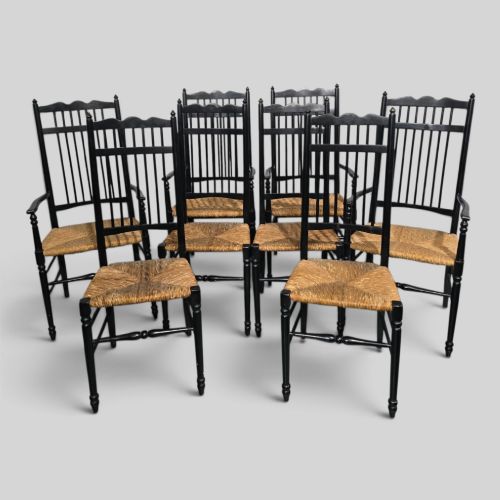
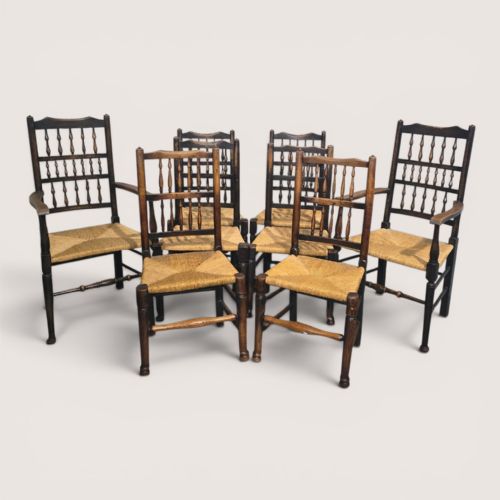
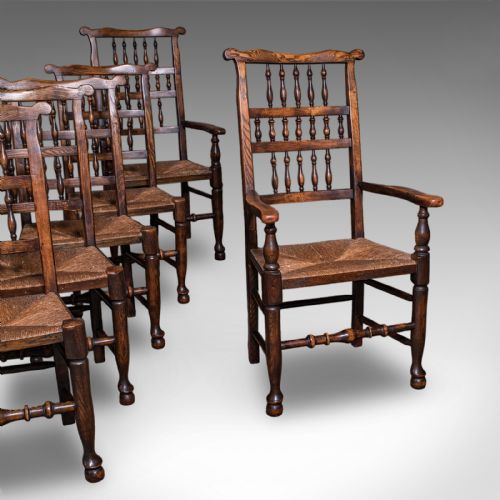
Dining sets and individual carvers dominate the listings, frequently appearing in groups or matched pairs originating from French and English domestic contexts. Buyers also find specialised forms including ladder backs, spindle backs, nursing chairs, and high chairs.
Materials and construction methods
Makers built frames from native hardwoods such as sturdy oak, flexible elm, smooth beech, and patterned fruitwood, utilising pegged mortise and tenon joints to secure the structure. Turned spindles, ladder backs, and curved armrails give these frames their specific regional profiles.
Seats are woven by hand using dried marsh rush, tightly wrapped around wooden seat rails in concentric patterns that provide both resilience and elasticity. Some historical examples feature applied paint finishes or original surface treatments over the timber.
Vintage Rush Chair Retail Price Guide 2026
Typical asking prices for vintage rush chair among the pieces listed under this phrase on Sellingantiques today, from the lower quarter to the upper quarter. They describe what is for sale here now, not the wider market.
Materials recorded across these pieces include rush, oak, elm, beech, fruitwood, ash, and paint.
Distinctions in construction and finish
Quality depends upon the tightness and regularity of the rush weaving, alongside the structural integrity of the timber frame and its joints. Examples originating from notable workshops or bearing maker documentation hold distinct status compared to anonymous vernacular pieces.
Surface condition dictates character, with untouched original paint or patinated bare timber showing greater integrity than compromised replacements. The harmony of matched sets and the precision of turned spindle work further separate standard utility seating from finer artisan output.
Morris and Co·Rossetti·Liberty and Co·Lawrence Neal
The Vintage Rush Chair Glossary
- Rush
- Marsh grass twisted and woven by hand to form durable, textured chair seats. It yields a natural straw-coloured surface that patinates with age.
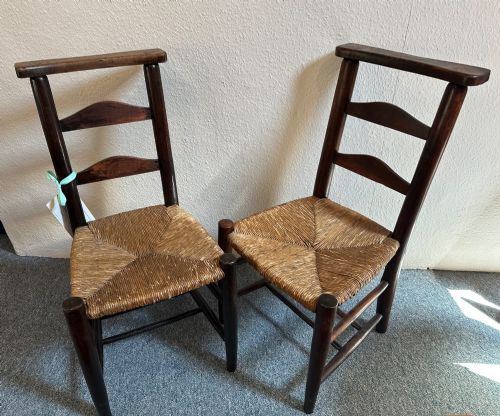
- Ladder back
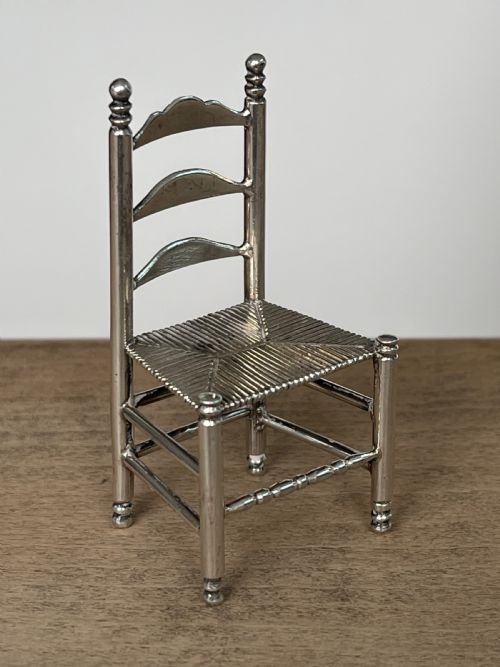
- A chair back constructed with horizontal arched slats between two upright posts. This traditional form appears frequently in English and French country seating.
- Carver
- An armchair designed with armrests, traditionally set at the head of a dining table or used as a fireside seat.
- Spindle back
- A chair back filled with vertical turned wooden rods rather than solid planks or splats. This technique lightens the frame while maintaining structural strength.
- Arts and Crafts
- A design movement valuing handcraft, vernacular traditions, and honest materials. Makers associated with this style produced simplified ladder backs and rush seats.
Vintage Rush Chair: Frequently Asked Questions
Are these chairs suitable for daily dining?
Most antique rush seating was constructed for daily domestic use and handles regular dining room activity comfortably when the frame and joints remain sound.
Check that the wooden stretchers are rigid and the woven rush shows no signs of fraying before placing chairs into heavy service.
How do I date an elm ladder back?
Examine the timber grain, tool marks on the underside, and the construction of the joints to determine the approximate period of manufacture. Hand-turned spindles and pegged joinery generally point to eighteenth or nineteenth-century vernacular production.
Compare the proportion of the ladder slats and the wear patterns on the feet with documented regional examples from the same era.
Can a damaged rush seat be repaired?
A professional restorer can completely re-weave a damaged or broken rush seat using traditional marsh grass materials and binding techniques.
Partial repairs are rarely successful due to the tension required across the entire woven platform, making full re-seating the standard method for restoration.