

Vintage Rural Country Painting
A vintage rural country painting brings the quiet rhythms of pasture, farmyard and village life directly into a room.
Vintage Rural Country Painting
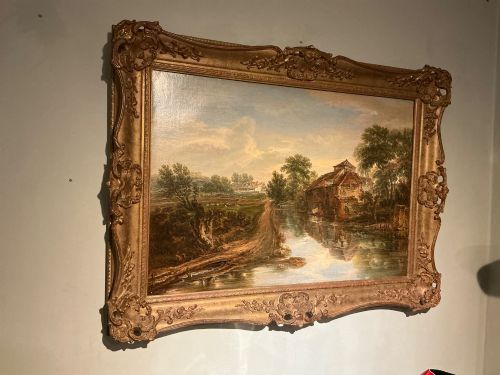
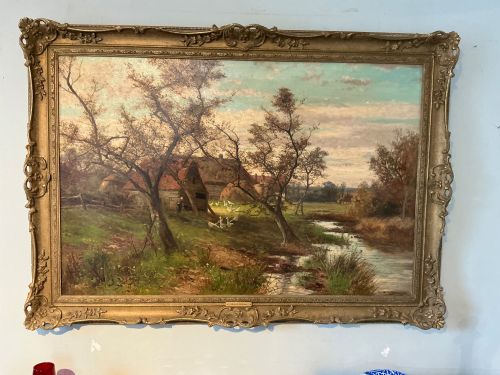
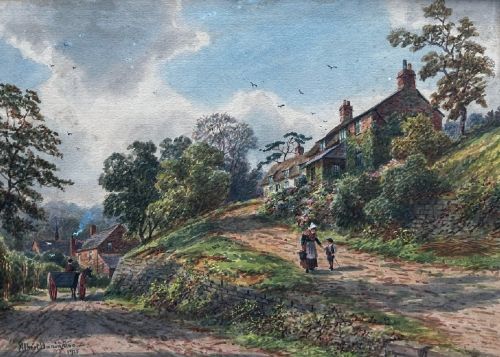
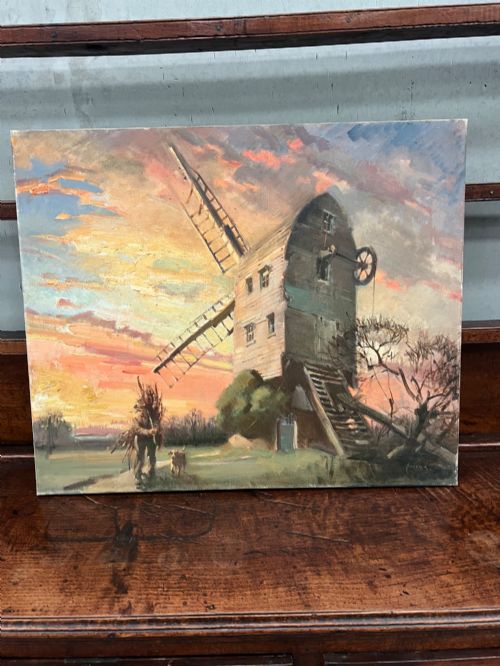
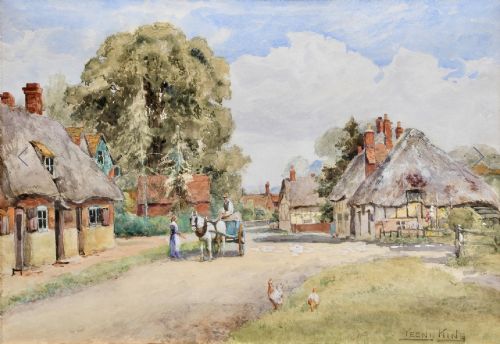
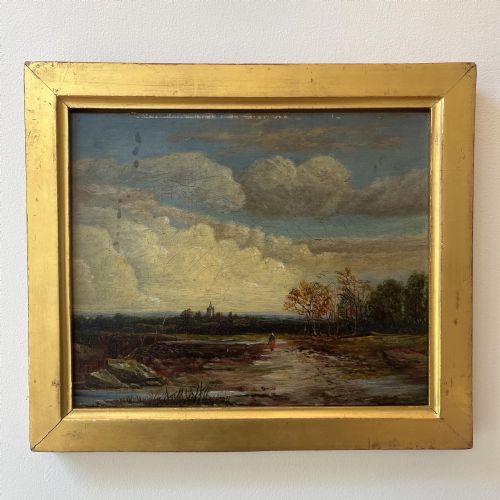
A vintage rural country painting captures landscapes, farming scenes, cottages and livestock across periods ranging from the nineteenth century through the mid twentieth century. Buyers search for these works to anchor a room in the traditions of agricultural life, pastoral views and quiet village settlements.
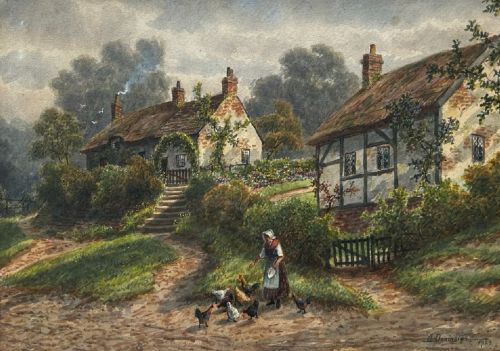
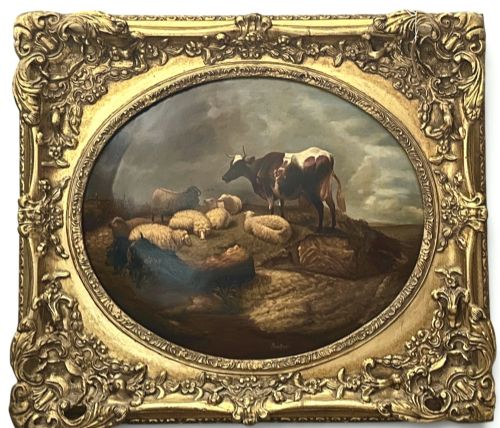
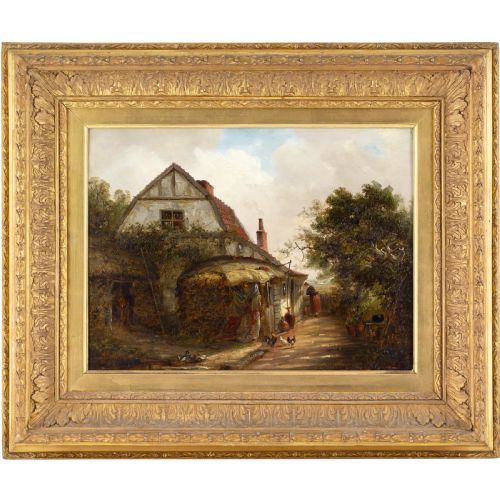
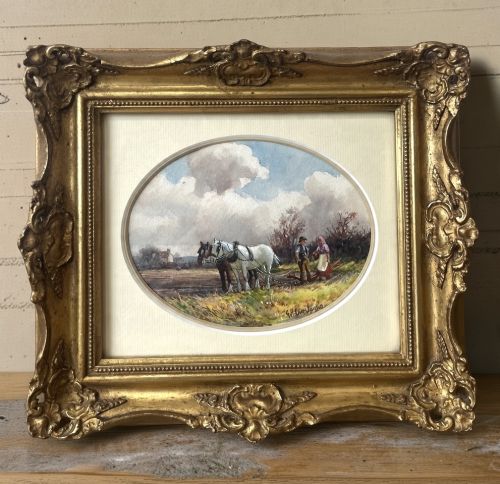
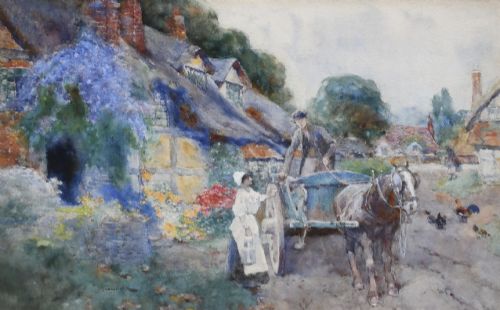
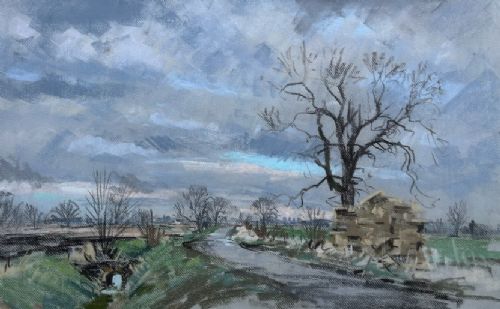
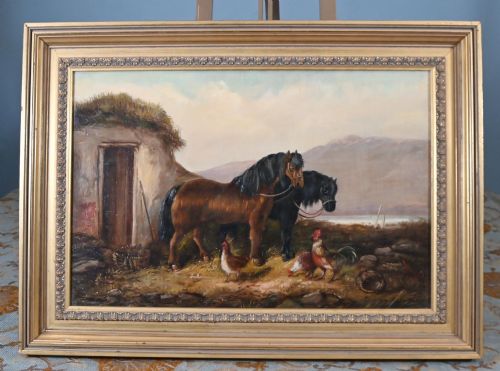
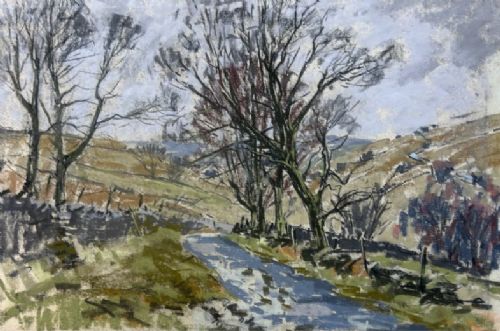
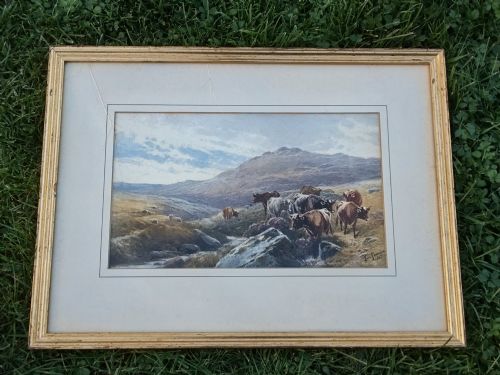
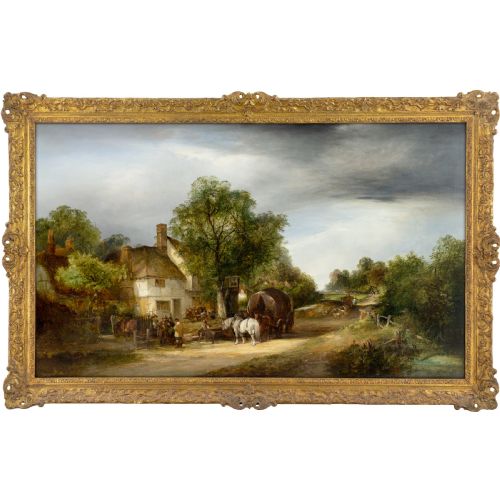
The selection on this page relies heavily on British and English school artists working in oil and watercolour, alongside pastel drawings and gouache. Typical subjects include farmyards with horses and carts, cattle grazing by streams, thatched cottages and Yorkshire or Scottish landscapes.
Most pieces date from the Victorian era up to the mid twentieth century, encompassing British Impressionism, Post-Impressionism and traditional academic realism. Smaller works on wooden board or card appear alongside substantial framed oils on canvas.
Materials and methods
Artists painted primarily in oil on canvas, wooden board, card or primed panel, utilising pigment mixed with linseed oil to build rich textures and deep colour fields. Watercolours on paper offer a lighter, more transparent medium, often heightened with gum arabic or bodycolour for contrast.
Supports frequently include stretched canvas housed in period gilt wood frames, heavy wooden boards, and thick artist paper or pastel cards. Painters applied these materials using bristle brushes for oils and fine sable brushes or chalk sticks for watercolours and pastels.
Vintage Rural Country Painting Retail Price Guide 2026
Typical asking prices for vintage rural country painting among the pieces listed under this phrase on Sellingantiques today, from the lower quarter to the upper quarter. They describe what is for sale here now, not the wider market.
Listings feature works spanning the nineteenth century, the Victorian era, and the mid twentieth century, executed in oil, watercolour and pastel.
Assessing the work
Quality rests upon the artist's command of light, atmosphere and anatomical precision in rendering figures, livestock and horses. Stronger pieces demonstrate confident brushwork, balanced composition and an authentic sense of place, whereas weaker works rely on rigid repetition and flat colour.
Condition plays a central role, distinguishing works that retain their original pigments and period frames from those suffering heavy surface grime, craquelure or careless restoration. The sensitivity of the touch in rendering everyday agricultural tasks separates routine decorative items from accomplished paintings.
David Woodlock·John Shelley·Angus Rands·Thomas Rowden·Edward Charles Williams·William Shayer·George Augustus Holmes·Frederick Walker·Edgar Hunt·George Morland·Sydney Yates Johnson·Harry Freckleton·Ernest Higgins Rigg·John Hobson Nicholson·William Greaves
The Vintage Rural Country Painting Glossary
- British Impressionism
- A painting style influenced by the French movement but retaining a distinct British focus on domestic landscapes, coastal scenes and rural light. It emerged in the late nineteenth century.
- Oil on Canvas
- Pigment bound in drying oil applied to a woven fabric stretched across a wooden frame. This combination allows for rich blending and textured impasto.
- Watercolour
- Pigments suspended in a water-soluble vehicle, traditionally applied to heavy paper. It creates luminous, translucent washes of colour.
- Genre Painting
- The pictorial representation of scenes from everyday life, typically involving ordinary people engaged in domestic or agricultural activities.
- Gilt Wood
- Wood carved and coated with a thin layer of gold leaf or metallic gilt paint. It is commonly found on traditional picture frames.
Vintage Rural Country Painting: Frequently Asked Questions
What subjects appear in these paintings?
These works depict traditional agricultural scenes, including farmyards, cattle grazing, horses pulling hay wagons, thatched cottages and regional landscapes across Britain.
Figures engaged in daily rural tasks such as feeding poultry or logging also form a central part of the subject matter.
How do I date a rural painting?
Dating relies upon stylistic markers, artist signatures, framing methods and the physical substrate, such as millboard, canvas or early card stocks.
Victorian pieces often display heavier academic detail, while mid twentieth century works embrace looser Impressionist brushwork and brighter palettes.
Are watercolours as durable as oils?
Watercolours on paper require protection behind glass and away from direct sunlight to prevent fading of delicate pigments over time.
Oil paintings on canvas or board are more robust, though they still benefit from stable indoor humidity and gentle cleaning.
Where were these artists active?
Many painters worked as part of recognised regional groups, such as the Staithes art colony in Yorkshire or various English school movements.
Their subjects frequently draw from specific rural locales across Yorkshire, Devon, Nottinghamshire and the Isle of Man.