




Vintage Ruby Glass Light
These vintage ruby glass light fixtures bring a rich, deep red glow to a room, cast through brass, enamel, and gilded metal work.
Vintage Ruby Glass Light
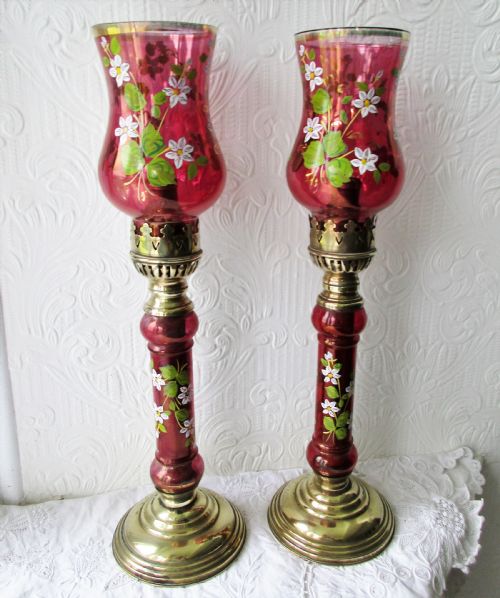
When you search for vintage ruby glass light, you encounter a range of forms spanning the nineteenth and early twentieth centuries. The selection encompasses oil lamps, chandeliers, candle lamps, lamp shades, and matching pairs of lustres.
Victorian pieces dominate the offerings, often combining ruby glass with brass components or silver plating. You also find Edwardian ceiling pendants and Bohemian glass elements.
The objects take both hanging and table-standing forms, including wall-mounted oil lamps converted to electricity and individual chandelier bowls or arms.
Materials and construction
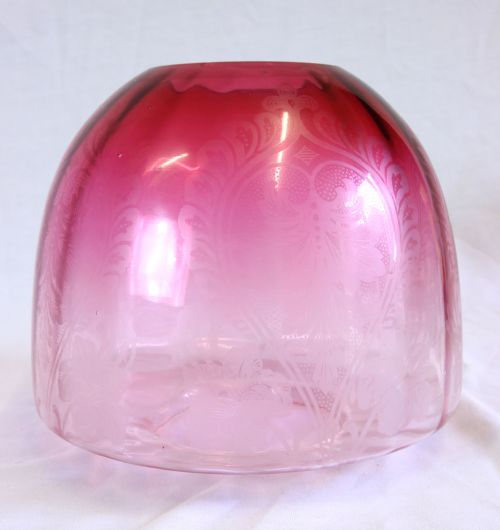
The manufacture relies primarily on ruby glass, cranberry glass, and crystal combined with brass frames, gilded metal work, and silver plating. Artisans shaped the glass through cutting, etching, frosting, and adding gold leaf details.
Many items incorporate structural brass mounts, arms, and chains to support the heavy glass components. Decoration includes enamelling, hunting themes, and hanging crystal teardrops.
The listings span the nineteenth century, the Victorian period, the Edwardian era, and the nineteen-twenties, incorporating brass, enamel, and cut glass.
What separates the better examples
Quality rests upon the depth and clarity of the ruby glass, alongside the crispness of any cut or etched patterns. Hand-applied gilding and enamel work show greater control on finer pieces.
The matching of pairs, the weight of the brass or silver-plated mountings, and the presence of original parts such as matching peg lamps or chandelier arms distinguish the more substantial items from simpler components.
The Vintage Ruby Glass Light Glossary
- Ruby glass
- A deep red coloured glass produced by adding gold compounds or other minerals to the molten batch during manufacture. It provides the signature saturated hue seen across these lamps and shades.
- Cranberry glass
- A transparent pinkish-red glass created using gold chloride, often lighter in tone than ruby glass. It appears frequently in Victorian lamp shades.
- Lustre
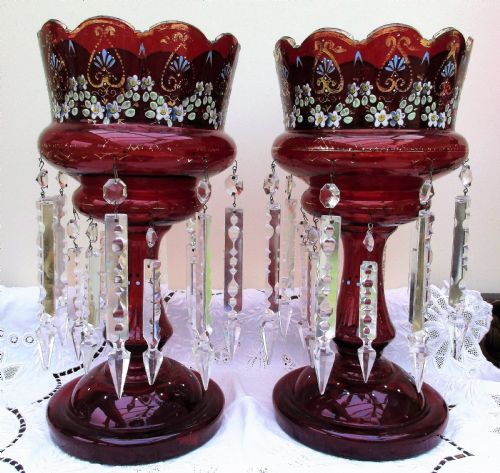
- A decorative glass or porcelain vase fitted with hanging crystal prisms or pendants. Victorian examples in ruby glass often sit on mantelpieces or act as decorative light garnitures.
- Peg lamp
- A small oil lamp featuring a tapered lower section or peg designed to fit directly into the top of a candlestick or lamp base. Pairs of these frequently survive intact.
- Chandelier arm
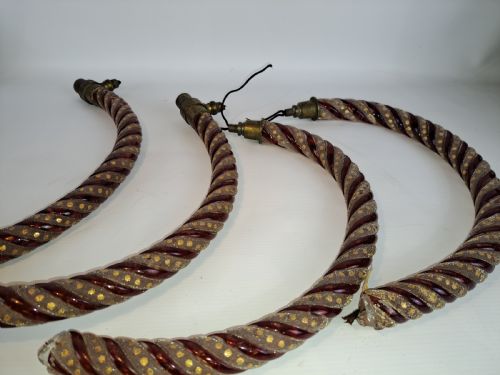
- A curved branch or component channelled to hold light fittings or glass drops. Bohemian examples show detailed ruby coloration and gilding.
Vintage Ruby Glass Light: Frequently Asked Questions
What is a ruby glass oil lamp?
A ruby glass oil lamp is a nineteenth-century lighting device featuring a reservoir or shade made from deep red glass. These pieces combine functional brass or metal burners with coloured glass bodies.
Many surviving examples date from the Victorian era and have since been converted to electricity for modern use.
How do I identify Victorian ruby glass?
Victorian ruby glass displays a dense, rich red coloration that often appears dark until light passes through it. Look for period manufacturing traits such as hand-cut facets, etched details, and applied gold leaf.
Items from this period frequently pair the red glass with heavy brass mountings, silver plating, or matching crystal drops.
Were these lights converted to electricity?
Yes, many older oil lamps and candle-lamps in this selection have been altered to take electric bulbs. This conversion allows period wall-mounted or table lamps to function safely in contemporary interiors.
Original components like glass bowls, shades, and brass fittings generally remain intact despite the rewiring.
What are mantel lustres?
Mantel lustres are decorative glass vessels hung with crystal prisms, designed to catch and refract light. Victorian ruby glass lustres were traditionally placed on mantelpieces alongside matching candlesticks.
They reflect the nineteenth-century preference for rich colours and sparkling crystal ornamentation in home decor.