



Vintage Ruby Band
A vintage ruby band brings together rich red stones and precious metals across styles from Victorian starbursts to mid-century modern lines.
Vintage Ruby Band
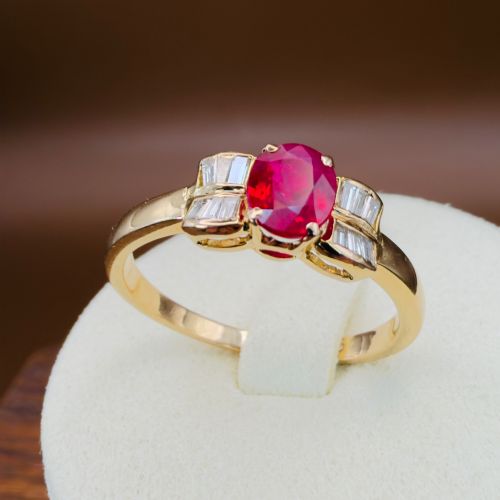
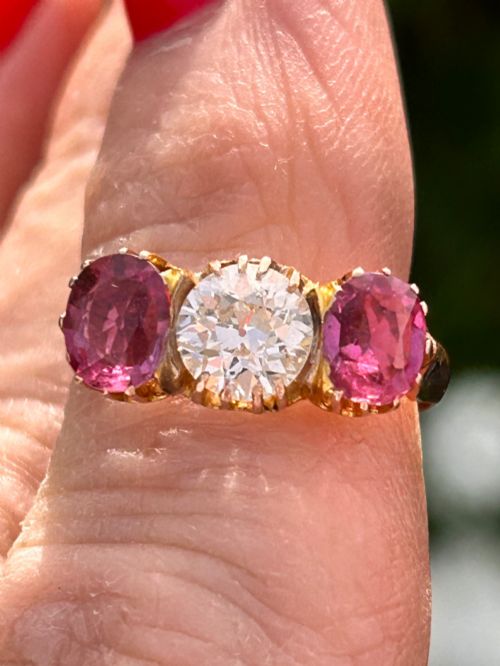
A vintage ruby band is a ring that incorporates rubies alongside diamonds, pearls, or sapphires, set in gold or platinum. These rings span periods from the late nineteenth century through the Edwardian era and the mid-twentieth century.
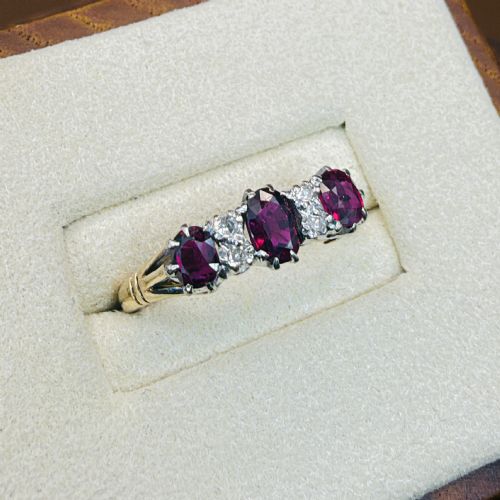
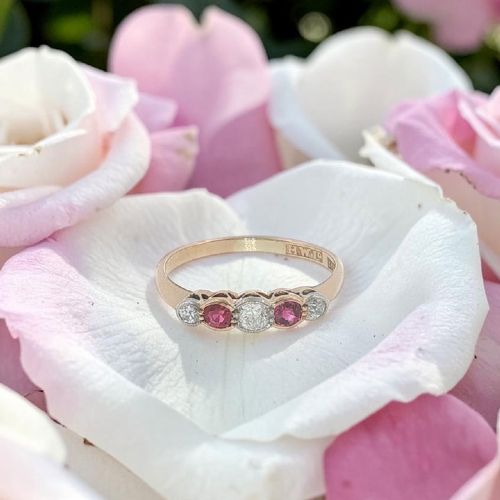
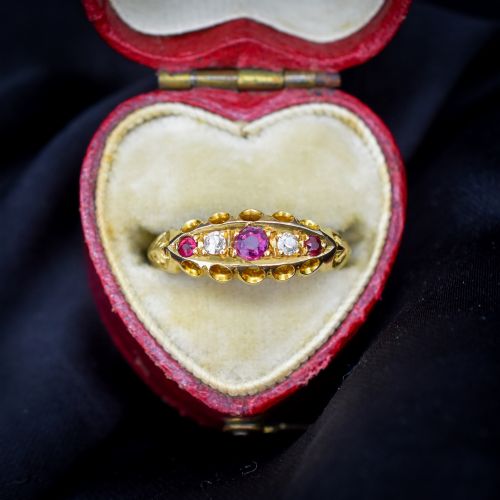
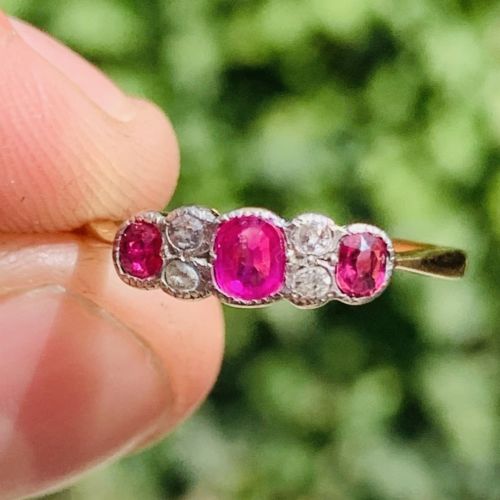
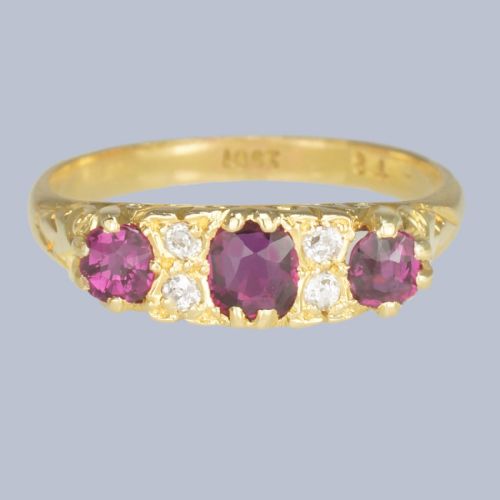
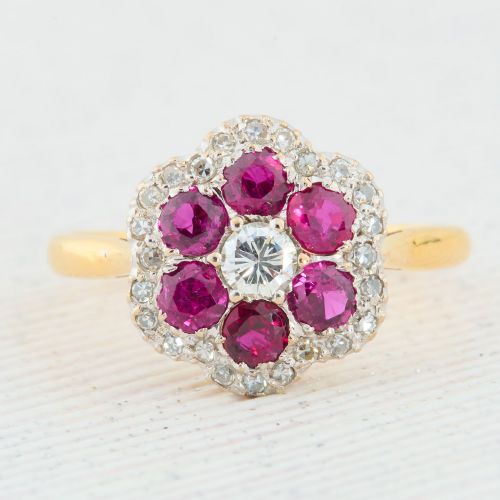
The version most commonly encountered on this page is an 18ct gold band featuring a combination of rubies and diamonds in cluster, trilogy, or five-stone formations. Many pieces carry hallmarking from British assay offices such as Chester and Birmingham.
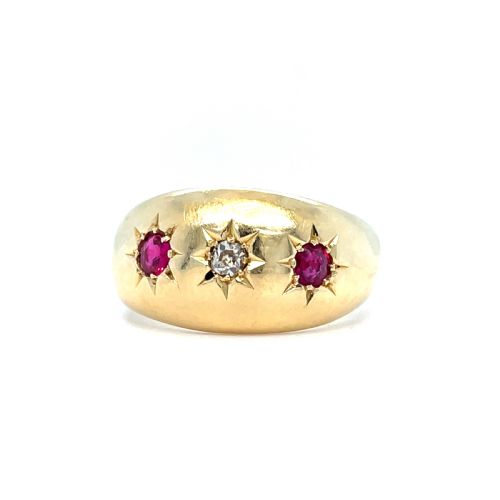
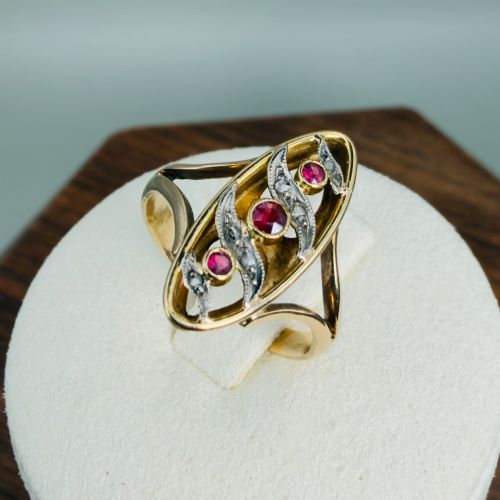
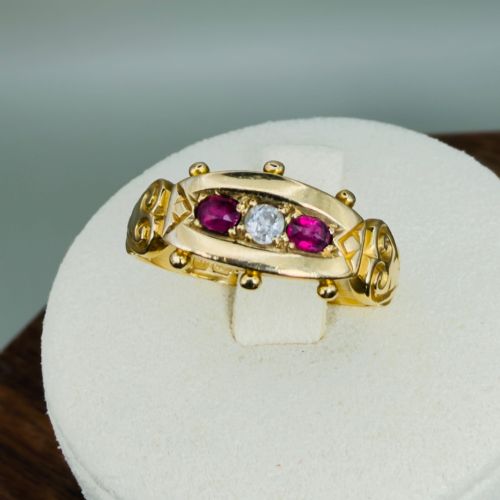
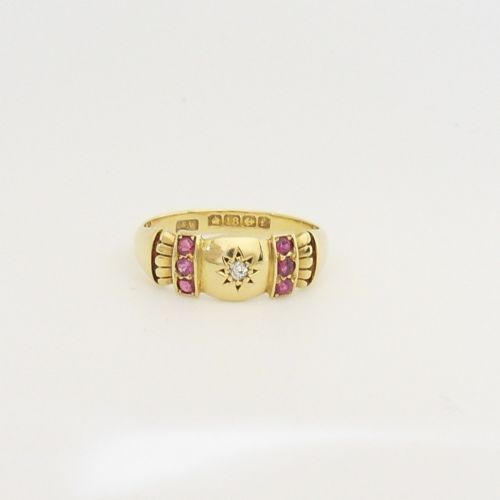
Makers and designers of these rings utilised varied settings, from gypsy mounts and starburst motifs to navette and boat shapes. The physical forms range from slim patterned bands to heavier cluster configurations.
How they were made
The construction of a vintage ruby band relies primarily on 18ct yellow gold, platinum, and occasionally 15ct gold or sterling silver. Metals were cast and hand-finished to hold stones securely within flush, claw, or cluster settings.
Gems such as old-cut diamonds and rubies, including Burmese varieties, were hand-set into the metal framework. Hallmarks and date letters were stamped directly into the shank to record the year and place of assay.
Listings feature gold purity variations including 15ct and 18ct yellow gold, alongside platinum and sterling silver settings.
What varies in quality
Quality in these rings is defined by the depth of colour and origin of the rubies, alongside the cut and clarity of any accompanying diamonds. Burmese stones and unheated gems command particular attention from collectors.
The weight of the gold mount and the crispness of the original hallmarks contribute to the standing of a piece. Finer examples display meticulous claw work and balanced stone proportions that remain intact over generations.
The Vintage Ruby Band Glossary
- Gypsy ring
- A style where stones are flush-set directly into the thick band so that the surface remains relatively smooth. This mounting method gained popularity during the late nineteenth century.
- Trilogy ring
- A ring set with three stones, typically representing the past, present, and future. In the context of this page, they pair rubies with flanking diamonds.
- Navette
- A boat-shaped gemstone setting that tapers to points at either end. It creates an elongated silhouette across the finger.
- Old-cut diamond
- A hand-faceted diamond cut prior to the standardisation of modern brilliant cuts. These stones feature smaller tables and larger culets.
- Assay mark
- An official stamp indicating the purity of the precious metal and the office where it was tested. British pieces often show town marks alongside date letters.
Vintage Ruby Band: Frequently Asked Questions
How do I care for a vintage ruby band?
Clean your ring gently using warm soapy water and a soft brush, avoiding harsh chemical dips that can damage softer stones or pearls. Store the piece separately in a fabric-lined box to prevent the metal and gems from scratching against other jewellery.
Have the settings checked periodically by a professional jeweller to ensure the claws holding the rubies and diamonds remain secure. Regular inspection prevents stone loss during daily wear.
Are these bands suitable for daily wear?
Ruby is a durable gemstone ranking high on the Mohs hardness scale, making these rings robust enough for regular use. However, antique settings in 18ct gold or platinum require more mindful care than modern mass-produced equivalents.
Consider removing the ring during heavy manual tasks or sports to protect the older prongs and delicate band engravings from undue stress.
How can I tell the period of my ring?
Examine the inner band for British hallmarks, which often include assay office symbols and specific date letters corresponding to years like 1903 or 1910. Stylistic elements such as Edwardian garland motifs or Victorian starburst settings also point directly to specific decades.
Consulting gemmological reports can provide further verification for unheated Burmese rubies and help date the stones accurately within the broader nineteenth and twentieth-century timelines.
What is the difference between a cluster and a five-stone band?
A cluster ring arranges smaller diamonds or accent stones around a central ruby to create a concentrated visual mass, often in a floral or oval formation. This layout maximises the apparent surface area of the gems.
A five-stone band displays rubies and diamonds set in a straight horizontal line across the finger, offering a more linear profile that sits smoothly alongside other rings.