



Vintage Round Tray
A vintage round tray brings practical utility and period character to a tabletop, offering a dependable surface for serving drinks or displaying objects.
Vintage Round Tray
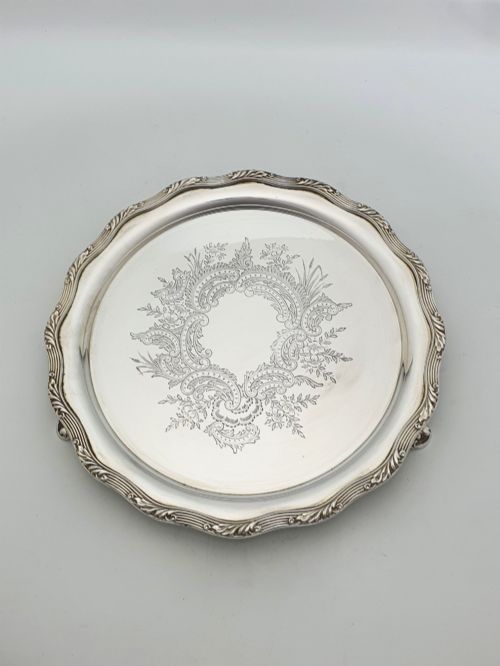
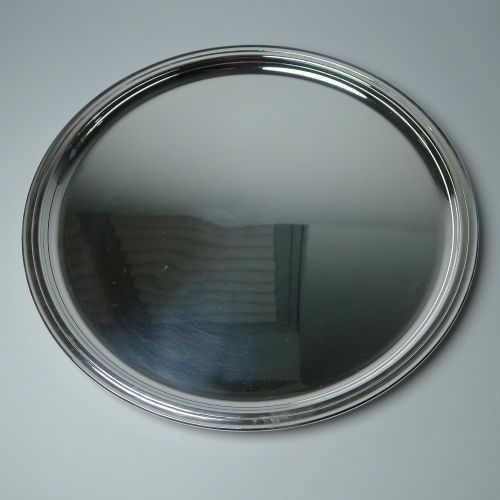
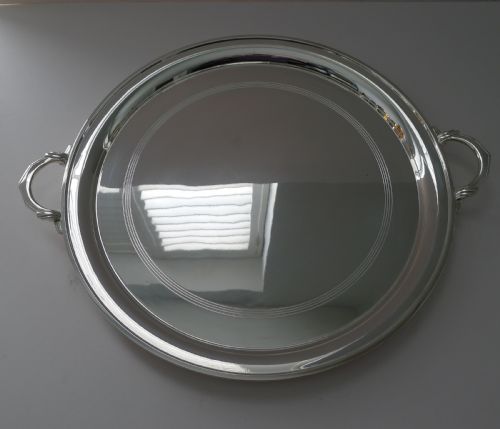
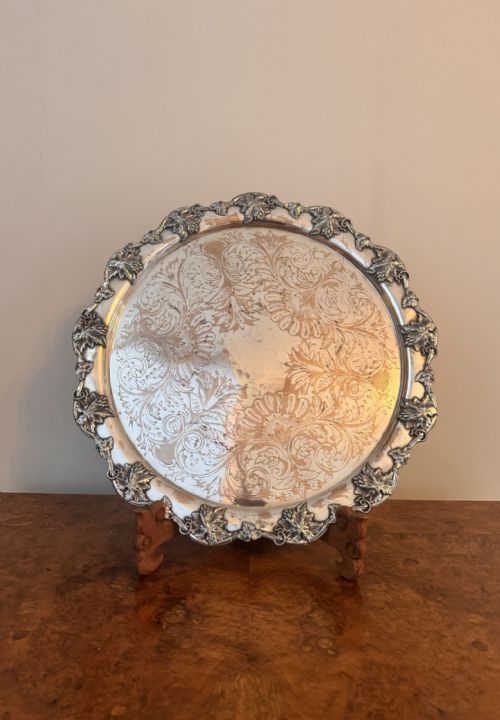
A vintage round tray encompasses circular serving vessels, salvers and table plateaus created across the nineteenth and twentieth centuries. These pieces appear in forms ranging from plain cocktail servers to heavily chased Victorian salvers and mirrored display stands.
The selections available here lean heavily towards silver plated and EPNS constructions, alongside occasional departures in mahogany, copper and pewter. Stylistic variations span from Georgian and Victorian revivals through to Art Deco, Arts and Crafts and Mid-Century Modern designs.
Makers from Paris and England contribute distinct regional flavours, balancing domestic serving accessories with decorative table centrepieces. Buyers will frequently encounter circular cocktail trays dated around the early decades of the twentieth century.
How they were made
Silver plating on base metal or EPNS forms the predominant manufacturing method for these items, yielding durable metallic surfaces that often incorporate engine turned detailing or etched mirror glass inserts. Craftsmen utilised copper and pewter for alternative finishes, applying pie crust edges and raised rims by hand.
Cabinetmakers constructed wooden variants such as mahogany table top stands using traditional joinery suitable for heavy revolving table tops. Surface decoration relied on techniques like chasing, engraving and silver plating over robust metallic foundations.
Vintage Round Tray Retail Price Guide 2026
Typical asking prices for vintage round tray among the pieces listed under this phrase on Sellingantiques today, from the lower quarter to the upper quarter. They describe what is for sale here now, not the wider market.
Listings span periods from the eighteenth century to the mid twentieth century, featuring materials such as silver plate, mahogany, copper and pewter.
What varies in quality
Quality reveals itself in the crispness of chased decoration, the stability of mounted mirror plates and the thickness of the silver plating over the underlying base metal. Superior examples exhibit balanced proportions, secure handles or galleries and maker signatures from established workshops.
Substandard items often display thinning plate that exposes the base metal underneath, alongside looseness in applied rims or feet. The weight of the metal and the precision of engine turned patterns distinguish workshop pieces from mass produced output.
Christofle Gallia Paris·Keith Murray For Mappin·Walker And Hall·Elkington·Victor Saglier Paris
The Vintage Round Tray Glossary
- Salver
- A flat tray, typically made of silver or silver plate, used for presenting food, drinks or letters. These often feature raised feet and ornate decorative borders.
- EPNS
- Electroplated Nickel Silver, a common base metal alloy coated with a thin layer of silver through electrolysis. This material forms the foundation of many twentieth century serving items.
- Engine turned
- A mechanical decorating technique that cuts intricate geometric patterns into metal surfaces using a specialised lathe. This method provides precise, repetitive textures on cocktail trays.
- Table plateau
- A mirrored or wooden circular stand placed in the centre of a dining table to hold glassware, decanters or ornamental centerpieces. These items protect table surfaces and reflect candlelight.
- Pie crust edge
- A decorative, scalloped rim resembling the fluted crust of a pastry pie. This stylistic treatment frequently appears on circular serving trays.
Vintage Round Tray: Frequently Asked Questions
How do I clean a silver plated tray?
Use a soft cloth and a specialised silver polish designed for plated items, applying gentle pressure to avoid wearing away the thin metallic coating.
Avoid abrasive scouring pads or harsh chemical dips, which can permanently strip the plating and expose the base metal beneath.
Can I use these trays for serving drinks?
Most silver plated and metal trays function well for serving cocktails, glassware or small bottles during gatherings.
Ensure that mirrored or wooden plateau surfaces are protected from prolonged moisture exposure to preserve the backing and the finish.
What is the difference between a salver and a tray?
A salver traditionally denotes a formal serving tray supported on small feet, often utilised for presenting calling cards or drinks in domestic settings.
Standard trays generally focus on utility with integrated handles or flat rims designed for carrying items across a room.
How do I date a silver plated tray?
Examine the style of any engraved decoration, the shape of the handles and the construction methods used on the underside or rim.
Maker marks and registration numbers stamped into the base often provide specific clues to the decade of manufacture.