



Vintage Roll Arm Settee
A vintage roll arm settee offers deep comfort and traditional upholstery, bringing enduring British character and distinguished seating to a room.
Vintage Roll Arm Settee
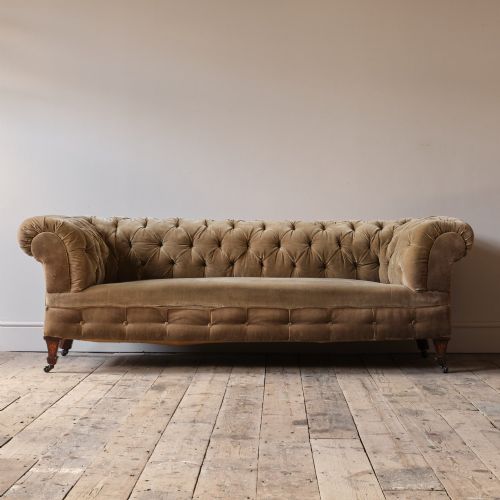
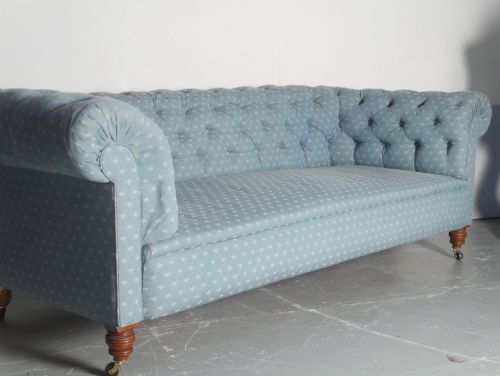
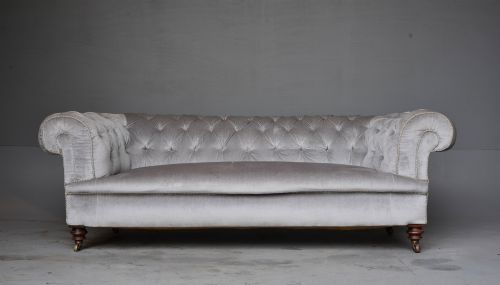
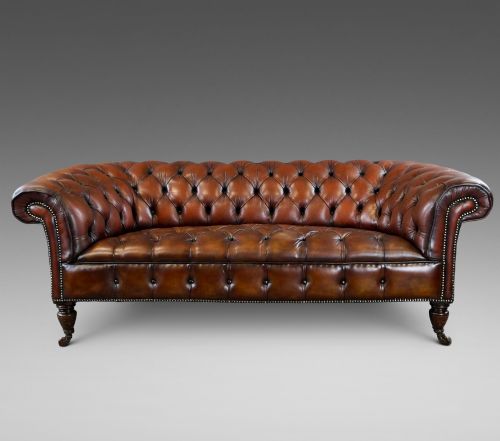
When you search for a vintage roll arm settee, you are looking at substantial upholstered seating dominated by traditional Chesterfield sofas and English country forms. These pieces span the nineteenth century through the Edwardian period, alongside examples from the nineteen-twenties and nineteen-thirties.
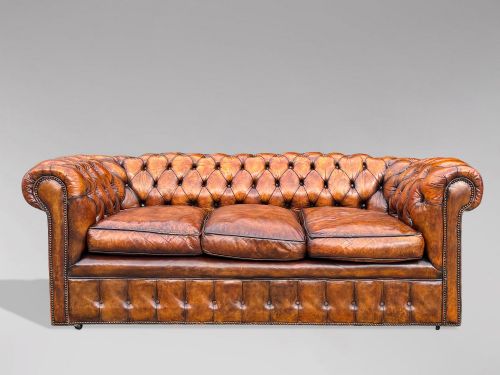
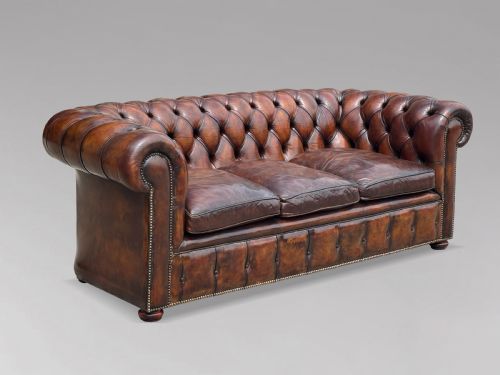
You are most likely to meet large leather Chesterfields featuring deep buttoning and characteristic low backs with scrolled arms. The selection ranges from nineteenth-century country house models to early twentieth-century library and club sofas.
Forms include two-seater and three-seater configurations, alongside wider twentieth-century iterations reaching up to two hundred and fifty centimetres. Makers such as Howard and Sons, Hampton and Sons, Robert Strahan and Co, and Maple and Co appear among the nineteenth-century examples.
Materials and construction methods
Frames are built from sturdy timber and hardwood, providing the rigid skeletal structure necessary to support heavy upholstery and continuous daily use. Brass hardware frequently appears in castors or detailing on nineteenth-century pieces.
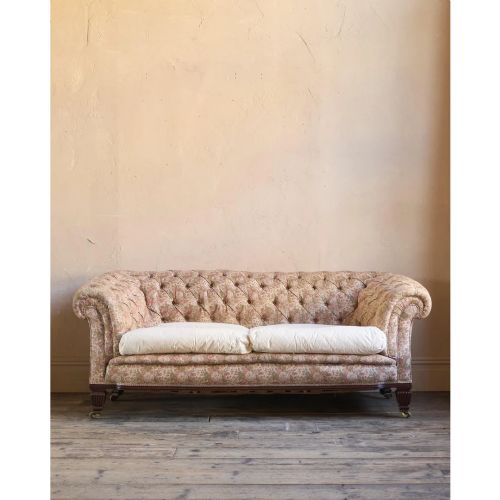
Upholstery relies heavily on traditional leather, often finished by hand with deep buttoning techniques that secure the padding to the internal frame. Velvet and alternative fabrics also clothe these frames, alongside pieces offered in raw leather ready for bespoke hand-dyeing.
Vintage Roll Arm Settee Retail Price Guide 2026
Typical asking prices for vintage roll arm settee among the pieces listed under this phrase on Sellingantiques today, from the lower quarter to the upper quarter. They describe what is for sale here now, not the wider market.
Listings feature traditional materials including mahogany, brass, hardwood, velvet, and leather across Victorian, Edwardian, and Art Deco styles.
Judging the quality of a roll arm settee
Quality rests upon the integrity of the underlying timber frame and the depth of the traditional upholstery work. Pieces retaining their original un-restored leather show the authentic patina of age, whilst fully restored examples depend on the skill applied during re-dyeing and re-buttoning.
The distinction between standard workshop production and work by renowned firms such as Howard and Sons or Hampton and Sons alters the standing of a piece. Finer proportions, superior hardwood frames, and substantial hand-tied spring systems separate the top tier from simpler nineteenth-century vernacular seating.
Howard and Sons·Hampton and Sons·Robert Strahan and Co·Maple and Co
The Vintage Roll Arm Settee Glossary
- Chesterfield
- A traditional upholstered sofa characterised by arms and back of the same height, typically featuring deep buttoning. This form dominates the vintage roll arm settee category.
- Buttoning
- An upholstery technique where indentations are formed across the back and seat using twine pulled through to secure the padding. It creates the characteristic diamond pattern seen on leather Chesterfields.
- Hardwood
- Dense timber derived from broad-leaved trees, utilised for the internal frames of quality sofas to ensure structural longevity.
- Patina
- The surface sheen and softening of colour acquired by leather and wood through age and handling. Collectors prize an untouched original patina.
- Castor
- A small wheel mounted on a swivel attached to the base of sofa legs for mobility. These are frequently fashioned from brass.
Vintage Roll Arm Settee: Frequently Asked Questions
What defines a vintage roll arm settee?
A vintage roll arm settee is typically a deep-seated upholstered sofa, most commonly a Chesterfield, featuring scrolled arms and traditional leather or fabric coverings. These pieces originate from the nineteenth and early twentieth centuries.
They combine generous proportions with heavy internal padding and low backs, designed primarily for relaxed lounging in country houses and gentleman's clubs.
How do I care for antique leather upholstery?
Antique leather requires regular dusting with a soft, dry cloth and occasional treatment with appropriate leather balms to prevent drying and cracking. Avoid placing leather furniture in direct sunlight or near heat sources.
Maintaining a stable room temperature helps preserve the natural suppleness and original patina of nineteenth-century hides.
Can I reupholster a vintage settee?
Many large antique Chesterfields are acquired specifically for reupholstering or custom hand-dyeing to match modern interiors. Some pieces are sold in raw leather or require complete restoration.
Purists often prefer untouched original leathers, but reupholstering allows damaged fabrics to be replaced while retaining the solid hardwood frame.
How do I distinguish Victorian from Edwardian settees?
Victorian settees, particularly from the mid to late nineteenth century, often feature heavier dark hardwood frames, deep buttoning, and robust proportions associated with formal reception rooms. Edwardian examples tend to display slightly lighter scaling and varied upholstery treatments.
Maker stamps, construction details, and the evolution of styling from the eighteen-eighties into the early nineteen-hundreds help clarify the exact period.