







Vintage Riding Boots
These vintage riding boots and related equestrian gear bring authentic country house character into a modern interior.

Vintage Riding Boots
You are most likely to meet sturdy leather boots alongside functional oak, mahogany, and beech bootjacks and folding campaign tools. These pieces reflect the daily routines of nineteenth and early twentieth-century equestrian life, offering both utility and robust decorative presence.
What varies in quality
Quality rests in the grade of the timber, the thickness and suppleness of the leather, and the refinement of any brass or silver mounts. Pieces originating from known makers or specific country house provenances generally display superior joinery and more substantial proportions.
Functional hardware, such as folding campaign hooks or integrated boot jacks, reveals the precision of the metalwork. Finer examples balance robust everyday utility with careful attention to detail in the turned wooden elements and carved surfaces.
Vintage Riding Boots Retail Price Guide 2026
Typical asking prices for vintage riding boots among the pieces listed under this phrase on Sellingantiques today, from the lower quarter to the upper quarter. They describe what is for sale here now, not the wider market.
Listings feature oak, mahogany, beech, and leather items spanning the Georgian, Victorian, and Edwardian periods.
Maxwell London
The Vintage Riding Boots Glossary
- Bootjack
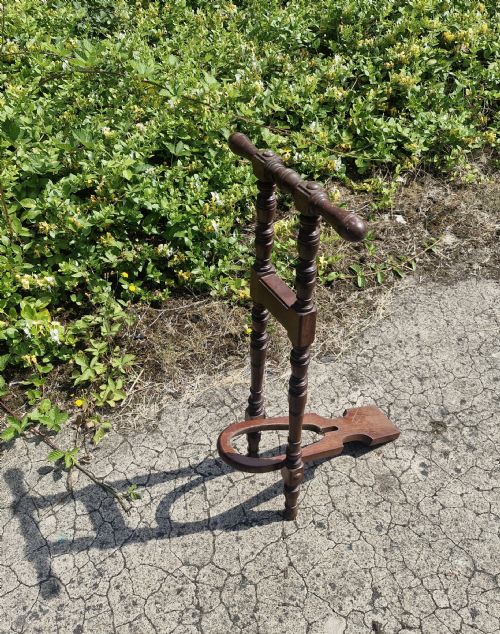
- A V-notched device used for removing boots without bending down. These were commonly fashioned from oak, mahogany, or cast iron and kept in country house boot rooms.
- Boot tree
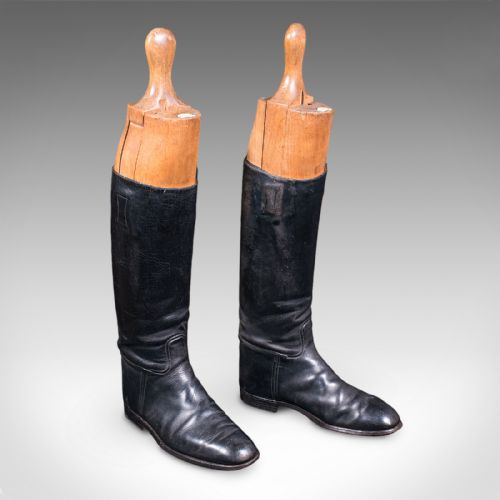
- A wooden form inserted into a boot to maintain its shape and assist with drying. They are frequently turned from beech or other dense woods.
- Boot pull
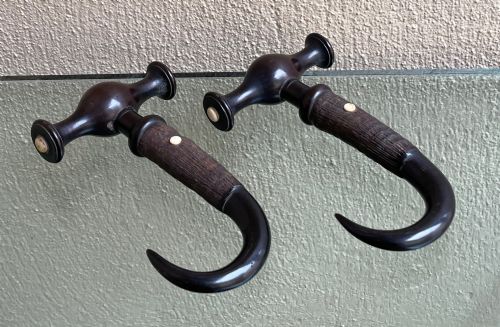
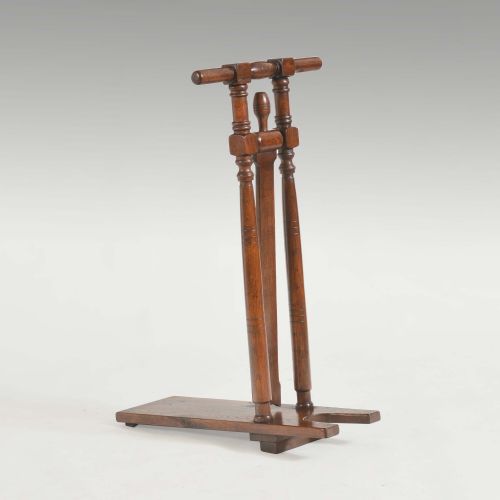
- A handheld hook or pair of handles used to pull on tight riding boots. They often feature horn, silver, or brass elements.
- Campaign equipment
- Portable furnishings and tools designed for military officers or travel. These items typically include folding mechanisms and robust brass mounts.
- Bootmaker's last
- A solid block shaped like a foot used by cobblers to shape or stretch footwear. Antique examples in beech and English leather often double as display pieces.
Vintage Riding Boots: Frequently Asked Questions
How were antique boot jacks used?
Boot jacks sat on the floor of hallways and boot rooms to assist riders in removing tall leather boots without stooping. A person placed the heel of one boot into the V-notched opening while standing on the wooden base, then stepped out.
This simple leverage protected the leather from strain and made daily equestrian routines much easier.
What are wooden boot trees for?
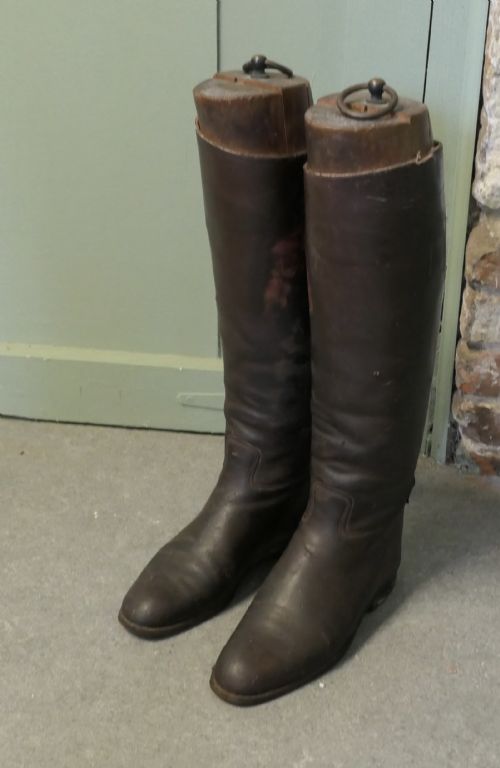
Wooden boot trees were inserted directly into riding boots immediately after use to absorb moisture and maintain the proper shape of the leather. They prevented the tall shafts from slumping and cracking over time.
Collectors often find these adjustable wooden forms paired with vintage leather boots.
Where were whip and boot stands kept?
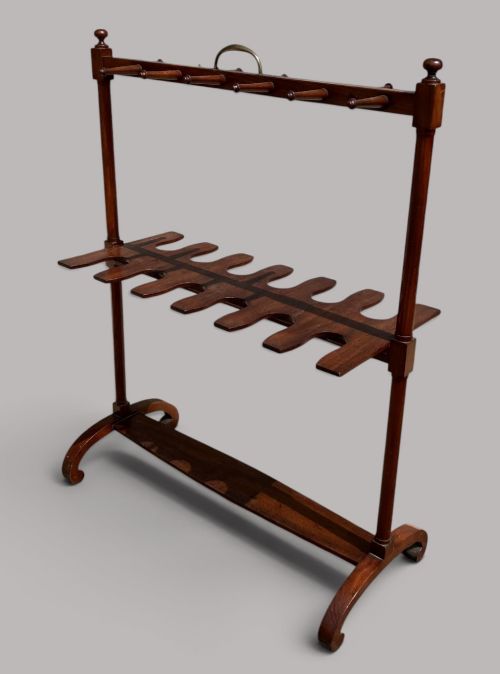
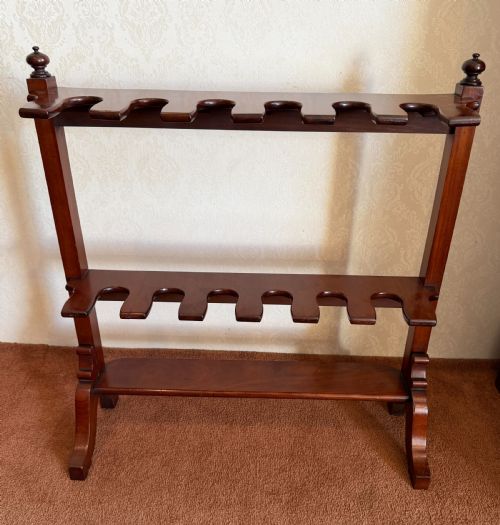
These functional racks stood in the entrance halls or boot rooms of English country houses to organise riding gear. They kept heavy boots, whips, and crops orderly and ready for the morning ride.
Their substantial mahogany or oak construction allowed them to withstand damp environments and heavy daily use.
How do you date a boot jack?
Dating relies on the choice of timber, the style of the joinery, and any associated brass or iron hardware. Georgian and Regency examples often feature simple, solid mahogany or oak planks, while Victorian and Edwardian versions incorporate more elaborate turned details.
Checking for campaign folding brass hooks or specific maker stamps can also narrow down the era.