



Vintage Revolving Shelf
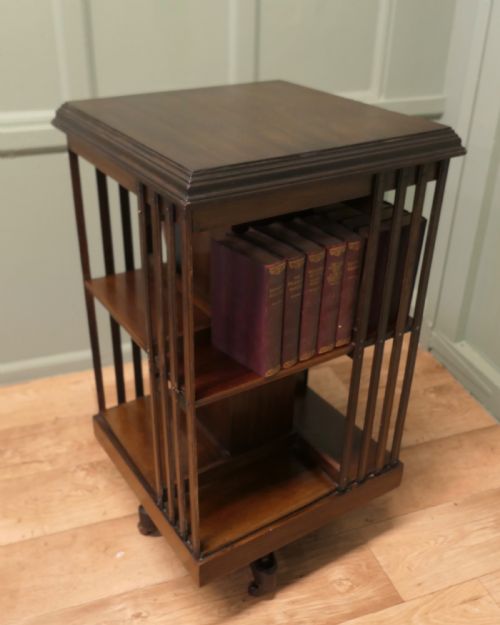
A vintage revolving shelf gives you neat desk or floor storage that turns smoothly at a touch, turning heavy volumes or games into an accessible display.
Vintage Revolving Shelf
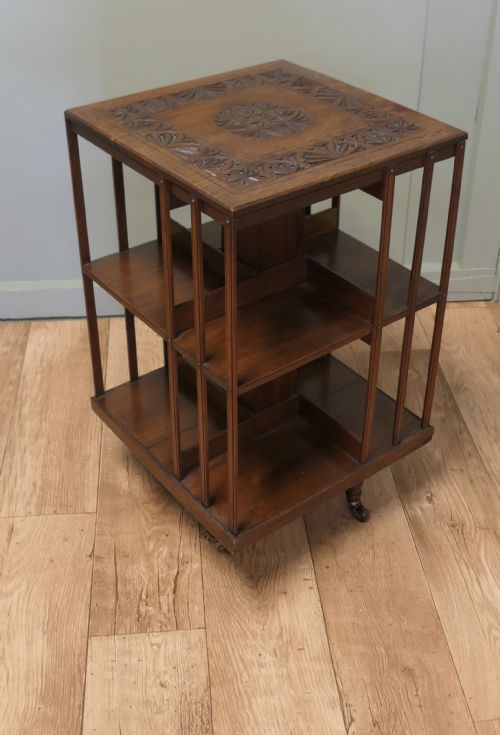
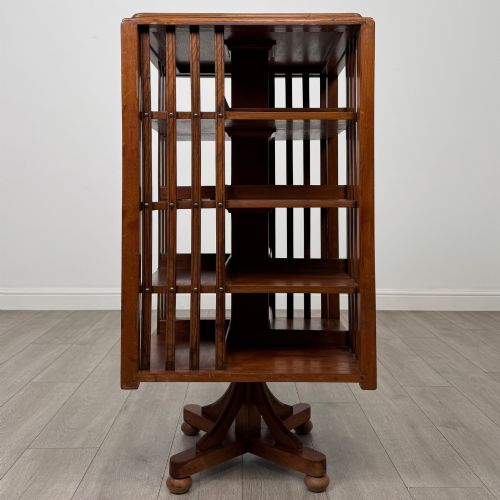
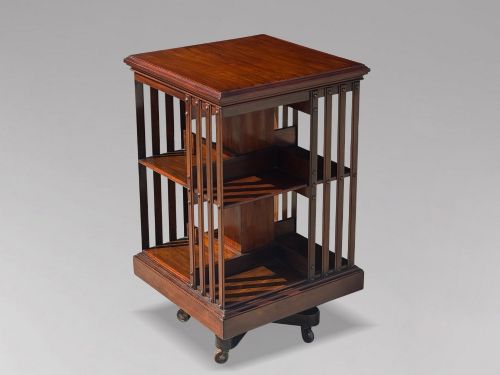
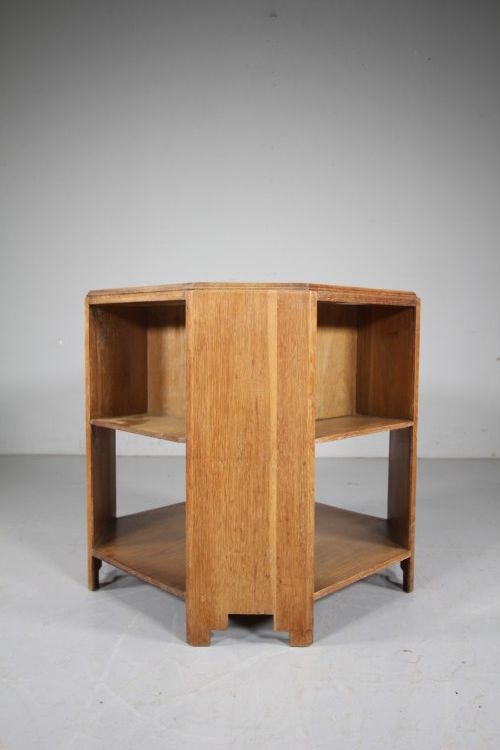
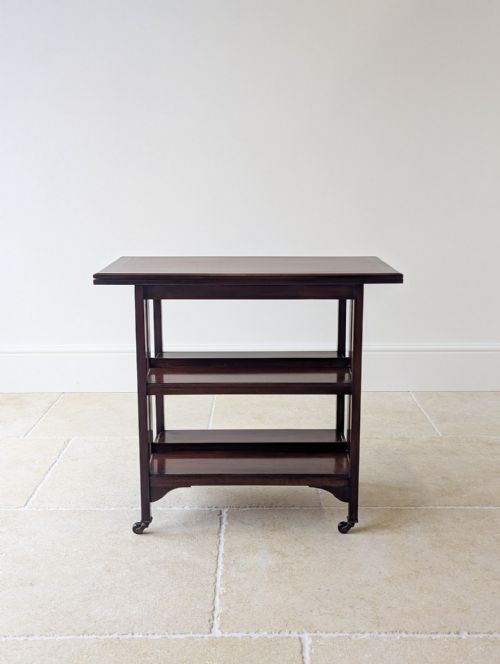
A vintage revolving shelf takes the form of tiered bookcases, compact side tables, and card tables with bookshelf bases. These pieces turn on a central axis, letting you reach every book or object without shifting position.
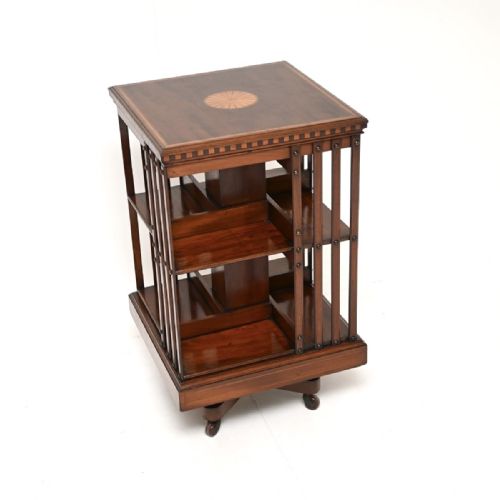
The selections here span the Victorian era, the Edwardian period, and the nineteen-thirties, showing both robust four-tier designs and petite multi-shelf configurations. Oak and mahogany dominate the offerings, occasionally accented with satinwood inlay or brass fittings.
You will encounter classic circular and square revolving bookcases alongside hybrid furniture pieces like card tables with built-in lower shelves. They serve equally well beside an armchair, on a desk, or in the centre of a room.
How they were made
Cabinetmakers built these revolving shelves primarily from solid timber and veneers of mahogany and oak. Selected pieces feature fine satinwood inlay work that contrasts sharply against the darker primary wood.
The internal turning mechanism relies on concealed metal and cast iron bearings to support the weight of stacked books smoothly. Carved mouldings and turned supports appear across Victorian and Edwardian examples, giving structural strength to the multi-tiered framework.
Vintage Revolving Shelf Retail Price Guide 2026
Typical asking prices for vintage revolving shelf among the pieces listed under this phrase on Sellingantiques today, from the lower quarter to the upper quarter. They describe what is for sale here now, not the wider market.
What varies in quality
The smoothness of the revolving action distinguishes a superior tier from a stiff or wobbling one. Craftsmanship shows in the tightness of the joinery at the corners and the crispness of any carved detailing or inlay.
Timber selection dictates the overall presence of the piece, with rich, figured mahogany and quarter-sawn oak commanding attention above plain variants. Original brass hardware and intact internal mechanisms preserve the integrity of the design.
Heals
The Vintage Revolving Shelf Glossary
- Revolving bookcase
- A tiered piece of furniture mounted on a pivot mechanism that allows the entire structure to turn full circle. This design keeps heavy reference books or daily reading within arm's reach.
- Tier
- An individual shelf level within a vertical stack. Multi-tiered versions provide substantial storage without claiming extra floor space.
- Inlay
- Decorative wood or metal set flush into the surface of a larger piece to create patterns. Satinwood is frequently used for this contrasting detail on mahogany carcases.
- Quarter-sawn oak
- Timber cut radially from the log, producing distinctive grain patterns known as medullary rays. This cutting method also provides greater stability against warping in structural shelves.
Vintage Revolving Shelf: Frequently Asked Questions
How do revolving shelves work?
These pieces use a concealed pivot mechanism fitted beneath the lowest tier, often incorporating cast iron or metal bearings. This hidden engineering allows several stacked tiers of heavy books to rotate with minimal hand pressure.
Weight distribution matters for smooth rotation. Placing heavier books on the lower tiers keeps the centre of gravity low and prevents any wobble as the shelves turn.
Where should I put a revolving bookcase?
Their 360-degree access makes them ideal for placement beside an armchair, behind a desk, or freestanding in the middle of a study. Because you can reach every side without moving the furniture, they use tight corners efficiently.
Smaller tabletop versions sit comfortably on sideboards or large desks. Floor-standing multi-tier models act as functional room dividers or sculptural accents.
How do I date an antique revolving shelf?
Dating relies on timber choices, decorative styles, and construction clues. Victorian and Edwardian examples often feature rich mahogany with inlaid satinwood, while nineteen-thirties pieces lean towards simpler oak forms.
Examining the turning mechanism and the type of fixings inside the base also helps establish the period. Earlier nineteenth-century models tend to feature heavier turned spindles and robust carved mouldings.
Can these shelves hold heavy books?
Solid timber construction in oak and mahogany gives these pieces considerable structural strength. They were originally built to hold rows of heavy reference volumes, legal texts, or ledgers.
Spreading heavier volumes across the bottom tiers ensures the piece remains balanced and turns without strain. The internal iron and brass bearings carry the load while maintaining a fluid spin.