

Vintage Revolving Library Stand
A vintage revolving library stand lets you turn a whole shelf of books to your hand with a gentle push.
Vintage Revolving Library Stand
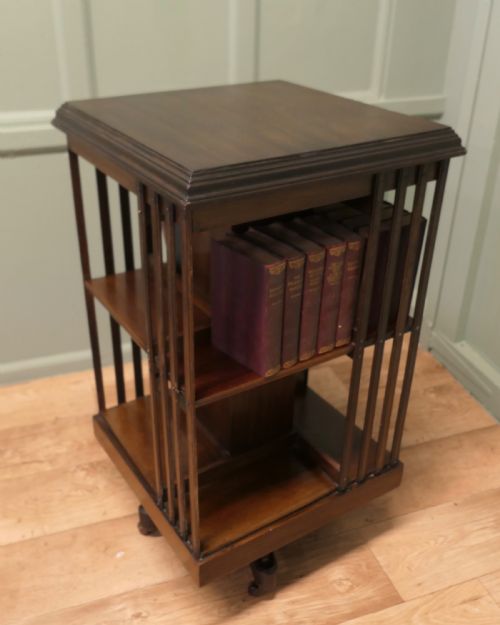
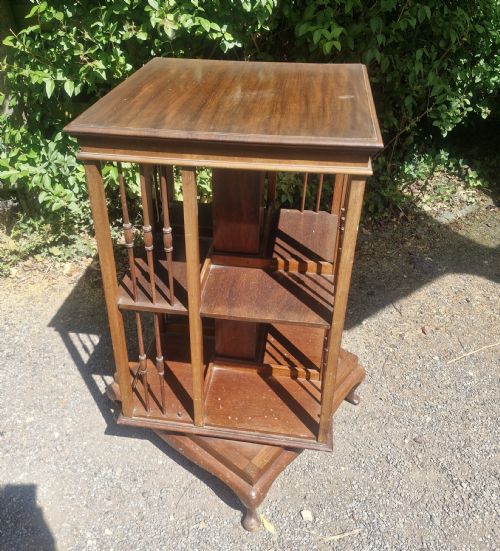
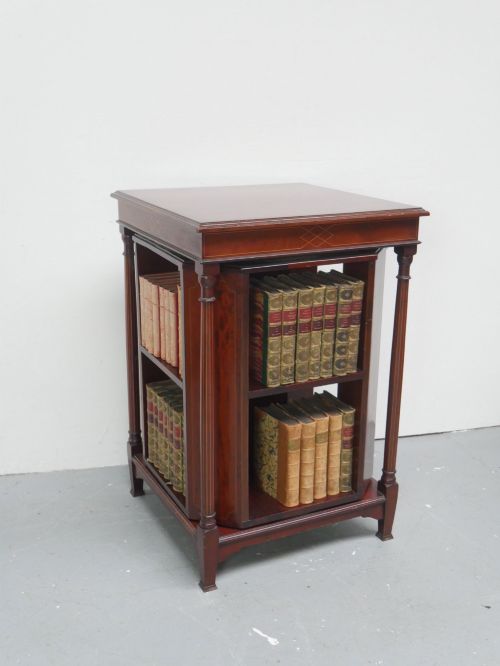
A vintage revolving library stand is typically encountered on this page as a rotating bookcase or bookstand designed to sit upon the floor or a desk. These pieces serve to hold collections of volumes upright while allowing rotation on a central axis for easy selection.
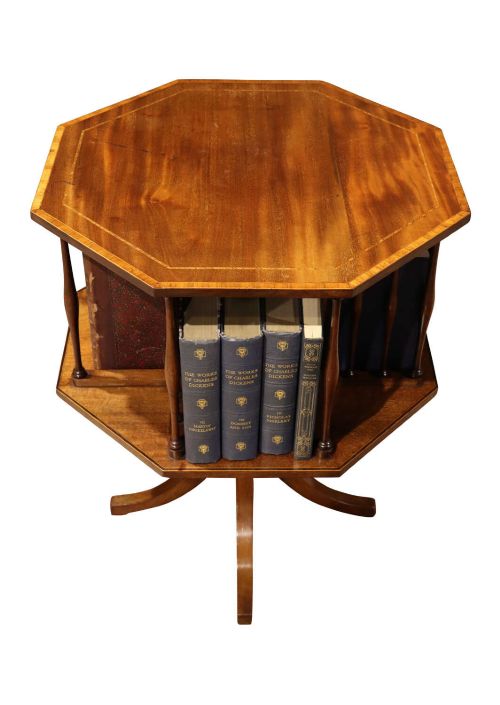
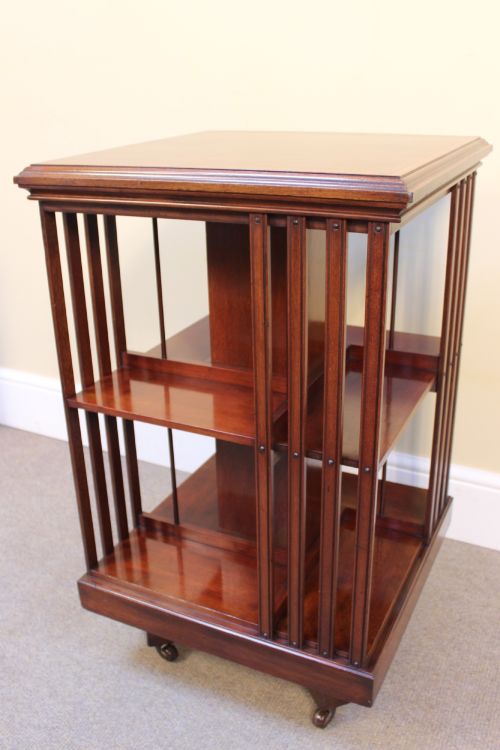
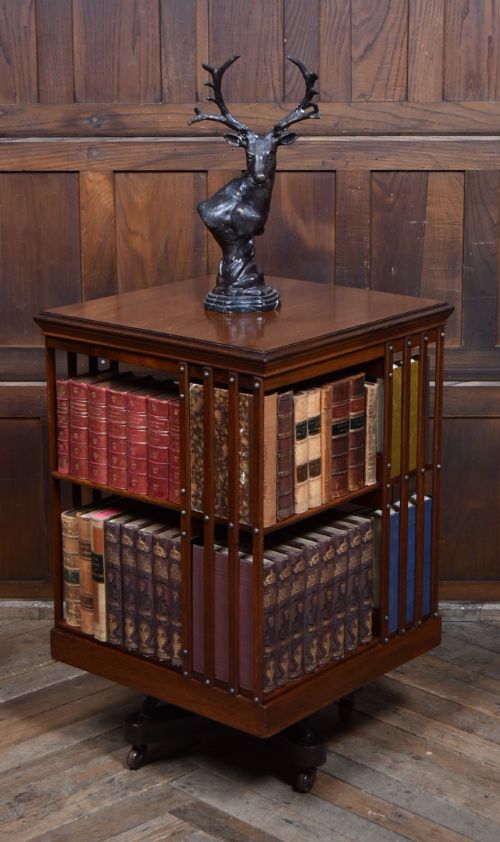
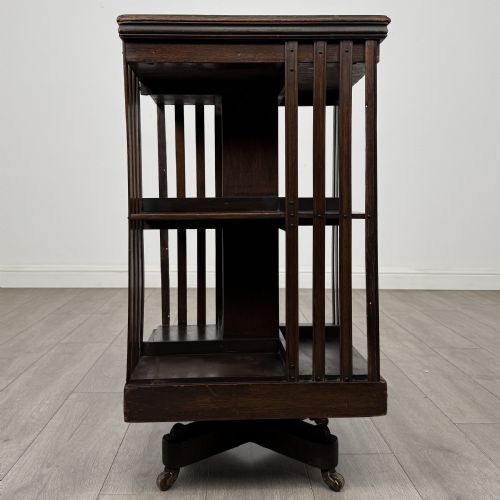
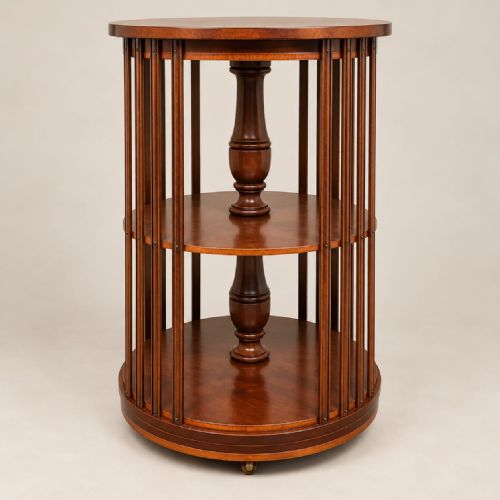
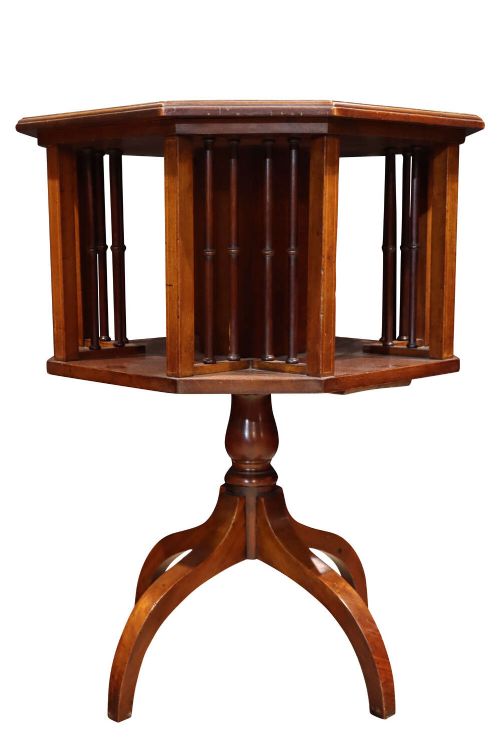
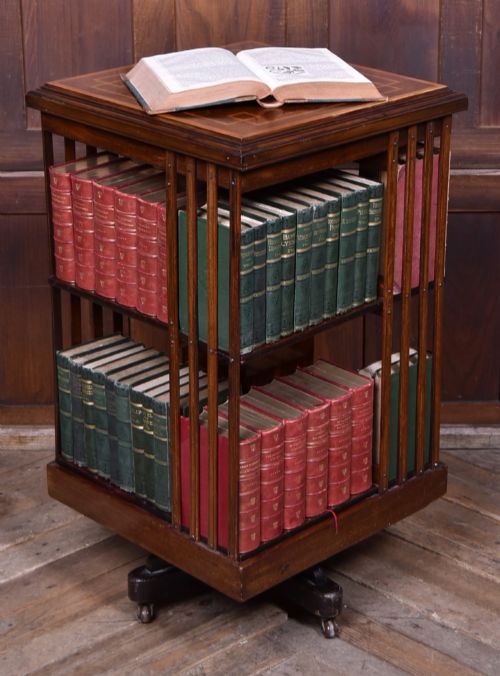
Most examples appearing here belong to the Edwardian period or the Victorian era, constructed in formats ranging from small single-tier table stands to tall four-tier bookcases. Makers built them with square, octagonal, or circular frames to fit corners and small spaces in studies and drawing rooms.
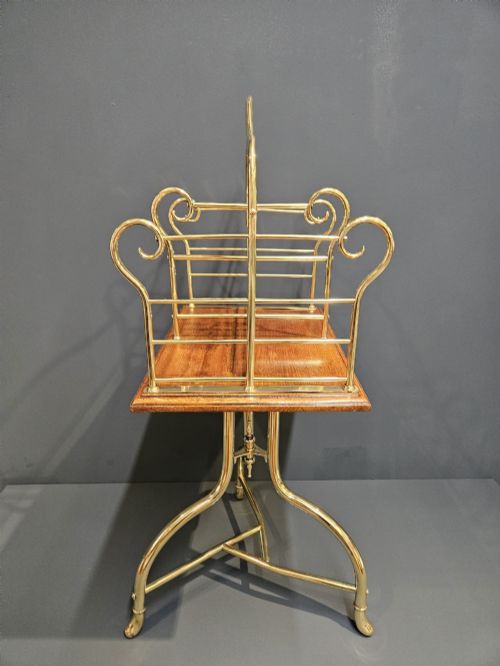
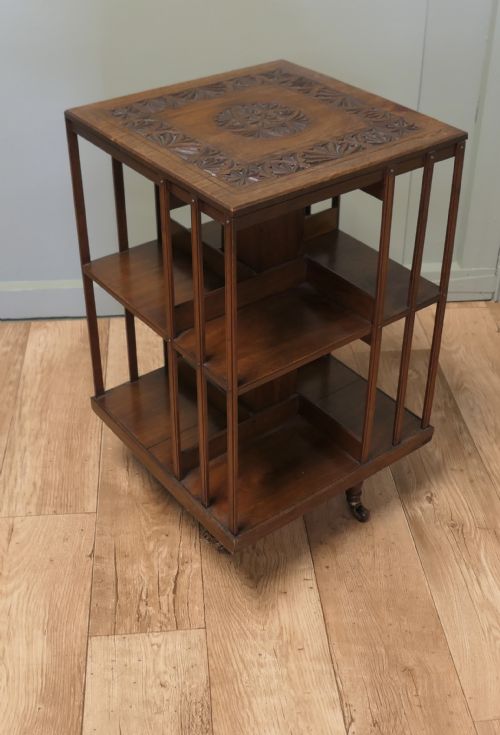
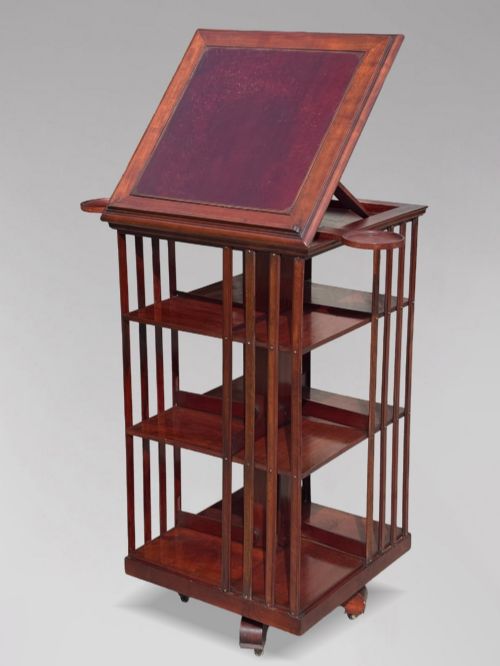
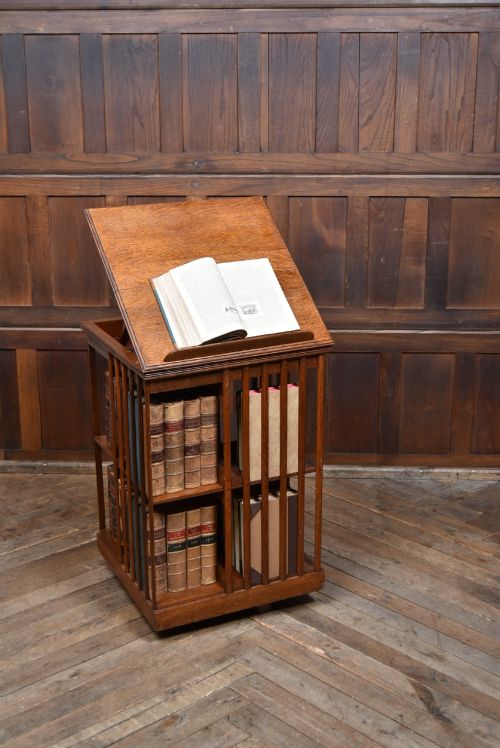
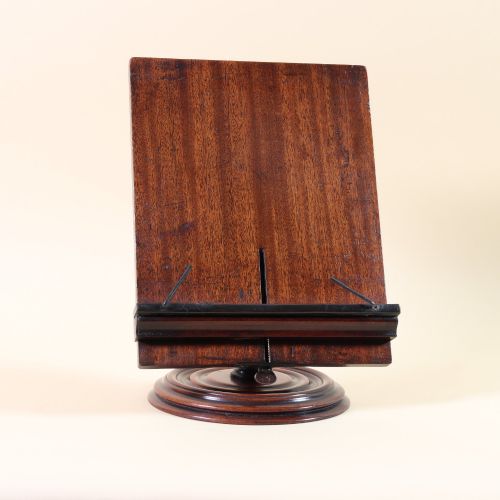
The forms span straightforward utilitarian oak book stands to finely figured mahogany and walnut pieces featuring inlaid details and carved slats. Alongside standard bookcases, one finds book rests and revolving book tables intended for quick access to daily reading.
How they were made
Cabinetmakers utilised solid timbers such as oak, mahogany, and walnut for the primary frames, often selecting matched veneers and flame mahogany panels for visible surfaces. Satinwood inlay and brass components added decorative contrast to the timber structures.
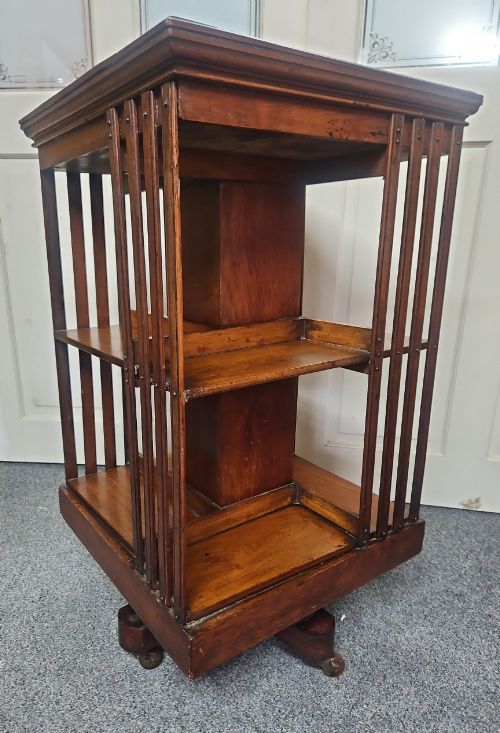
Rotating mechanisms relied upon internal iron and cast iron assemblies hidden beneath the base to permit smooth, balanced turning. Slatted sides and carved uprights were joined using traditional woodworking techniques to support the weight of heavy volumes across multiple tiers.
Vintage Revolving Library Stand Retail Price Guide 2026
Typical asking prices for vintage revolving library stand among the pieces listed under this phrase on Sellingantiques today, from the lower quarter to the upper quarter. They describe what is for sale here now, not the wider market.
Bookcase forms span simple two-tier oak models up to tall four-tier revolving structures and compact desktop book rests.
What varies in quality
The distinction between standard utility items and finer examples rests upon the selection of timber and the complexity of the cabinetry. Pieces featuring figured mahogany, intricate satinwood inlay, or integrated reading stands demonstrate higher ambition from the workshop.
Engineering of the internal revolving mechanism dictates the mechanical success of each piece, where superior balancing allows effortless rotation without wobble. The presence of multiple tiers, carved details, and solid brass fittings further separates exceptional library stands from simpler productions.
Heals
The Vintage Revolving Library Stand Glossary
- Revolving bookcase
- A freestanding or desktop shelving unit mounted on a concealed pivot mechanism allowing it to spin freely. This design keeps a collection of books accessible from a single stationary seat.
- Flame mahogany
- A timber cut from the fork of the mahogany tree to produce a distinctive, flickering flame-like grain pattern. Cabinetmakers reserved this decorative veneer for the most prominent exterior surfaces.
- Satinwood inlay
- Contrasting ornamental wood inserted into recesses in a primary timber surface to create linear or geometric patterns. It provides a bright, golden accent against darker woods like mahogany.
- Tier
- An individual level of shelving arranged vertically within the bookcase structure. Stands can range from a single desk-top level up to four stacked compartments.
- Book rest
- A portable or integrated support angled to hold a volume open at a readable pitch. These often accompanied revolving stands to facilitate study.
Vintage Revolving Library Stand: Frequently Asked Questions
What is a revolving library stand?
A revolving library stand is a rotating piece of furniture built to hold books upright while giving the reader access to every volume from one spot.
These stands use a hidden internal pivot system beneath the shelves so the entire weight turns smoothly on its base.
How were these stands used?
Readers placed them beside armchairs, desks, or in tight study corners to keep reference books and favourite volumes within arm's reach.
The rotating action meant a large collection could sit in a small footprint without needing wall shelving.
How do I date an Edwardian stand?
Edwardian pieces often feature lighter timbers like oak or inlaid mahogany, reflecting the decorative tastes of the early twentieth century.
Checking construction methods, such as the style of the slatted sides and the form of the iron turning mechanism, helps narrow the production era.
What woods were commonly used?
Mahogany and oak form the vast majority of the pieces seen here, chosen for their strength and durability under heavy book loads.
Walnut and satinwood appear on finer decorative examples, often enhanced with contrasting inlay work.