


Vintage Revolving Bookshelf
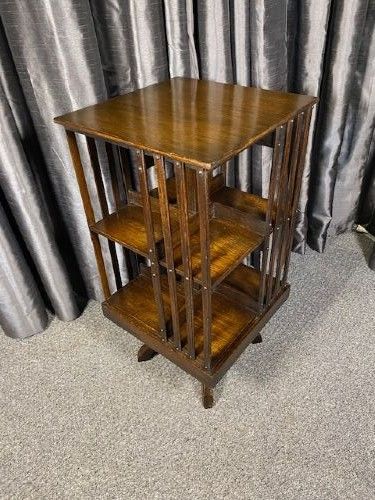
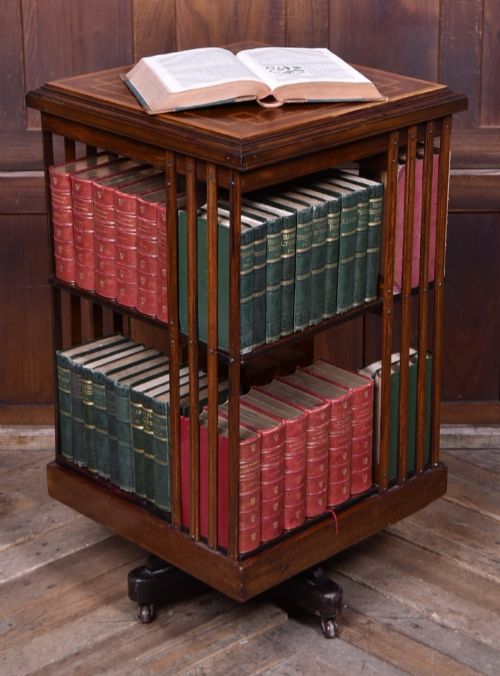
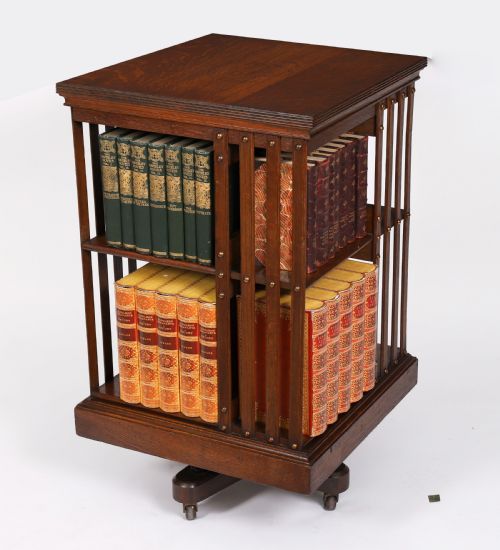
A vintage revolving bookshelf turns smoothly on a central spindle, placing a ready library within arm's reach.
Vintage Revolving Bookshelf
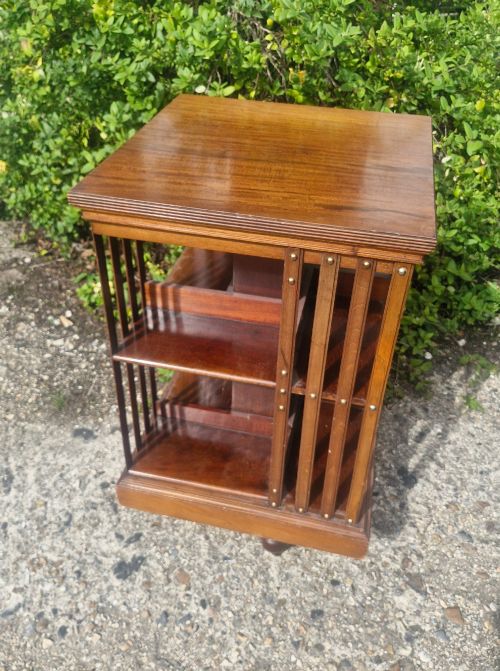
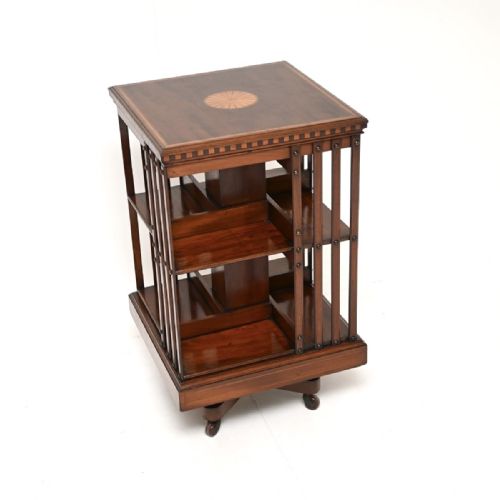
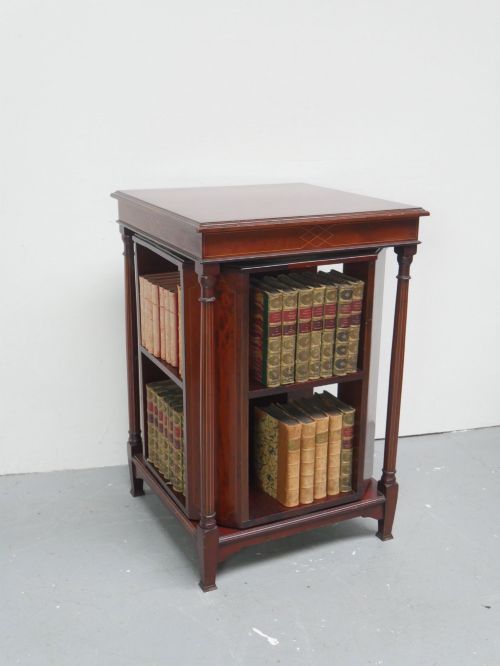
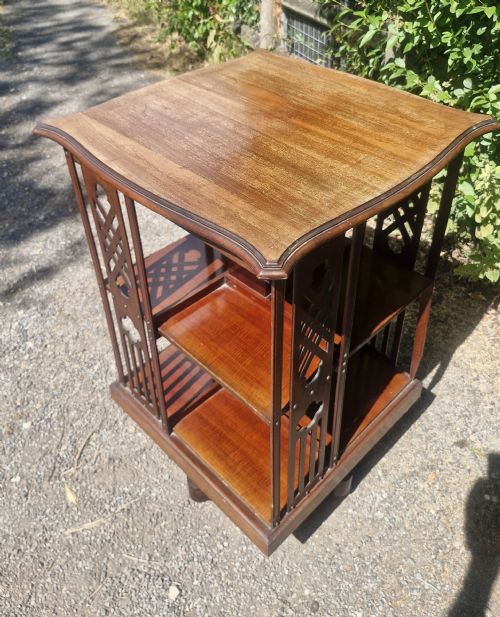
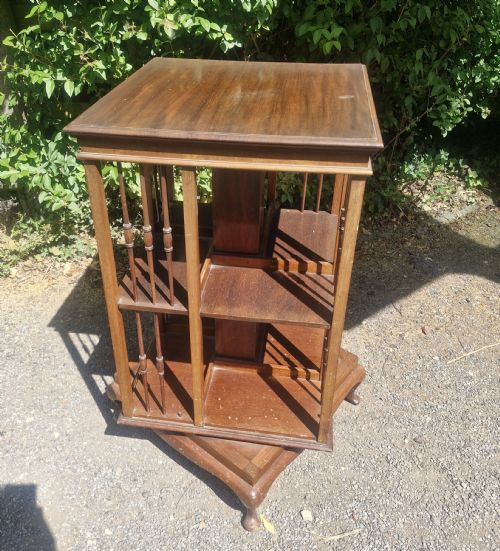
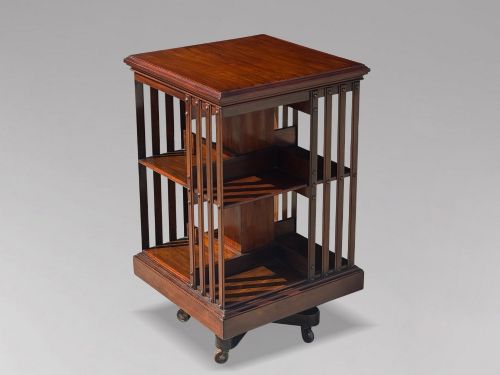
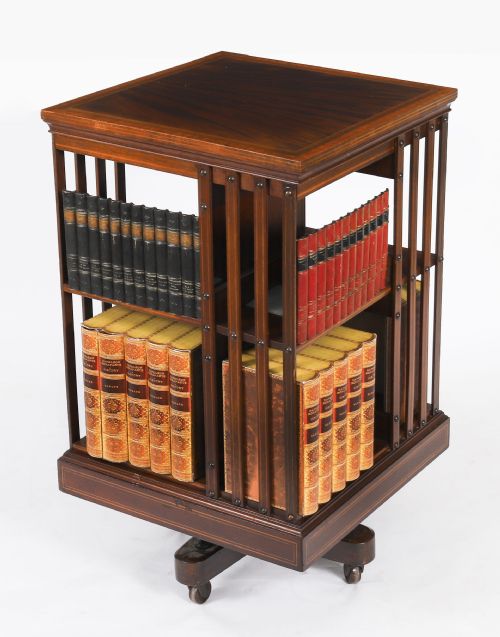
A vintage revolving bookshelf stands as a clever piece of furniture designed to hold volumes upright while rotating on a concealed base. The pieces gathered under this phrase span the late Victorian and Edwardian eras, alongside examples from the 1920s.
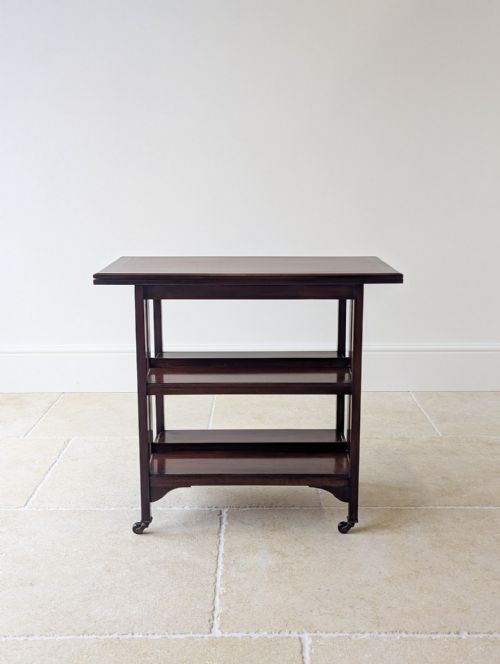
Most entries encountered on this page are floor-standing or table-top mahogany bookcases built around nineteen hundred. Oak and walnut also appear, alongside occasional French provincial designs and card tables with bookshelf bases.
Makers such as Heals and Maple and Co are represented among these revolving bookcases, showing the range of workshops that produced them. Buyers find both small desktop models and larger tiers designed to sit beside an armchair or desk.
How they were made
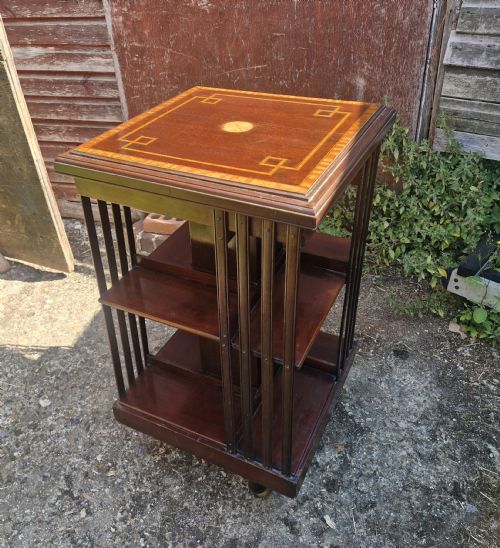
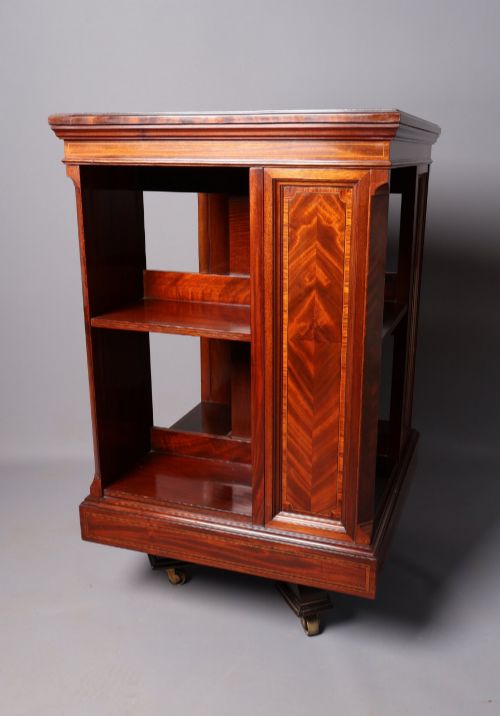
Makers constructed these bookcases primarily in solid mahogany, oak, and walnut timbers, often selecting flame mahogany for the visible panels. Satinwood inlay and brass detailing appear frequently to decorate the exterior slats and top surfaces.
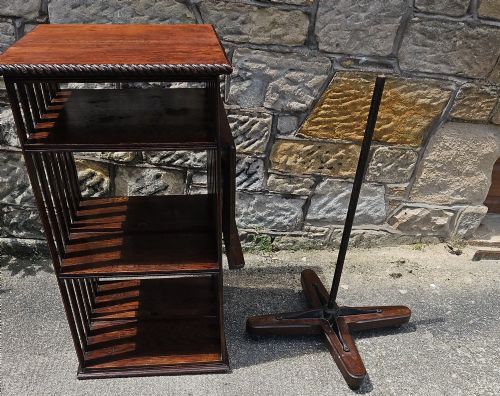
The internal mechanism relies on a cast iron or metal spider and ball bearing system concealed beneath the base to ensure smooth rotation. Joinery follows traditional cabinet-making methods of the nineteenth and twentieth centuries, with crossbanding and veneering applied to fine surfaces.
Listings span multiple decades from the late nineteenth century through the 1920s, dominated by Edwardian mahogany and oak examples.
What varies in quality
The sophistication of the timber selection marks the difference between standard production and superior examples. Finely figured flame mahogany or intricate satinwood inlay denotes workshops that invested greater labour in the exterior appearance.
The smoothness of the underlying swivel mechanism dictates daily utility. A well-engineered iron spindle allows the loaded tiers to turn effortlessly without listing or catching on the base.
Heals·Maple and Co
The Vintage Revolving Bookshelf Glossary
- Flame mahogany
- A wood veneer cut from the fork of the mahogany tree to create a distinctive, flickering flame pattern. It appears on the top surfaces and sides of finer Edwardian revolving bookcases.
- Satinwood inlay
- A contrasting light hardwood inserted into darker timber surfaces to form decorative borders or motifs. This technique defines many Edwardian examples.
- Crossbanding
- A strip of veneer laid perpendicularly to the grain of the main panel to frame the edges. Cabinet-makers used this border treatment on shelves and tabletops.
- Cast iron mechanism
- The hidden metal apparatus beneath the revolving tiers that supports the weight and enables rotation. Its durability ensures the piece turns smoothly over decades.
Vintage Revolving Bookshelf: Frequently Asked Questions
How do I care for a mahogany revolving bookshelf?
Apply a traditional beeswax polish sparingly and buff with a soft cloth to nourish the timber. Keep the revolving bookcase away from direct heat sources and strong sunlight to prevent the mahogany finish from drying out or fading.
Periodically check the central mechanism beneath the base to ensure dust does not impede the rotation. A light application of appropriate lubricant keeps the metal or cast iron components turning smoothly.
How do I distinguish Edwardian from Victorian revolving bookcases?
Victorian revolving bookcases, dating from the late nineteenth century, tend to feature heavier proportions and darker, dense mahogany timbers. Their construction often emphasises robust utility and traditional joinery.
Edwardian examples, built around nineteen hundred, frequently incorporate lighter satinwood inlay, flame mahogany veneers, and sometimes more refined dimensions. Oak variants also surface frequently from this later period.
Can these bookcases hold heavy books?
These revolving bookcases were designed to support standard library volumes and novels of their era. The solid wood construction and internal metal frames provide sturdy support for everyday reading collections.
Large or exceptionally heavy reference volumes should be placed on the lower tiers to maintain stability. Overloading the upper shelves can strain the central spindle and affect the balance during rotation.
Where did people use revolving bookcases?
Libraries, studies, and drawing rooms served as the primary locations for these rotating stands. Placed beside an armchair or desk, they allowed readers to access a selection of volumes without leaving their seat.
Table-top versions were designed specifically for desks or sideboards to keep frequently consulted dictionaries and reference books close at hand.