




Vintage Red Stone Ring
A vintage red stone ring brings together bright red gems and precious metal in designs spanning from the Victorian era to the mid-century.
Vintage Red Stone Ring
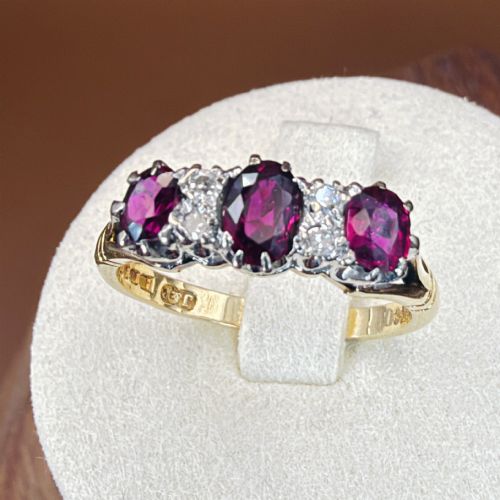
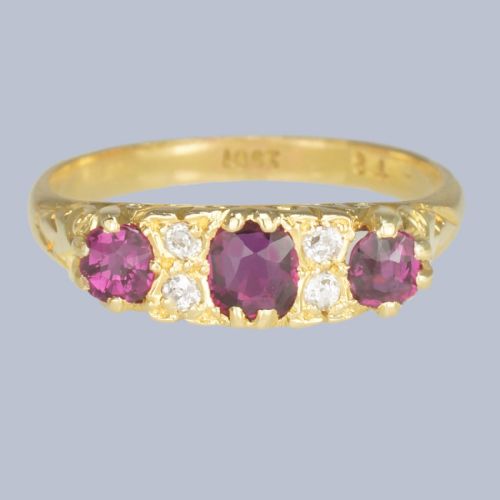
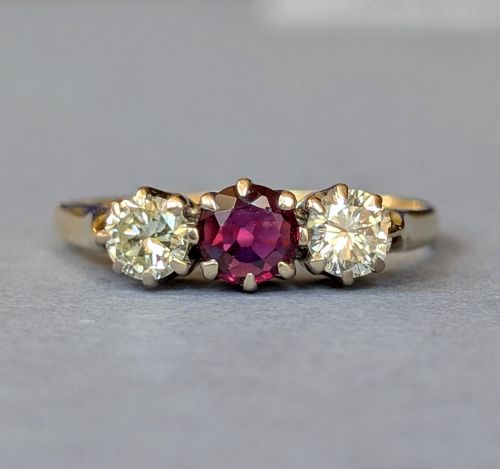
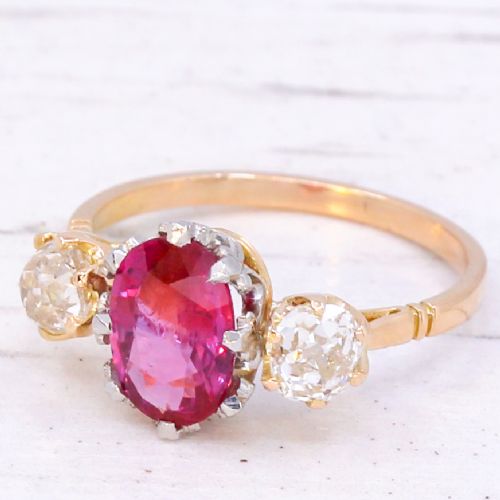
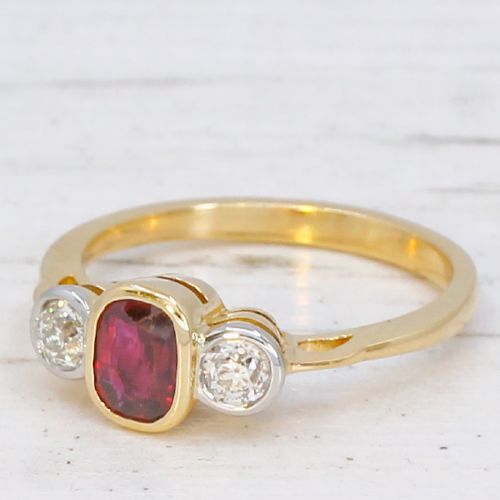
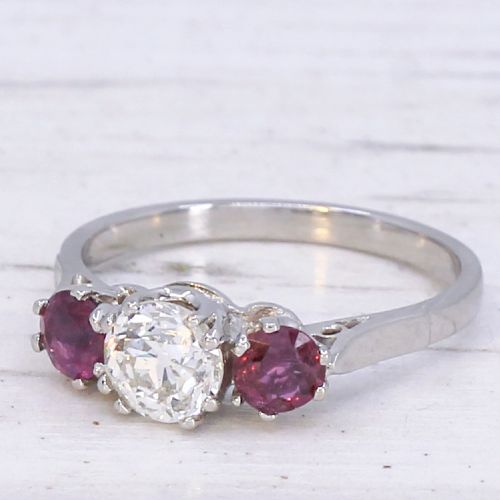
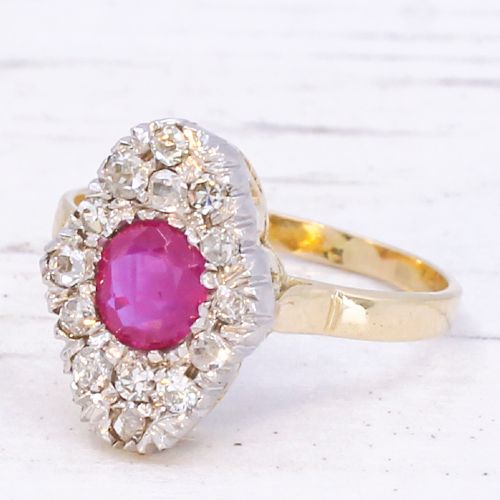
When you search for a vintage red stone ring, you encounter a selection of jewellery pieces predominantly featuring rubies, garnets, and spinels set alongside diamonds. The most common varieties on this page date from the late Victorian period through the Edwardian years and Art Deco era up to the mid-century.
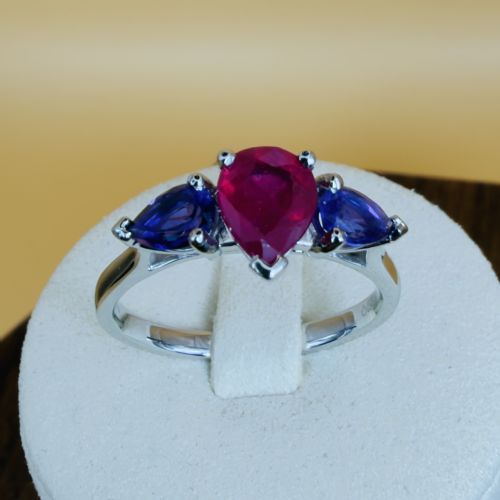
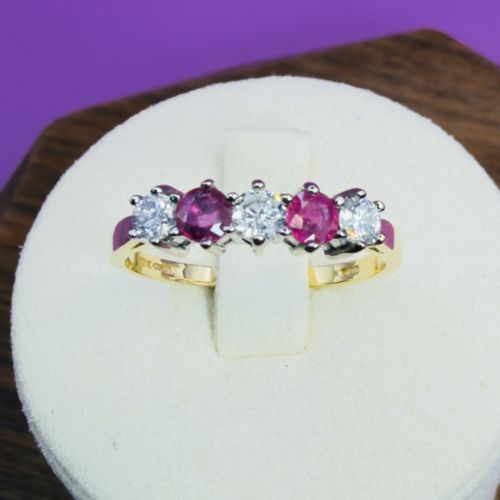
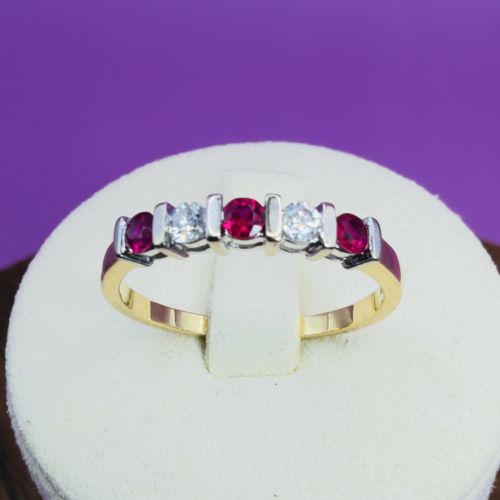
The forms span several distinct styles, including cluster rings, three-stone trilogy designs, five-stone band configurations, and starburst settings. These rings utilise various gold purities, including 9ct and 18ct yellow gold, alongside white gold and platinum mountings.
Earlier examples often display old cut diamonds paired with natural rubies in traditional or starburst arrangements, whereas later mid-century and vintage pieces lean towards clean lines and alternative groupings. Each object type listed consists entirely of rings created across multiple decades.
Materials and construction methods
Metals such as 18ct yellow gold, white gold, and platinum form the durable structural bands and settings for these red stones. Goldsmiths secured the red gemstones and diamonds using traditional claw, bezel, or flush settings tailored to the era.
Gemstones including rubies, garnets, and spinels were hand-cut, with older periods frequently employing old cut diamonds alongside untreated or natural red stones. The combination of high-karat gold with precious gems reflects the prevailing bench techniques of each respective decade.
Several rings conceal tiny starburst engravings around their flush-set stones, giving the metalwork its own hidden sparkle.
Distinguishing quality across periods
Quality in these rings rests upon the origin and character of the central red stones, particularly with certified natural rubies such as Burmese or Mogok varieties commanding attention. The integration of well-matched old cut diamonds and substantial precious metal weight elevates certain pieces above standard commercial examples.
The precision of the setting work and the integrity of the original metal mounts dictate the overall refinement of the piece. Superior craftsmanship shows in the balance of the cluster or trilogy arrangement and the preservation of the original hand-cut facets on both the red stones and the surrounding diamonds.
The Vintage Red Stone Ring Glossary
- Trilogy ring
- A ring featuring three primary gemstones set in a row, often representing the past, present, and future. This layout is frequently seen paired with rubies and diamonds.
- Starburst setting
- A design where stones are arranged in a radiating pattern resembling a star, popular in late Victorian and Edwardian jewellery. Central red stones in these settings are often surrounded by smaller diamonds.
- Old cut diamond
- A precursor to the modern brilliant cut, characterised by a smaller table, higher crown, and open culet. These hand-cut diamonds appear commonly in antique and vintage rings.
- Cluster ring
- A ring style featuring a central gemstone encircled by a cluster of smaller accent stones, typically diamonds. This configuration maximises visual impact and light reflection.
Vintage Red Stone Ring: Frequently Asked Questions
How do I date a red stone ring?
Dating relies on stylistic clues such as the cut of the diamonds, the arrangement of the stones, and the metal combinations used in the band. Victorian and Edwardian pieces often feature intricate starburst or cluster motifs, while Art Deco examples display geometric symmetry.
Assay office marks and maker stamps inside the band can also provide precise chronological reference points. Comparing the setting techniques to known historical periods helps confirm the era of manufacture.
Are all red stones rubies?
Not every red gem in these rings is a ruby, as garnets, spinels, and paste stones also appear across different periods. Rubies are a variety of corundum, whereas garnets and spinels are distinct mineral species with different refractive properties.
Examining the internal characteristics under magnification helps differentiate between these materials. Gemological reports are sometimes available for high-value stones to confirm their exact identity.
How should I care for vintage rings?
Maintenance requires gentle cleaning with warm soapy water and a soft brush, avoiding harsh chemical dips that can damage softer stones or antique metals. Regular checks by a jeweller ensure that the claws holding the red stones and diamonds remain secure.
Removing the ring during heavy manual tasks prevents unnecessary wear on the precious metal band. Proper storage in a dedicated jewellery box protects the stones from scratching against one another.