

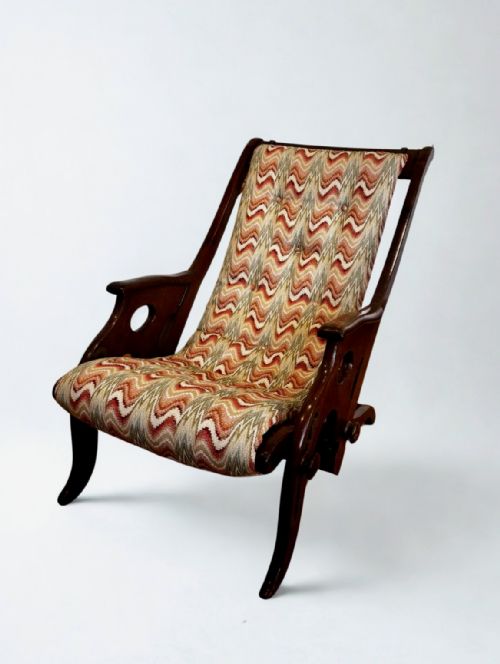


Vintage Recliner Chair
A vintage recliner chair offers mechanical comfort from the nineteenth and early twentieth centuries, blending adjustable frames with traditional upholstery for sustained repose.
Vintage Recliner Chair
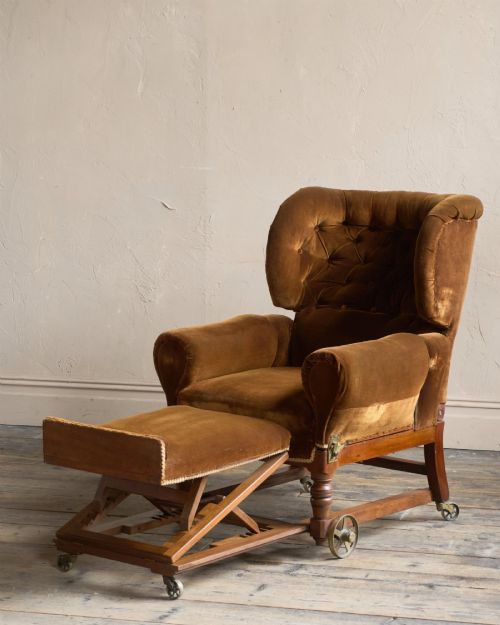
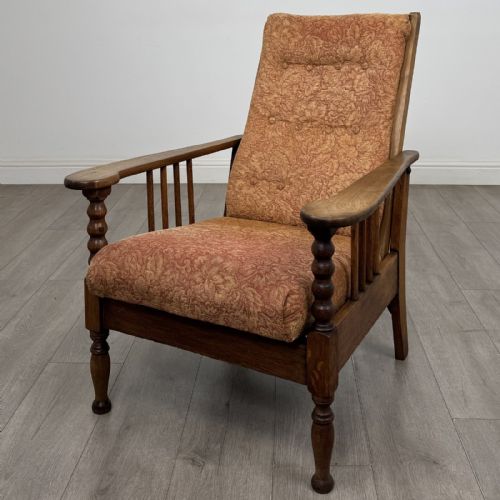
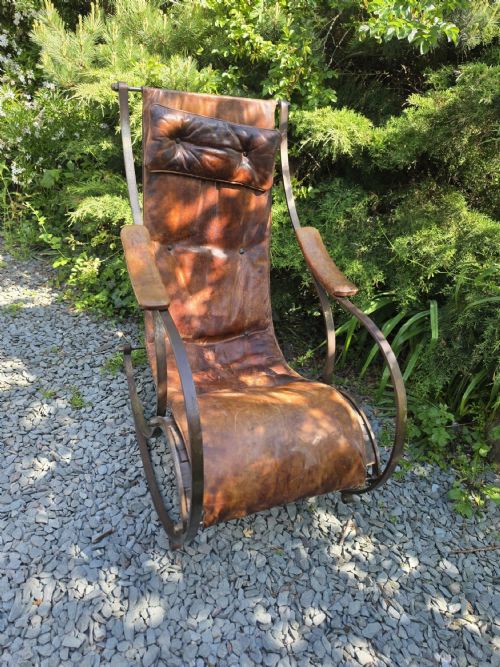
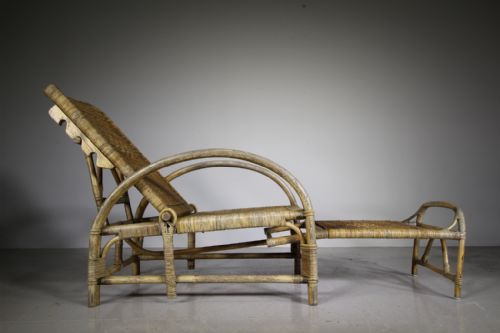
When searching for a vintage recliner chair, buyers encounter nineteenth and early twentieth-century forms ranging from library chairs and steamer deck chairs to campaign seats and planters chairs. These seating designs accommodate shifting postures through adjustable mechanisms, ratchets, or folding frames.
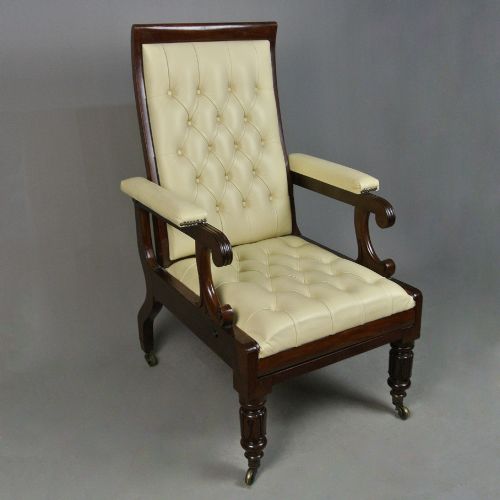
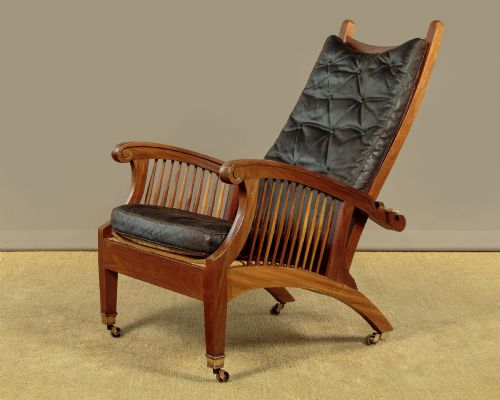
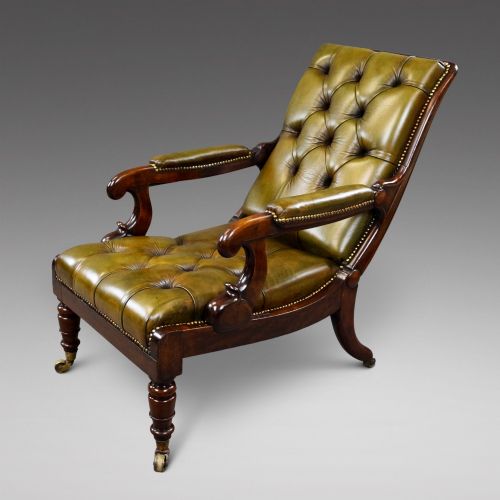
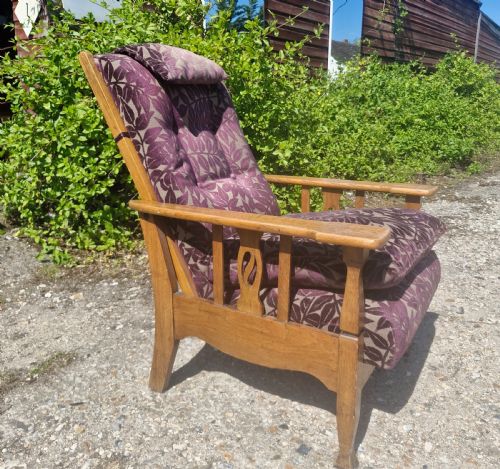
The selection on this page relies heavily on early twentieth-century oak reclining armchairs, alongside nineteenth-century button-leather library chairs and colonial campaign furniture. Makers such as Robert Daws, Foot and Son, and John Ward appear alongside vernacular designs from English, French, and Anglo-Indian workshops.
How they were made
Frames are constructed from dense timbers like mahogany, oak, rosewood, and walnut, often shaped with turned supports or folding wooden slats. Metal components in brass and iron provide the internal ratchets, hinges, and castor wheels necessary for movement.
Upholstery relies on traditional horsehair stuffing secured beneath leather, fabric, linen, velvet, or cane panels. Buttoning techniques distribute tension across leather and fabric surfaces while securing the interior padding within the wooden frame.
Vintage Recliner Chair Retail Price Guide 2026
Typical asking prices for vintage recliner chair among the pieces listed under this phrase on Sellingantiques today, from the lower quarter to the upper quarter. They describe what is for sale here now, not the wider market.
One chair even doubles as a writing slope, proving that nineteenth-century Victorians truly believed in multitasking from a reclining position.
What varies in quality
The sophistication of the mechanical adjustment mechanism dictates the upper tier of the range, separating simple folding deck chairs from patented library and invalid chairs with complex ratchets. Original signed brass plates from makers like Robert Daws or Foot and Son elevate a piece above unmarked workshop iterations.
Timber selection and secondary framing integrity determine durability, distinguishing solid rosewood and figured mahogany structures from simpler oak or walnut builds. The retention of original leather, brass castors, and intact caning preserves the structural authenticity of the design.
Angraves of Leicester·J Herbert McNair·Heals of London·Jas Shoolbred·Robert Daws·Foot and Son·John Ward
The Vintage Recliner Chair Glossary
- Bergère
- A closed armchair with a cane-work back and sides, often paired with a loose upholstered seat cushion. This technique allows lighter panel construction while maintaining structural rigidity.
- Campaign chair
- Portable folding furniture designed for military officers or travellers during the eighteenth and nineteenth centuries. These items dismantle or fold compactly for transit.
- Metamorphic armchair
- Seating that transforms into alternative forms, such as a chaise longue or a chair with an integrated writing slope. Such designs demonstrate ingenious nineteenth-century mechanical capability.
- Planters chair
- A colonial seating form featuring extended leg rests for reclining in warm climates. These chairs typically employ extensive woodwork and caned or slatted platforms.
- Steamer chair
- A reclining deck chair with adjustable leg rests, popular on ocean liners and in gardens during the early twentieth century. They often feature folding wooden frames for easy stowage.
Vintage Recliner Chair: Frequently Asked Questions
How do these reclining mechanisms work?
Many nineteenth-century examples utilise brass ratchets or notched arm supports that engage with a metal bar to hold the backrest at various angles. Others rely on weight distribution and footrests that extend outward as the user leans back.
Later deck and steamer chairs use simple wooden slots or folding struts that lock into predetermined positions along the frame.
Were these chairs used indoors or outdoors?
Usage depends entirely on the specific form and material construction of the individual piece. Library chairs, metamorphic armchairs, and daybeds belong strictly inside domestic rooms or studies.
Conversely, wicker garden armchairs, rattan loungers, and folding steamer deck chairs were built for verandas, lawns, and maritime travel.
How should I care for leather upholstery?
Leather surfaces benefit from regular dusting and the occasional application of traditional wax or leather balsam to prevent drying and cracking. Avoiding direct sunlight and excessive heat protects both the hide and the internal stuffing from degradation.
For buttoned upholstery, a soft brush helps clear dust from the deep pleats without stressing the securing threads.
How can I tell a Victorian chair from an Edwardian one?
Victorian pieces from the nineteenth century generally feature heavier timbers like mahogany and rosewood, deep buttoned leather, and robust mechanical innovations such as patent ratchets. The styling leans toward formal library or colonial forms with substantial presence.
Edwardian and early twentieth-century examples, dated around nineteen-ten to nineteen-twenty, often showcase lighter oak frames, Arts and Crafts influences, or simpler folding cane structures.