







Vintage Qum Rug
A vintage qum rug brings Persian artistry into a room, offering intricate patterns and fine fibres woven by skilled hands.
Vintage Qum Rug
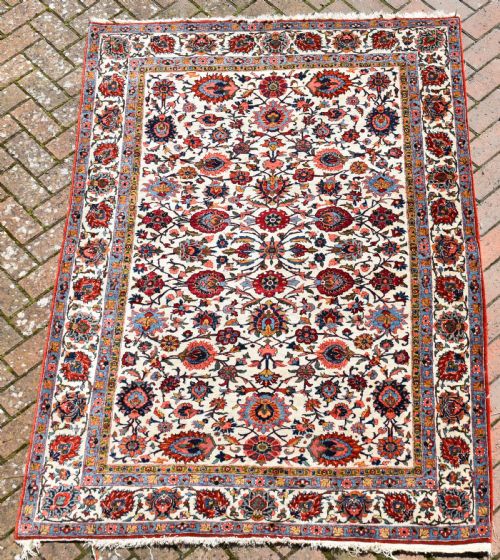
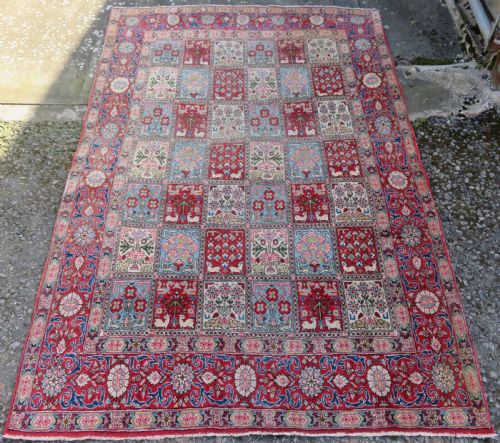
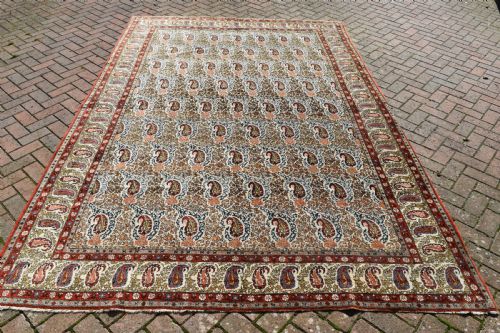
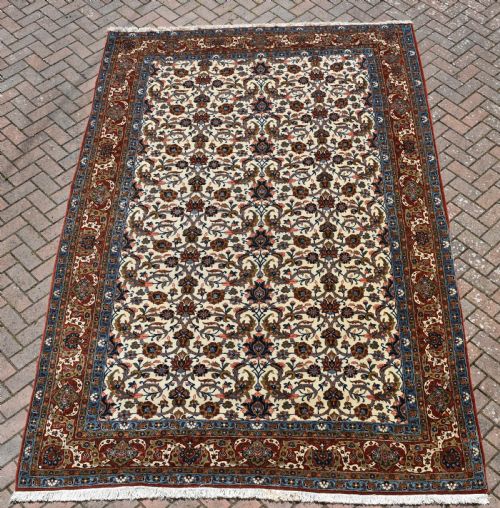
A vintage qum rug is a floor covering originating from central Persia, known for detailed traditional patterns and woven formats. These textiles appear in various dimensions, from compact area rugs to large roomsize carpets suited for principal spaces.
Buyers encountering this group will most often meet pieces dated from the early decades of the twentieth century, specifically across the nineteen-tens, twenties, thirties, and forties. These floor coverings employ established Persian styles that reflect regional weaving traditions.
How they were made
Makers constructed these floor coverings using natural materials recorded in the listings as wool, cotton, and silk. These fibres provided the foundation and pile necessary for durable yet intricate textile production.
The construction combined structural warp and weft threads with knotted pile techniques, allowing artisans to execute complex tile patterns and traditional Persian motifs with precision.
Vintage Qum Rug Retail Price Guide 2026
Typical asking prices for vintage qum rug among the pieces listed under this phrase on Sellingantiques today, from the lower quarter to the upper quarter. They describe what is for sale here now, not the wider market.
Every vintage qum rug carries the quiet patience of a weaver counting knots in central Persia over a century ago.
What varies in quality
The standard of a vintage qum rug depends heavily on the density of the knots and the finesse of the execution. Finer knots permit greater clarity in traditional patterns and tile designs.
Material selection also dictates overall grade, with certain examples utilising finer silk or superior wool grades. The complexity of the central Persian design scheme further separates standard production from exceptional examples.
The Vintage Qum Rug Glossary
- Pile
- The upright yarn loops that form the usable surface of the rug. This surface absorbs wear and displays the visual pattern.
- Warp
- The vertical foundation threads stretched lengthwise on the loom. Weft threads are inserted across these structural elements.
- Weft
- The horizontal threads passed through the warp to hold the knots in place. Together they form the woven foundation of the carpet.
- Tile pattern
- A geometric layout featuring repeated compartment motifs. This specific design appears frequently in central Persian weaving.
Vintage Qum Rug: Frequently Asked Questions
How do I style a qum rug?
Placing a qum rug in a principal room allows the traditional Persian motifs to anchor the interior scheme. Their detailed tile patterns and varied dimensions suit both traditional and transitional decor.
Because these textiles employ durable natural fibres, they function effectively in low to moderate traffic areas where the woven details remain visible.
What materials are used?
The listings show that these rugs utilise wool, cotton, and silk. Silk and fine wool provide the soft pile seen in higher-grade examples.
Cotton typically serves as the sturdy foundation material for the warp and weft threads, ensuring structural stability across large roomsize carpets.
How are periods identified?
Periods for these rugs span the nineteen-tens through the nineteen-forties, relying on stylistic conventions and material analysis. Woven traditions from central Persia evolved gradually during these decades.
Examining the specific construction techniques and structural materials helps place an individual carpet within this twentieth-century timeframe.