
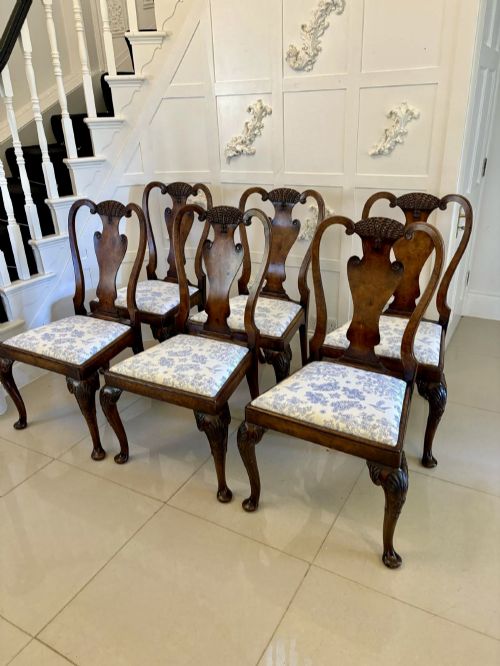
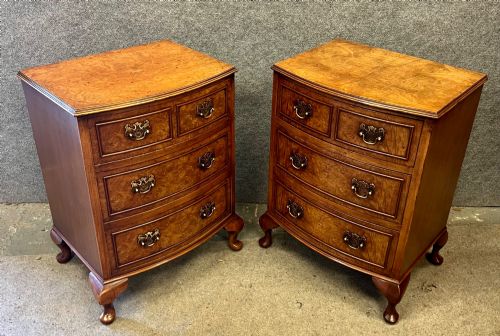
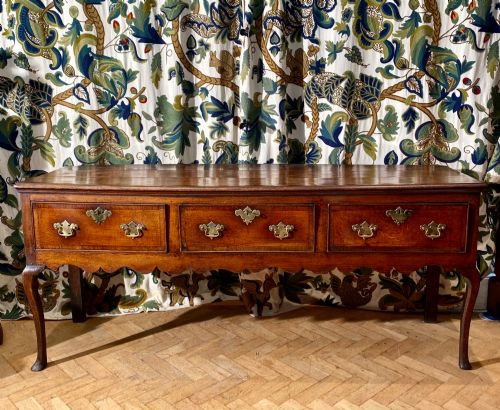
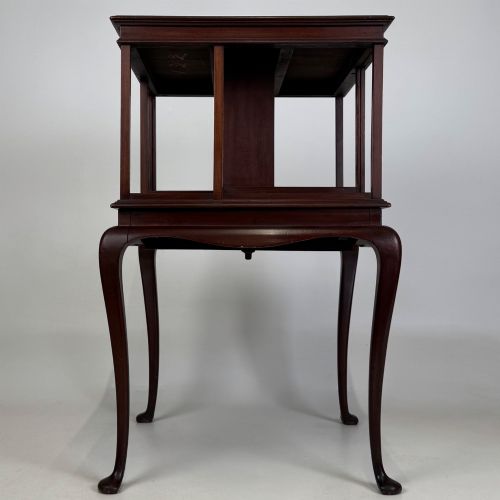

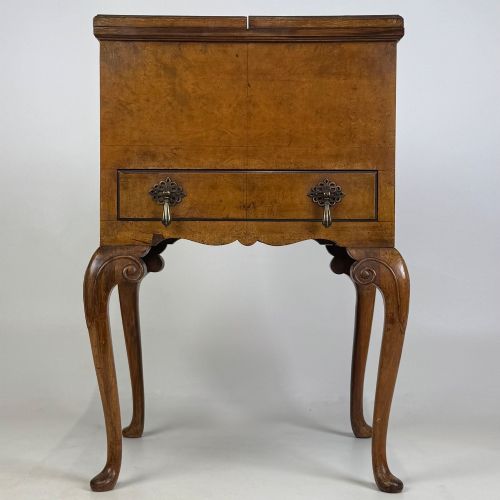
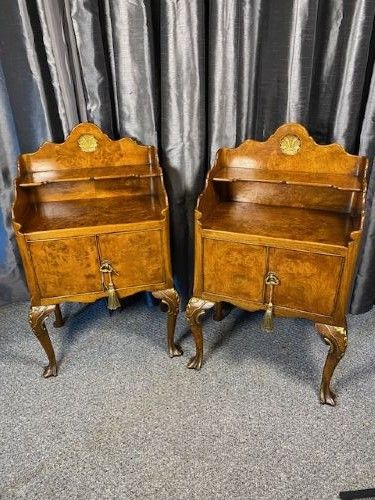
Vintage Queen Anne Table
A vintage queen anne table brings classic cabriole legs and rich walnut timber into a room, offering both practical surface space and enduring design.
Vintage Queen Anne Table
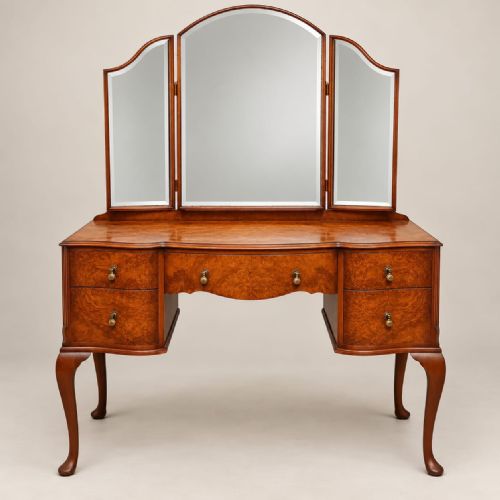
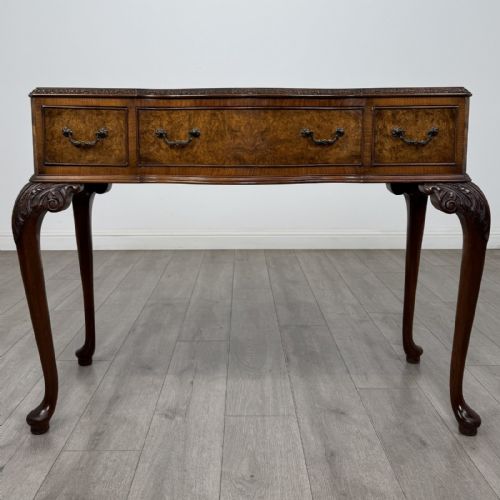
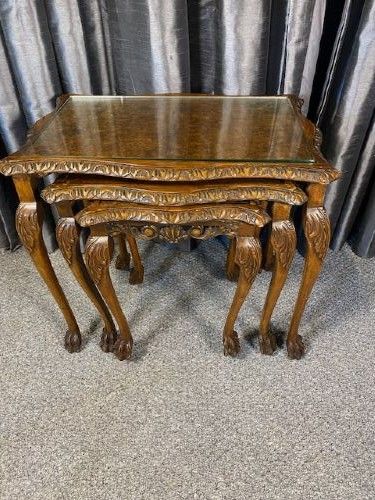
A vintage queen anne table encompasses a variety of forms designed primarily in walnut and burr walnut, spanning side tables, writing desks, coffee tables, and lowboys. Buyers searching for a vintage queen anne table frequently encounter revival pieces from the early twentieth century alongside genuine eighteenth-century examples.
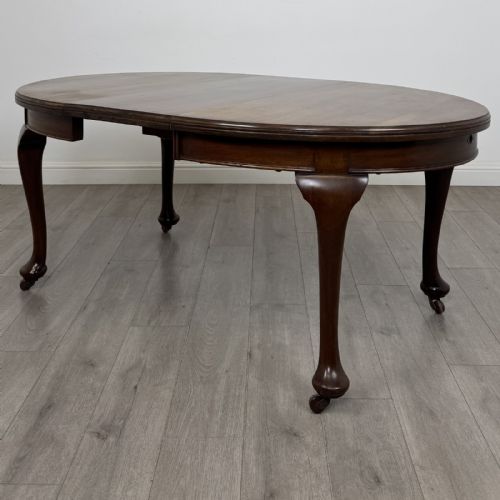
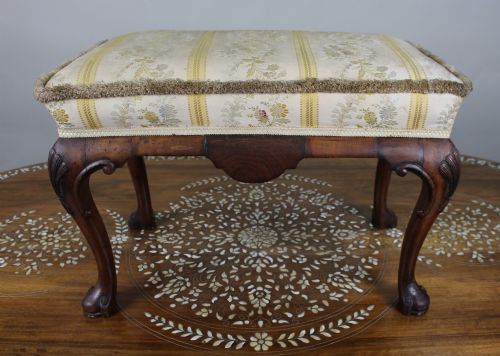
The selection ranges from small bedside tables and stools to large pedestal desks and dining tables. Many pieces exhibit revival characteristics originating from the Edwardian era and the nineteen-twenties.
Forms such as the lowboy and the tea table demonstrate the versatility of this design tradition. Walnut predominates, often finished with figured veneers or leather writing inserts.
Materials and construction
Makers utilised solid walnut and burr walnut veneer over secondary timbers to achieve rich, figured surfaces on desks and tables. Brass handles, glass tops, and green tooled leather inserts appear across writing tables and pedestals.
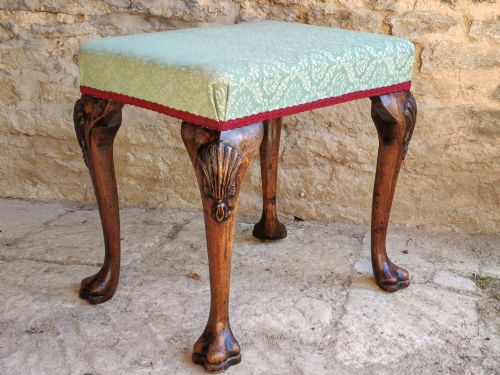
Joinery methods reflect traditional cabinet-making, incorporating sturdy frames for gateleg tables and fine veneering for lowboys and console tables. Cabriole legs define the silhouette of stools, side tables, and dressing tables alike.
Tree burrs form as healing knots around tree injuries, producing the wild, swirling patterns that seventeenth-century cabinet-makers chased for their finest tabletops.
Judging quality in walnut furniture
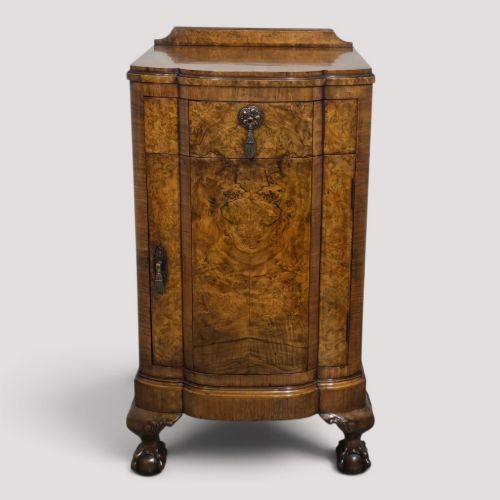
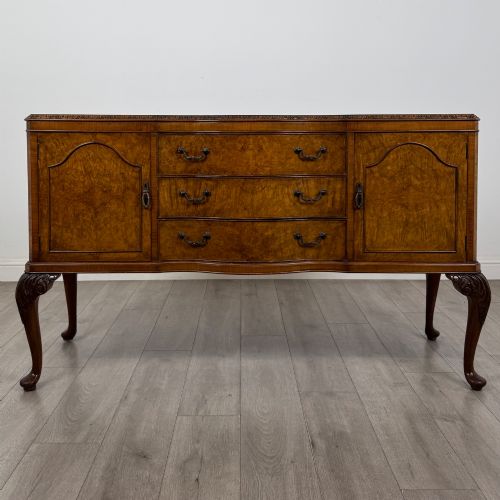
Quality rests upon the selection and matching of burr walnut veneer across the top and drawer fronts. Pieces displaying finely figured grain and careful timber selection stand apart from simpler constructions.
The crispness of the carving on cabriole legs and the retention of original brass hardware and leather surfaces determine the finer examples. Solid walnut framing and robust internal joinery distinguish superior desks and lowboys.
Wylie & Lochhead Glasgow·Maple & Co
The Vintage Queen Anne Table Glossary
- Cabriole leg
- A furniture leg that bends outward in a convex curve and tapers inward to a scroll foot, characteristic of the style.
- Lowboy
- A small kneehole dressing table or side table featuring multiple drawers, typically raised on tall legs.
- Burr walnut
- A prized wood harvested from the abnormal growth of a walnut tree, yielding intricate, swirling grain patterns used for decorative veneering.
- Gateleg table
- A table with hinged drop leaves supported by legs that swing outward like a gate.
- Pie crust
- A carved, raised decorative border resembling pastry crust, often seen on the edges of small coffee tables.
Vintage Queen Anne Table: Frequently Asked Questions
How do I identify a revival piece?
Revival pieces often date from the Edwardian period or the nineteen-twenties, showing machine-prepared timbers beneath hand-selected burr walnut veneers. They replicate earlier eighteenth-century proportions while utilising construction methods typical of the twentieth century.
Examining the secondary woods and interior drawer construction helps clarify whether a piece originates from the original period or later revival movements.
Where do these tables work best?
Writing desks and lowboys function effectively in studies and living spaces as compact workspaces or console surfaces. Smaller side tables and bedside cabinets fit easily beside upholstery or beds.
Coffee tables and tea tables provide central display surfaces that complement traditional and transitional interiors alike.
What is the difference between a lowboy and a desk?
A lowboy is a compact side table or dressing table featuring a shallow drawer configuration raised on relatively tall legs. A desk typically incorporates pedestals or larger kneehole spaces designed for seated writing.
Both forms frequently showcase figured walnut veneer and characteristic cabriole supports.
How should I care for walnut surfaces?
Walnut benefits from occasional polishing with traditional beeswax to nourish the timber and protect the veneer. Avoiding direct sunlight and excessive moisture preserves the rich colour of the wood.
Leather writing surfaces require gentle cleaning with specialist balms rather than standard furniture polish.