





Vintage Print Rack
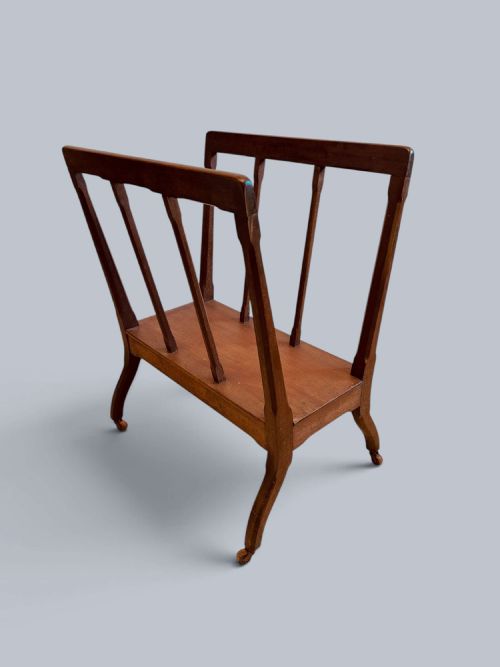
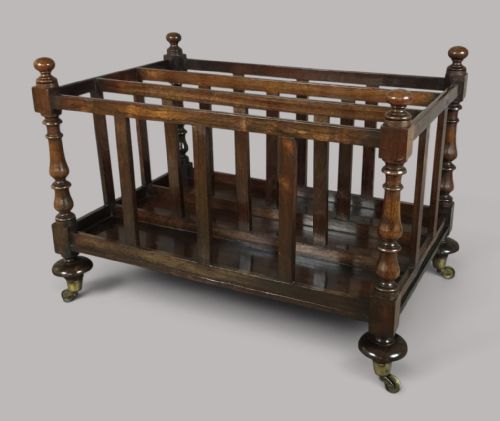
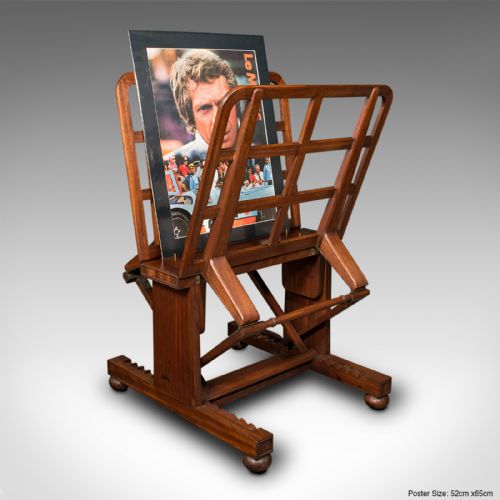
These vintage print rack options are sturdy mahogany and rosewood stands designed to hold large folios, prints, and maps.
Vintage Print Rack
A vintage print rack usually takes the form of a folio stand or a combined folio stand and canterbury, built to display unbound works on paper safely. These pieces emerge from the nineteenth century, spanning Regency, George IV, William IV, and Victorian periods.
The most common forms on this page are large mahogany, walnut, oak, and rosewood stands with adjustable frames. Buyers encounter grand scale country house proportions alongside compact artist and architect picture racks.
How these stands were constructed
Cabinetmakers utilised heavy timbers such as mahogany, rosewood, walnut, and oak to build frames capable of supporting bulky paper folios without tipping. Brass fittings frequently appear as hinges, castors, and adjustable ratchet mechanisms that alter the angle of the display leaves.
Turned wooden supports, slatted sides, and deep base troughs define the structural joinery of these pieces. Woods were finished to highlight natural grain patterns, often polished to a deep dark sheen appropriate for nineteenth century libraries and studios.
Vintage Print Rack Retail Price Guide 2026
Typical asking prices for vintage print rack among the pieces listed under this phrase on Sellingantiques today, from the lower quarter to the upper quarter. They describe what is for sale here now, not the wider market.
Materials recorded across the inventory include mahogany, rosewood, walnut, oak, and brass hardware.
What separates the best pieces
Quality rests in the weight of the timber, the complexity of the turning on the uprights, and the smoothness of any adjustable mechanism. Grand scale country house pieces with substantial rosewood or figured mahogany display superior timber selection compared to simpler variants.
The integration of brass hardware and the crispness of the carpentry dictate the standing of a piece. Finer examples retain original castors and functional brass ratchets that operate without stiffness.
The Vintage Print Rack Glossary
- Folio stand
- A hinged wooden rack designed specifically to hold large portfolios of prints, drawings, and maps. These pieces allow artwork to be browsed upright without bending the paper.
- Canterbury
- A low stand featuring partitions for holding folios, music sheets, or magazines, often combined with a lower drawer. The form originated in the eighteenth century and persisted through the Victorian era.
- Ratchet mechanism
- A mechanical brass adjustment device mounted between the display leaves. It holds the rack open at various angles for viewing.
- Regency
- A British design period spanning the early nineteenth century, noted for classical lines and dark timbers. Pieces from this era often display restrained architectural proportions.
Vintage Print Rack: Frequently Asked Questions
What are vintage print racks used for?
These stands serve to display and organise large art folios, maps, prints, and architectural drawings in a home or studio setting.
Collectors utilise them to browse collections without risking damage to delicate paper items.
How do I identify a Regency print rack?
Regency stands date from the early nineteenth century and typically feature dense timbers like mahogany or rosewood alongside classical turnings.
They often include heavy brass castors and adjustable display leaves suited to grand library spaces.
Are these racks adjustable?
Many examples feature brass ratchet mechanisms that allow the display sides to tilt outward at different angles.
This adjustability supports both flat storage and upright browsing of heavy folios.
What woods were used for these stands?
Cabinetmakers constructed these pieces from durable hardwoods including mahogany, walnut, oak, and rosewood.
These heavy timbers provided the necessary structural weight to support bulky paper collections securely.