



Vintage Pottery Mug
These vintage pottery mug pieces range from early English earthenware to Japanese Sumida Gawa wares, bringing tactile historical drinking vessels to your shelf.
Vintage Pottery Mug
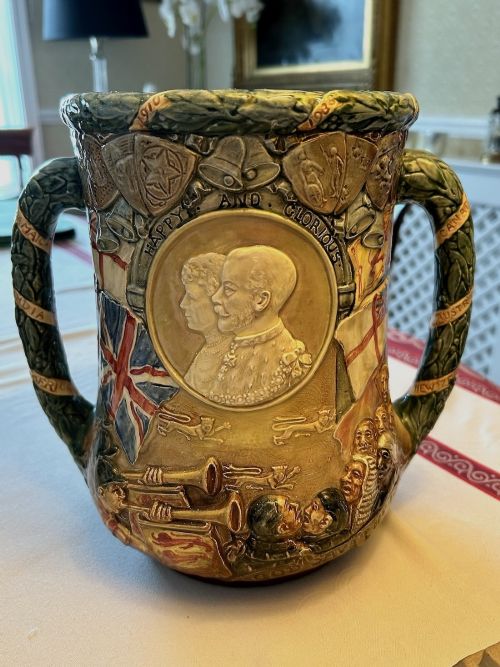
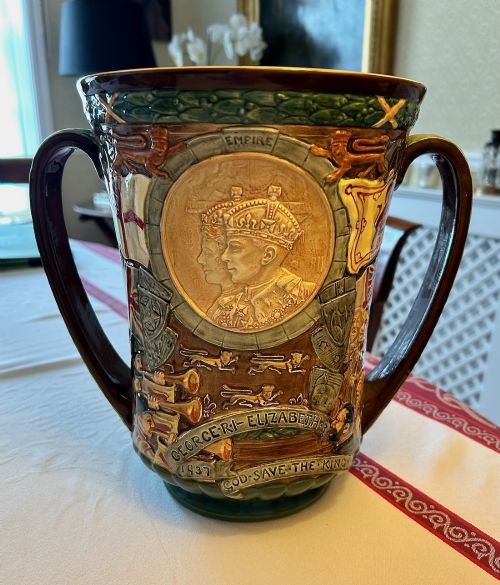
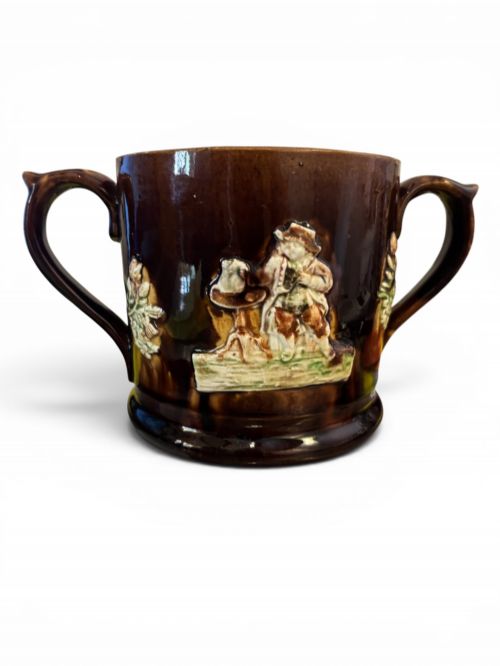
A vintage pottery mug selection spans practical drinking vessels and commemorative ceramics dating from the eighteenth century through to the mid-twentieth century. Buyers encounter utilitarian ale tankards alongside highly decorative loving cups and character jugs.
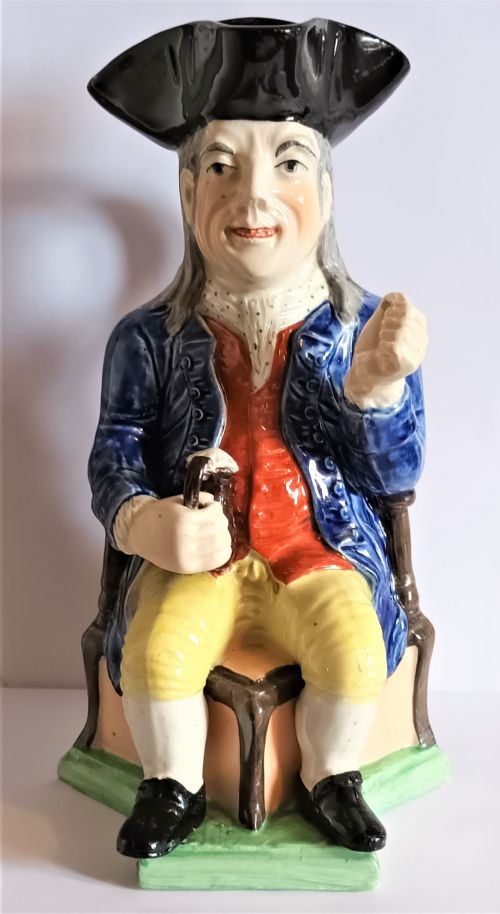
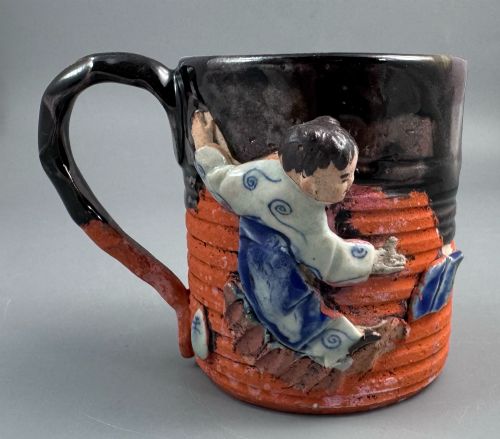
Makers from various traditions are represented, including Royal Doulton commemoratives and Staffordshire figures. International entries such as Japanese Sumida Gawa pieces and German steins expand the regional scope.
Materials and construction
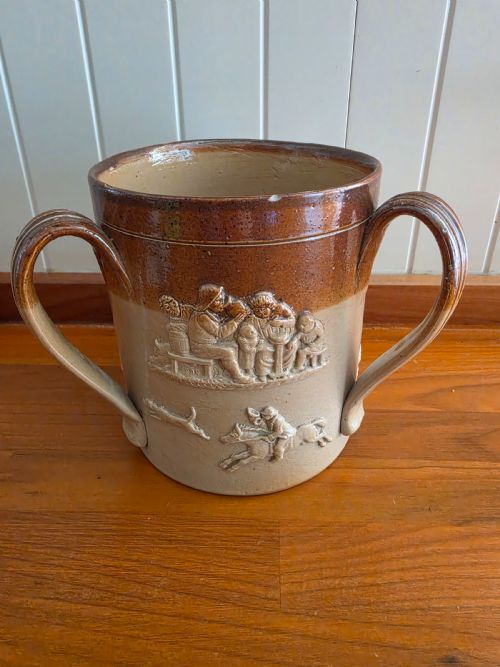
Potters shaped these vessels from local clays, earthenware, and robust stoneware using traditional throwing and moulding techniques. Multiple handles, applied figures, and structural spouts were often hand-modelled and attached before firing.
Glazes define the surface texture and appearance, ranging from pearlware glazes to rich salt-glazes on stoneware. Transfer printing, hand-painted polychrome enamel details, and applied low-relief decoration complete the finish.
Vintage Pottery Mug Retail Price Guide 2026
Typical asking prices for vintage pottery mug among the pieces listed under this phrase on Sellingantiques today, from the lower quarter to the upper quarter. They describe what is for sale here now, not the wider market.
Potters hid ceramic amphibians inside drinking vessels specifically to startle unsuspecting drinkers at the bottom of a pint.
Distinctions in quality
Quality rests in the crispness of the moulded relief, the stability of applied handles, and the control shown in hand-painting or transfer printing. Early pieces with complex multi-handled forms or intricate frog interiors demonstrate greater technical ambition.
Condition and the survival of delicate surface details like applied figures or painted inscriptions heavily influence the standing of each piece. Maker attribution and clear period characteristics further distinguish the finer examples.
The Vintage Pottery Mug Glossary
- Earthenware
- Porous pottery fired at lower temperatures, typically requiring a glaze to become impermeable to liquids. It forms the body of many traditional drinking vessels.
- Stoneware
- Dense, non-porous ceramic fired at higher temperatures until the clay vitrifies. It offers high durability for heavy-use vessels.
- Pearlware
- A refined earthenware developed in the late eighteenth century featuring a subtle bluish glaze that pooled in recesses. It provided a paler ground for underglaze painting.
- Tyg
- A large drinking vessel featuring three or more handles designed to be passed around a company. Early examples frequently date to the seventeenth and eighteenth centuries.
- Frog mug
- A drinking vessel featuring a small ceramic frog modelled inside the base or rim, designed to surprise the drinker as the liquid lowered. They were popular in British taverns.
- Loving cup
- A large two-handled or multi-handled vessel used for communal toasts at celebrations and feasts. They often carry commemorative inscriptions or poems.
Vintage Pottery Mug: Frequently Asked Questions
What is a frog mug?
A frog mug is a traditional drinking vessel featuring a small ceramic frog modelled inside the bottom or peeking over the rim. As the drinker finishes their ale, the hidden figure appears as a practical joke.
Most surviving examples date from the eighteenth and nineteenth centuries in Britain. They were popular social items in taverns and communal gatherings.
How do I date a pottery mug?
Dating relies on identifying the ceramic body, the glaze type, and the manufacturing technique. Stoneware and early earthenware display different weight and surface qualities compared to later mass-produced wares.
Inscriptions, royal commemorative subjects, and transfer-printed motifs provide specific historical markers. Stylistic clues such as handle shape also help narrow the period.
What is a tyg?
A tyg is a sturdy drinking vessel featuring three or more looped handles. The multiple handles allowed drinkers to pass the cup securely around a table during toasts.
Early examples were made in slipware and stoneware, often intended for communal drinking at feasts and celebrations.
Can I use these mugs for drinking?
While these pieces were originally made for functional use, antique pottery and pearlware can be porous or develop hairline fractures over centuries. Modern use risks damaging fragile glazes and historical surfaces.
Collectors generally treat these vessels as decorative objects or historical display pieces rather than everyday tableware.