



Vintage Portrait Brooch
A vintage portrait brooch captures a likeness in shell, enamel or metal, offering wearers a tangible piece of history.
Vintage Portrait Brooch
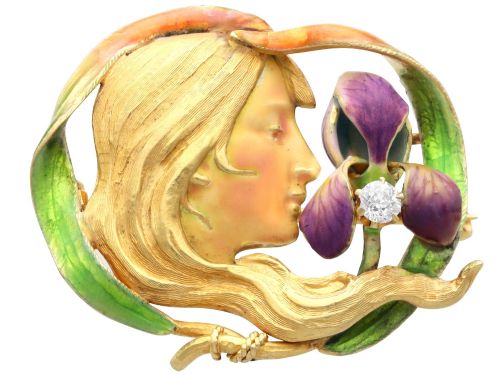
A vintage portrait brooch encompasses carved shell cameos, painted enamels and metallic tokens depicting human figures. These ornaments bridge portraiture and personal adornment across several centuries.
The selections span Georgian love tokens, Victorian shell carvings, Edwardian silver mountings and later mid-century iterations. Buyers encounter both carved profiles and delicate vitreous enamel depictions.
Common forms include classical figures, religious icons and sentimental love tokens mounted in gold, silver or pinchbeck. Each piece serves as a wearable miniature artwork with distinct historical roots.
Materials and construction methods
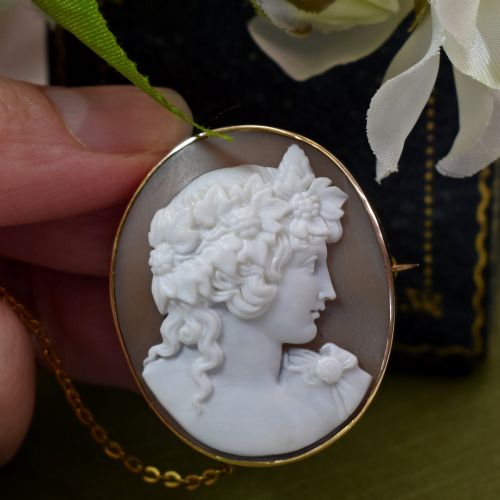
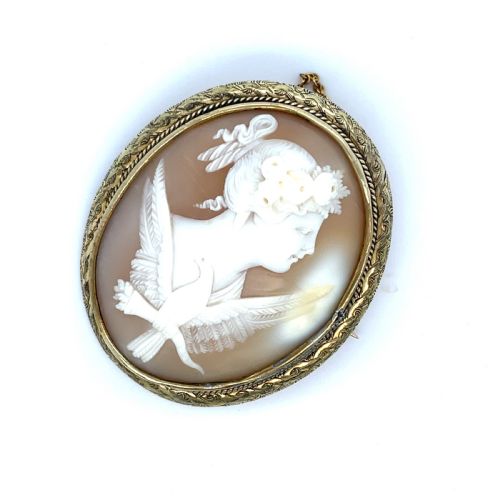
Carved pieces utilise natural shell, where artisans cut through stratified layers to reveal a lighter image against a darker background. This relief technique requires immense patience and precise hand-tooling.
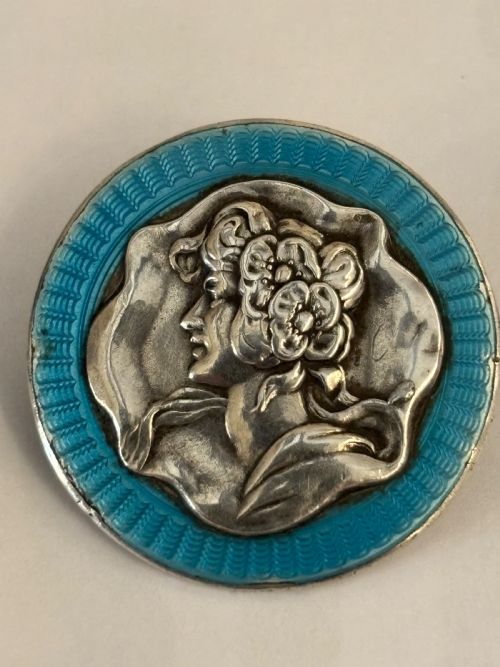
Enamelled examples apply vitreous glass pastes to silver or gold grounds, fired at high temperatures to create durable coloured portraits. Metalworkers mount these miniatures in solid gold, gold gilt, pinchbeck or sterling silver settings.
Some Victorian owners tucked locks of hair behind the portrait panel, turning a simple brooch into a secret keepsake.
Markers of distinction and finesse
The setting adds another layer of distinction, with substantial gold frames, detailed wirework or hallmarks elevating the piece. Lesser items show softer contours in the carving and simpler, unbranded metal mounts.
R. Pernice
The Vintage Portrait Brooch Glossary
- Cameo
- A method of carving an object such as a shell or stone so that the relief image stands out distinctly from the background. This technique creates a layered portrait effect.
- Guilloche enamel
- A decorative technique where the metal surface is engraved with intricate geometric patterns beneath a translucent enamel layer. This allows light to reflect through the coloured glass.
- Pinchbeck
- An alloy of copper and zinc invented to imitate gold. It provides a warm metallic appearance without using precious metal.
- Neoclassical
- A style inspired by classical antiquity, frequently appearing in Georgian and Victorian portrait pieces. It references ancient Greek and Roman motifs.
Vintage Portrait Brooch: Frequently Asked Questions
What periods do these brooches come from?
The pieces span from the Georgian era through the Victorian and Edwardian periods into the mid-twentieth century. Each era brings distinct mounting styles and portrait subjects.
Buyers encounter neoclassical revival motifs alongside turn-of-the-century enamel work and later shell carvings.
How do I care for a shell cameo brooch?
Shell is a natural organic material that requires gentle handling and protection from harsh chemicals, perfumes and prolonged direct sunlight. Clean the surface very carefully with a soft, dry cloth.
Avoid immersing antique shell pieces in water or liquid jewellery cleaners, as moisture damages the delicate layers.
What metals are typically used in the mounts?
Makers utilised sterling silver, nine-carat gold, fifteen-carat gold, gold gilt and pinchbeck to frame these miniature portraits. The choice of metal often reflects the period and value of the piece.
Silver mountings frequently appear alongside Edwardian pieces, while solid gold frames support larger nineteenth-century shell carvings.
How do I distinguish between carved shell and moulded resin?
Natural shell displays unique growth lines visible under magnification and feels cool to the touch. Hand-carving also leaves minute tool marks absent in mass-produced moulded pieces.
Resin or plastic substitutes often show seam lines, uniform opacity and a lighter weight compared to genuine shell.