

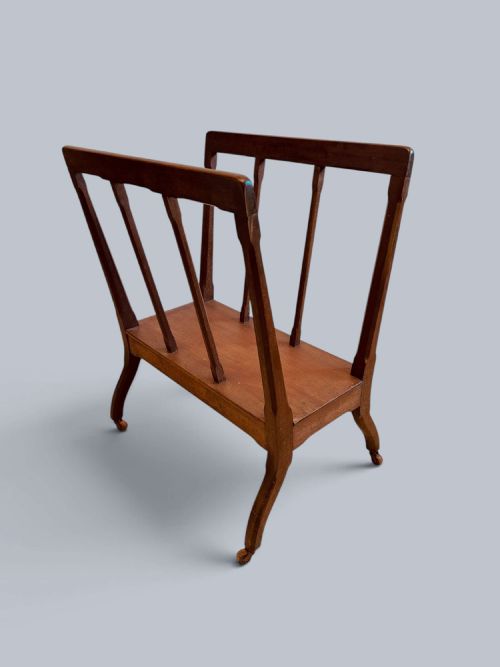
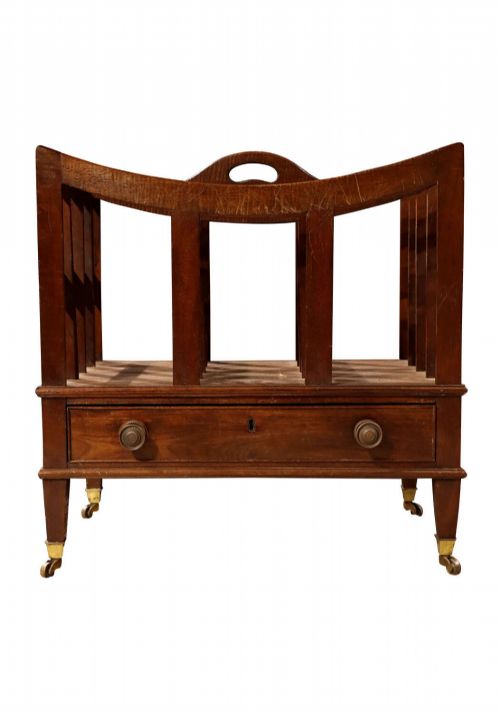



Vintage Portfolio Rack
A vintage portfolio rack is a sturdy timber stand designed to hold large prints, watercolours, and architectural drawings upright without bending.
Vintage Portfolio Rack
When you search for a vintage portfolio rack, you encounter practical stands and cabinets originating from the nineteenth and early twentieth centuries. These pieces appear as folio stands, canterburys, magazine racks, and music stands, designed for artists, architects, and collectors to organise loose sheets. Mahogany dominates the selection, accompanied by examples in walnut, oak, and brass.
The most common forms on this page include mahogany folio stands from the Regency and Late Georgian periods, alongside Edwardian canterburys. Architectural and artist's picture racks provide adjustable frames to display single works or store entire collections. Smaller canterburys often incorporate drawers for stationery and smaller papers while holding larger volumes on top.
These items reflect the domestic and professional requirements of nineteenth-century drawing rooms and studios. Cabinetmakers constructed them to sustain heavy paper burdens while remaining portable enough to shift around a large room. The presence of brass casters and adjustable supports on Regency pieces demonstrates a focus on practical utility.
How they were made
Cabinetmakers utilised solid mahogany and walnut timbers, selecting wood figures that displayed rich grain patterns across the spreading bases and upright frame supports. Turned pillars and reeded legs received hand-applied polish, whilst structural joints relied on traditional mortise and tenon construction to bear the weight of heavy folios.
Hardware components consisted of cast brass fittings, including hinges, castors, and adjustable ratchet mechanisms that allowed users to alter the angle of the display frames. Canterburys integrated fitted drawers with hand-cut dovetail joints, ensuring durability during daily use in a busy household or studio.
Vintage Portfolio Rack Retail Price Guide 2026
Typical asking prices for vintage portfolio rack among the pieces listed under this phrase on Sellingantiques today, from the lower quarter to the upper quarter. They describe what is for sale here now, not the wider market.
Architects once relied on these adjustable stands to keep oversized blueprints close at hand without rolling them into tubes.
What varies in quality
The sophistication of the timber turning and the crispness of the mouldings separate standard production items from pieces produced by notable workshops like Gillow's. Proportions dictate structural success, with finer examples maintaining stability without appearing overly heavy or cumbersome.
Mechanical complexity also distinguishes the range, as adjustable racks with original brass ratchets and smooth-running castors represent a higher grade of manufacture. The integrity of the timber joints and the retention of original brass hardware preserve the structural and visual balance of the piece.
Gillow’s
The Vintage Portfolio Rack Glossary
- Folio stand
- A timber rack with sloping sides designed specifically to hold large loose sheets of paper, prints, or maps.
- Canterbury
- A low wooden stand featuring partitions for sheet music or folios, often built with a single drawer beneath.
- Regency
- A British design period spanning the early nineteenth century, characterised by classical restraint, rosewood or mahogany veneers, and brass mounts.
- Reeded
- A decorative moulding formed of parallel convex rounds cut into the surface of a wooden leg or pillar.
- Dovetail
- A joint formed by interlocking wedge-shaped fingers, utilised in drawer construction to resist tension and pull.
Vintage Portfolio Rack: Frequently Asked Questions
What is a folio stand used for?
A folio stand holds large paper items such as prints, maps, watercolours, and architectural drawings in an upright or slightly angled position.
Artists and collectors used them to store works safely while allowing easy browsing through large collections without damaging the edges.
How do I tell a regency rack apart?
Regency portfolio racks display classical proportions, often featuring turned mahogany pillars, brass castors, and adjustable frames dating from around eighteen hundred to eighteen thirty.
Later Victorian and Edwardian examples tend to feature heavier carving or incorporate enclosed drawer sections like those found in canterburys.
Can these racks hold heavy books?
Most folio stands and canterburys were built with solid mahogany or walnut frames designed to support substantial paper weight and heavy volumes.
The sturdy cross-braced bases and mortise joints provide the necessary structural strength for everyday use in a study or library.