





Vintage Pole Screen
These vintage pole screen pieces are ingenious adjustable heat reflectors and tapestry shields that keep a gentleman's face from scorching by the hearth.
Vintage Pole Screen
A vintage pole screen is a fireside accessory designed to deflect the intense heat of an open coal fire away from the sitter's face. These pieces consist of an upright wooden shaft mounted on a weighted base, carrying a sliding panel that adjusts in height.
You will most frequently meet examples from the Georgian, Regency, and Victorian periods on this page. The forms range from simple needlepoint shields to elaborate gilt brass banner hangers and converted lamp tables.
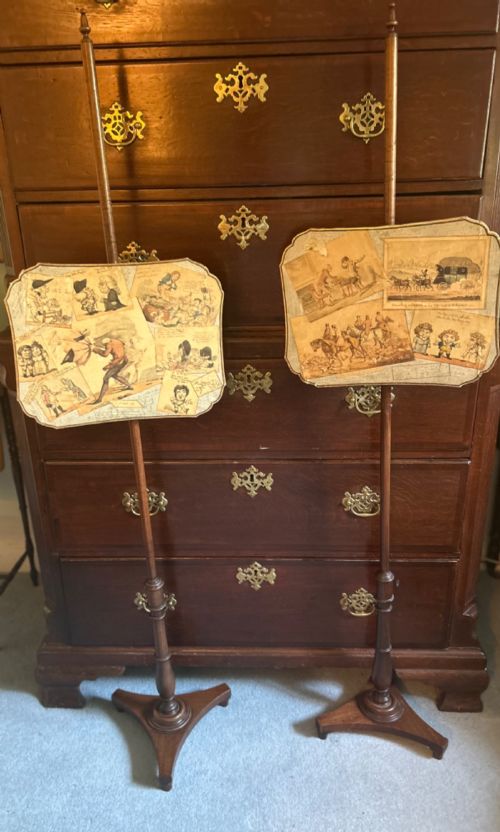
Materials span rich timbers such as mahogany and rosewood alongside brass, glass, and textiles. Some rarer variations include satirical prints, candle shields, and photo frames styled after miniature furniture.
How they were made
Cabinetmakers utilised dense timbers like mahogany and rosewood to turn slender poles and stable weighted bases. These woods provided the necessary strength to support sliding panels without tipping.
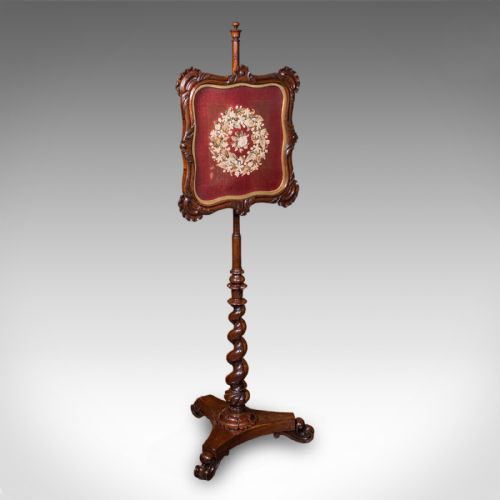
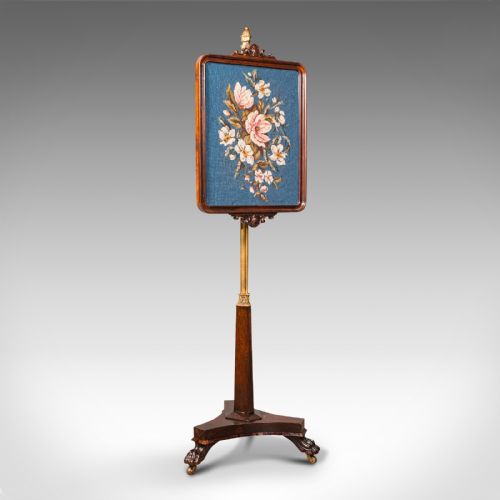
Panels often featured intricate needlepoint, tapestry, or fabric embroidery stretched across wooden or brass frames. Mechanisms relied on adjustable brass collars and fixtures to hold the screen at the desired height on the pole.
Vintage Pole Screen Retail Price Guide 2026
Typical asking prices for vintage pole screen among the pieces listed under this phrase on Sellingantiques today, from the lower quarter to the upper quarter. They describe what is for sale here now, not the wider market.
One exceptional piece incorporates witty satirical prints rather than polite needlepoint, proving that nineteenth-century firesides appreciated a quiet joke.
What varies in quality
The sophistication of the carved base and the quality of the timber dictate the standing of a piece. Finer examples display detailed hand-carving on mahogany or rosewood, whilst simpler versions rely on plain turned posts.
The artistry within the central panel creates a distinct separation in grade. Hand-worked needlepoint, tapestry, and satirical prints show greater care than plain fabric panels, and later lamp conversions alter the original form.
The Vintage Pole Screen Glossary
- Needlepoint
- Stitched yarn worked on an open-mesh canvas to create decorative panels. This technique forms the pictorial shields seen on many nineteenth-century examples.
- Tapestry
- Hand-woven textile art depicting pictorial scenes mounted within the screen frame. These panels add colour and texture to the fireside accessory.
- Gilt brass
- Metal treated with a gold-coloured finish for decorative hardware and banner hangers. It provides a bright contrast to dark woods like mahogany.
- Regency
- A stylistic period spanning the early nineteenth century known for classical revival forms. Pieces from this era often feature clean lines and rosewood construction.
Vintage Pole Screen: Frequently Asked Questions
What is a pole screen used for?
A pole screen was placed near an open fireplace to protect the sitter's face from the intense radiant heat of the coal fire. The sliding panel could be raised or lowered to match the height of the face.
Over time, many of these pieces were repurposed as decorative items, candle shields, or converted into table lamps while retaining their distinctive adjustable height mechanism.
How do I adjust the screen height?
The central panel is mounted on a collar that slides vertically along the wooden pole. Friction or a thumbscrew mechanism holds the shield at the chosen level.
Original mechanisms require gentle handling to avoid straining the brass fittings and the surrounding timber shaft.
What woods were used for these screens?
Cabinetmakers primarily utilised dense hardwoods such as mahogany and rosewood for the poles and weighted bases. These heavy timbers ensured the tall stand remained stable on the floor.
Secondary woods may appear in concealed areas, whilst brass components provide the structural sliding collars and decorative accents.
How can I tell the period?
Dating relies on the prevailing style of the woodwork, such as Regency classical lines or heavy Victorian proportions. The turning of the base and the style of the brass fittings offer further clues.
Needlepoint and tapestry panels often reflect the textile fashion of the manufacturing era, ranging from Georgian prints to mid-nineteenth-century embroidery.