

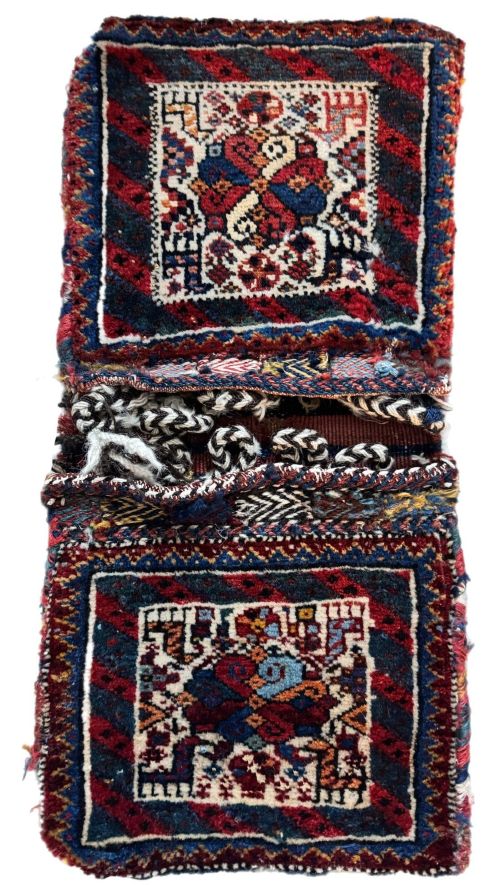
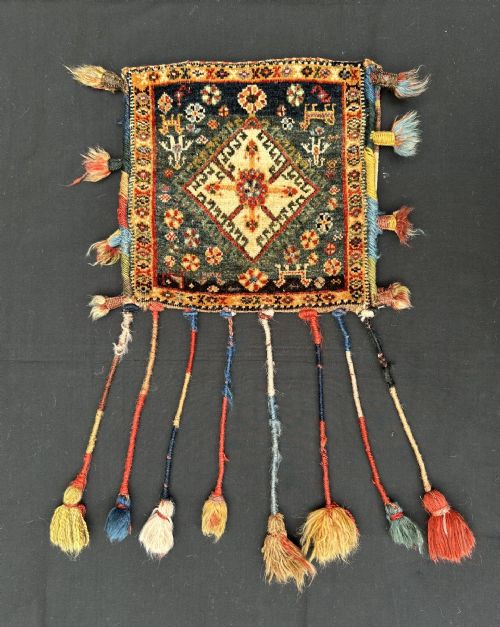
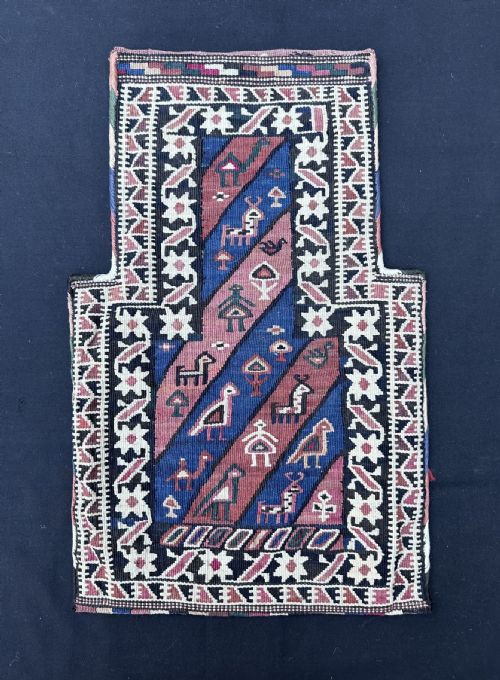
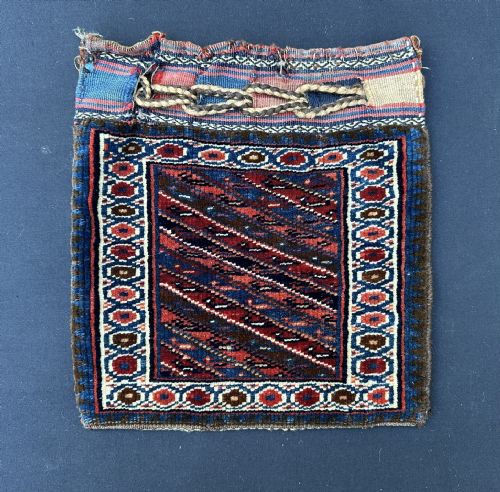


Vintage Persian Pouch
A vintage persian pouch is a woven tribal bag carrying the heritage of nomadic makers, prized for its honest craft and rich wool colour.
Vintage Persian Pouch
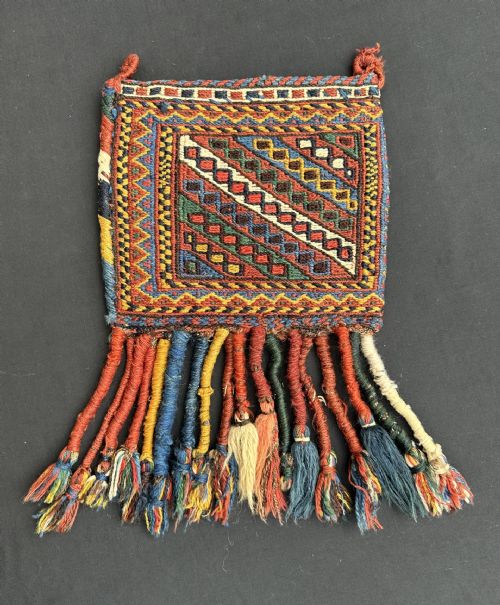
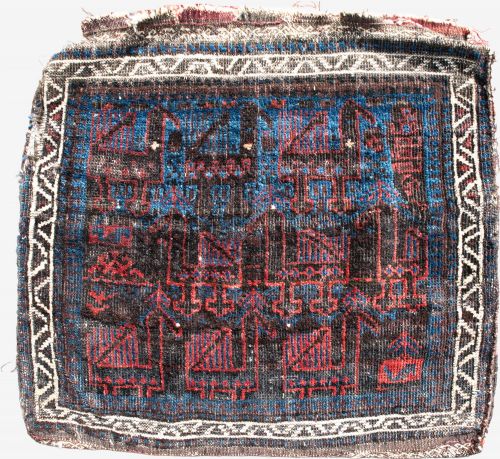
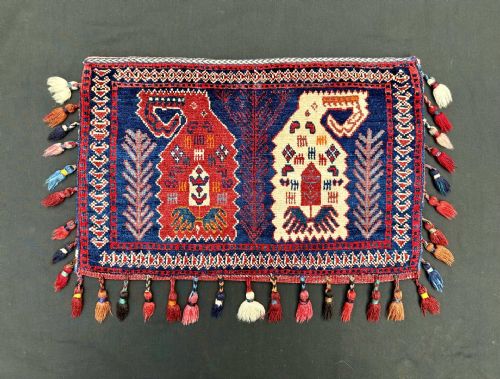
The pieces listed on this page originate from distinct tribal confederacies and regions, including the Qashqai, Baluch, Afshar, Luri, and Kordi groups. Most examples date from the late nineteenth century into the early decades of the twentieth century, reflecting traditional rural weaving practices.
Forms vary from single-faced storage pouches to double-sided vanity bags and bird bags, each designed for specific nomadic utility. These textiles showcase the diverse cultural output of regional tribes such as the Bolvardi sub-tribe or the Sistan Baluch.
Materials and construction
The construction relies fundamentally on wool and cotton, utilising hand-spun wool for the pile and face structures. Natural dyes provide the enduring palette seen across these tribal textiles.
Weavers employ banded weft work designs and traditional weaving structures suited to nomadic portability and daily hard wear. Original backs and durable selvages frequently survive on these utilitarian storage pieces.
Vintage Persian Pouch Retail Price Guide 2026
Typical asking prices for vintage persian pouch among the pieces listed under this phrase on Sellingantiques today, from the lower quarter to the upper quarter. They describe what is for sale here now, not the wider market.
Site listings span the late nineteenth and early twentieth centuries, featuring wool, cotton, and natural dyes across tribal bag forms.
Judging quality in tribal bags
Quality rests upon the fineness of the weave, the clarity of the tribal motifs, and the depth of the natural dyes. Tighter knotting and sophisticated geometric or pictorial layouts elevate certain vanity bags and storage pouches above standard utility items.
The survival of original components, such as the back panel or hanging bands, distinguishes better-preserved examples. Rich wool quality and a balanced, harmonious colour palette further separate exceptional regional pieces from simpler work.
Kordi Tribes·Afshar Nomads·Luri Tribes·Baluch
The Vintage Persian Pouch Glossary
- Khorjin
- A traditional Persian term for a saddle-bag or storage bag. These were woven in pairs or single panels for animal transport and household storage.
- Weft
- The horizontal threads passed across the warp threads to create the fabric structure. Banded weft work creates distinct horizontal stripes of colour and texture.
- Baluch
- A tribal group known for distinctive dark wool weaves and bird or geometric motifs. Their bags often feature rich indigo and madder tones.
- Afshar
- A nomadic tribe from southern Persia recognised for precise geometric ornamentation and vanity bags. Their weaving employs saturated natural dyes and sturdy cotton foundations.
- Qashqai
- A tribal confederacy in south-west Persia famous for finely woven storage pieces and expressive medallion designs. Their textiles utilise vibrant wool and balanced compositions.
Vintage Persian Pouch: Frequently Asked Questions
What were vintage persian pouches used for?
These textiles served practical storage functions within nomadic daily life, holding salt, personal vanity items, or belongings during migration. Families utilised them inside tents or on pack animals for organisation.
Over time, their durable wool construction ensured these utilitarian containers survived long after their original nomadic purpose had passed.
How do I tell different tribal bags apart?
Distinctions lie in the wool quality, dye palette, and structural motifs characteristic of specific regional groups like the Baluch or Afshar. Examining the specific weave and regional design vocabulary clarifies origin.
Geographic attribution often relies on characteristic patterns and structural traits recorded in the tribal provenance.
How should I display a vintage pouch at home?
Many collectors mount smaller storage pouches flat on a wall or place them on low surfaces where the wool texture can be appreciated safely. Protecting them from direct, harsh sunlight preserves the natural dyes.
Ensuring proper support prevents strain on the original hanging loops and hand-spun structure.
Are natural dyes common in these bags?
Natural dyes provide the foundational colour palette for nineteenth and early twentieth-century tribal weaving. These organic colourants yield rich, complex tones that age gracefully.
Examining the wool under natural light reveals the subtle variations typical of traditional dyeing methods.